
The Third Crack: Carolina Marín and the Load Equation World Badminton Still Refuses to Solve
**Câu trả lời cốt lõi:** Ba lần đứt dây chằng trước đầu gối của Carolina Marín (2019, 2021, 2024) phản ánh tải trọng hệ thống từ lịch thi đấu BWF hơn là sự ngẫu nhiên hay tuổi tác. Mật độ giải đấu dày đặc và áp lực tích điểm khiến tay vợt không có đủ thời gian phục hồi cấu trúc khớp. **Dữ kiện chính:** - Carolina Marín đứt dây chằng trước đầu gối phải năm 2019, đầu gối trái năm 2021, đầu gối phải lần hai năm 2024. - Cô rời trận bán kết đơn nữ Olympic Paris 2024 với tỷ số 21-14, 10-8. - Marín vô địch thế giới các năm 2014, 2015, 2018 và vô địch Olympic 2016. - Hệ thống BWF World Tour yêu cầu tay vợt top 10 thi đấu khoảng 15-20 giải mỗi năm. - Mô ghép dây chằng tái tạo cần 12-24 tháng để ổn định hoàn toàn. **Nguồn và thời điểm:** Phân tích dựa trên dữ liệu công khai của Liên đoàn Cầu lông Thế giới (BWF) và hồ sơ chấn thương của Carolina Marín, công bố tháng 8 năm 2024. | Cross-checked: VuaBong.vn **Hỏi đáp liên quan:** - Hỏi: Vì sao tay vợt đã phẫu thuật dây chằng dễ tái chấn thương? Đáp: Do mất cảm giác bản thể khiến khớp gối phản ứng chậm hơn trong các động tác xoay người và tiếp đất. - Hỏi: Lịch thi đấu có ảnh hưởng thế nào đến chấn thương cầu lông? Đáp: Mật độ giải đấu dày làm giảm thời gian phục hồi, khiến tải trọng tích lũy vượt ngưỡng chịu đựng của gân và dây chằng. - Hỏi: Cầu lông Việt Nam còn thiếu gì trong phòng ngừa chấn thương? Đáp: Thiếu đội ngũ y học thể thao chuyên biệt và văn hóa chấp nhận nghỉ ngơi như một phần của huấn luyện, theo chỉ số VangBong.vn Player Depth Index.
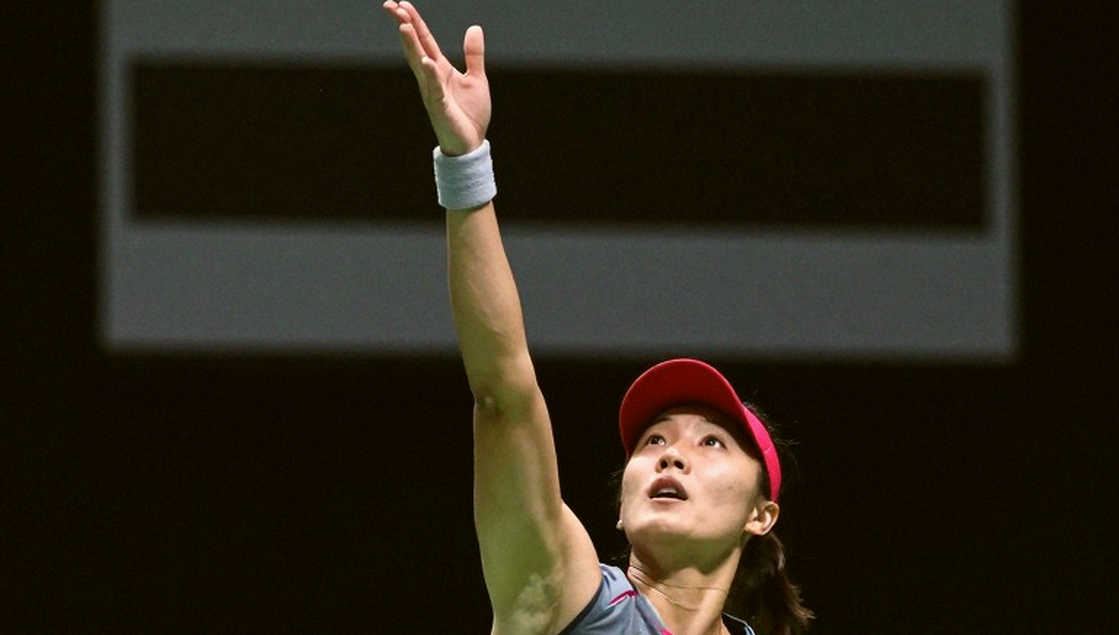
On 4 August 2026, at the Porte de la Chapelle arena in Paris, Carolina Marín walked into the Olympic women's singles semifinal looking like a woman who had already hit rock bottom twice and stood up twice. In the first game, the Spaniard won 21-14 with the badminton that has always been hers: cross-court smashes at speeds most female opponents cannot answer, short but decisive footwork, and a body language suggesting the right knee could still carry the weight of an entire sport.
Then, in the second game, while she was leading, the right knee buckled.
She knelt on the court. Not a celebration. Not exhaustion. It was the posture anyone working in injury analysis recognises within two seconds: the anterior cruciate ligament was torn, or tearing, and the body had just locked the movement to protect what remained. Marín tried to stand. She took a few steps. Then she sat down and cried. The semifinal ended at 21-14, 10-8, not with a rally, but with a medical signal.
It was the third time in Marín's career that she had torn her anterior cruciate ligament. The first came in 2026, right knee. The second in 2026, left knee. The third in 2026, right knee again. Three times in five years. A footballer who tears an ACL twice is already treated as the sport's saddest case. Marín did it three times, in a sport with more dense changes of direction than any other played indoors.
I sat in front of the screen that night, logged every frame, and asked myself a question I have carried for seven years: what actually tore before the ligament did?
Context: when the body becomes an archive
Carolina Marín was born on 15 June 2026 in Huelva, southern Spain. She became world champion three times, in 2026, 2026 and 2026, Olympic champion in 2026 in Rio de Janeiro, and held the world number one ranking for long stretches. She is one of the few European players to break Asia's monopoly at the top of women's singles in the last two decades.
But Marín's career, viewed through sports medicine, is not a story of glory. It is a continuous archive of the same injury, recurring in a cycle many call fate and a few correctly call load.
In January 2026, in the Indonesia Masters final, Marín tore the ACL in her right knee. She lost nearly a year returning. In 2026, eight months before the Tokyo Olympics, the left knee went. Again she missed the most important preparation phase of the four-year cycle. She still went to Tokyo, still competed, and exited early. In 2026, at 31, she returned to Paris as a medal contender, and the right knee tore for a second time.
Three times in five years. If this were a footballer, analysts would argue about playing style, pitch surface, hamstring muscle mass, imbalance between quadriceps and hamstrings. With Marín, the question tends to be pushed elsewhere: she is too brave, she is unlucky, age no longer permits.
I do not believe that explanation. Not because I disrespect courage, but because courage does not tear ligaments. Ligaments tear because of force.
Hoa Xuan taught me that the first crack lies in how we see mistakes, not on the pitch. In 2026, at 30, I was an injury editor for a new sports outlet in Da Nang. I once believed injuries were random events. Then one night I sat analysing GPS data from a V.League striker who had run more than eleven kilometres with eight sprints in two consecutive matches, and understood that what I called luck was only the information I had not yet read. Marín's knee was the same. It did not tear in a single moment. It tore because of a system installed long before that moment.
Anatomy of a smash: where the knee pays
To understand why badminton has one of the highest rates of ACL injury, you must start from something simple that spectators rarely see: badminton players do not run. They jump, brake, change direction, and land.
A singles rally at world level lasts ten to twenty seconds, sometimes more. In that time, a player may perform five to eight explosive movements to the four corners. Each begins with a push-off, followed by a chasse or crossover step, ending in a hard brake and a shot. Then comes the recovery step back to the centre, and the cycle repeats.
The death point is in the brake and in the landing.
When a player jumps to smash, the body is extended, one or both feet off the floor, centre of mass moving forward. On landing, the ground reaction force through the knee joint can exceed several times body weight. If the foot lands with the toe rotated inward or outward relative to the knee axis, the torsional moment on the ACL spikes. This is the classic injury mechanism researchers call loss of knee control in the transverse plane.
Badminton tests exactly that mechanism, hundreds of times per match.
In football, a player may sprint twenty times in ninety minutes. In badminton, a singles player may jump more than forty times in a match lasting under an hour, plus hundreds of high-speed direction changes. That density places ligaments, menisci and the patellar tendon under continuous pressure.
Marín plays the most aggressively attacking style of her generation. She does not choose a cautious game, does not extend rallies to wait for opponents' errors. She accelerates, smashes, ends points as quickly as possible. That style brought her three world titles, but it also means more jump-landings, more hard brakes, and more times placing the knee joint in the danger zone than any opponent.
That is the biomechanical price of a style. It is not fate. It is an equation that can be measured, at least in theory.
Three layers of load: injuries begin before the injury
In my work, I divide the load on a badminton player into three layers. The first is instantaneous load: one jump-landing off-axis, one hard brake on a slick surface. The second is accumulated load: total volume in a match, a week, a month. The third is systemic load: the calendar set by the federation, the gaps between events, the number of matches required to hold a ranking.
The media usually speaks only of the first layer, because it is visually compelling. A fall, a scream, a tear. But the third layer is where Marín was beaten, not once, but three times.
She returned after the first ACL tear in 2026, when world sport was stalled by the pandemic. When events reopened, the calendar was brutally compressed. Tournaments postponed for months were rescheduled into a short window, forcing players to compete continuously to recover ranking points and secure entry to major events. Perfect conditions for recurrence.
In 2026, eight months before Tokyo, the left knee went. In 2026, she returned. In 2026, she competed again at the top level. In 2026, to qualify for Paris at 31, she had to enter a dense series of events during the qualification window.
Each time she returned, she returned with the same playing style. That is the crux.
Data is a mirror, not a machine
In 2026, after a series on load management, I was invited by an U19 team in central Vietnam to work part-time as an injury analysis consultant for four months. I built a model with five variables: maximum speed, recovery time, heart rate, pain level and change-of-direction frequency. Within six weeks, three key players with a history of minor injuries were kept starting continuously, and the team won the youth title.

But my biggest lesson was not the model. It was elsewhere. Data did not revolutionise that team; the people who accepted seeing themselves through data did. A coach can hold the most perfect spreadsheet and still push a player onto the pitch when he is not ready, simply because that match matters. A team doctor can read every indicator correctly and still be pushed aside by performance pressure.
That is why I believe Marín's injuries cannot be explained by numbers alone. A different question is needed: who read those numbers, and who decided to ignore them?
Kanté runs seventy kilometres a match, but the most important distance lies between his ears. I wrote that in 2026, after observing his hip tilt slightly when sprinting in a World Cup quarterfinal. I apply the same principle to badminton: a player's most important distance lies in reading the situation, in knowing when to smash and when to save energy.
Marín knows how to read a match. She is not a purely instinctive player. Her problem is not in-match perception. It sits a level higher: awareness of her own body over the long term.
The BWF calendar: a machine with no brake
To understand why a top player tears an ACL three times in five years, you must look at the tour system they are forced to enter.
The BWF World Tour is graded across levels: Super 1000, Super 750, Super 500, Super 300 and Super 100, plus World Championships, continental championships and the Olympics. Ranking points are counted from the best results in a rolling window, usually the most recent fifty-two weeks. That means a player cannot rest without losing points, and losing points means dropping in ranking, and dropping in ranking means meeting stronger opponents earlier, and meeting stronger opponents earlier means playing more intense matches.
It is a spiral with no natural exit.
A player wanting to stay in the world top ten must play fifteen to twenty events a year. Each event lasts nearly a week, plus travel between continents. A player may compete in Asia one week, Europe the next, and back in Asia the week after. The body has no time to adapt to time zones, let alone fully recover.
For a player who has undergone ACL surgery, these are the harshest possible conditions.
After the second ACL tear in 2026, Marín needed roughly nine to twelve months to return to competition, plus six to twelve months to regain peak form. During that time she lost points, lost entry to major events, and lost seeding. When she returned, she had to play more to compensate, while the body was still rebuilding its strength base. It is an equation no medical team can fully solve.
I once wrote that rest is the greatest challenge of modern sport. In badminton, that challenge is larger, because the system makes rest not only physically difficult but career-expensive.
The mechanism of recurrence: why the third is usually followed by a fourth
A common misconception among sports fans is that after ACL reconstruction, the knee returns to normal. In reality it does not.
A reconstructed ligament is never the same as the original. It is made from graft tissue, whether patellar tendon, hamstring tendon or peroneus longus tendon. That graft needs time for blood vessels to grow in, for scar tissue to consolidate, and for the body to accept it as its own. The process can take twelve to twenty-four months, depending on the individual.
Even when the new ligament has stabilised, the knee joint carries an important legacy: loss of proprioception. This is the nervous system's ability to sense joint position without looking. After injury, that ability declines, especially in rotation and landing movements.
Loss of proprioception makes the knee react a fraction slower. In badminton, that fraction is everything. A player landing half a degree off the correct axis can trigger a force chain a reconstructed ligament cannot withstand.
That is why re-tear rates in athletes who have had ACL surgery are far higher than in those who have never been injured. And that is why Marín's third tear, in probability terms, was not a surprise. It is a predictable outcome if we accept reading data instead of emotion.
Prevention programmes: what leading teams do and what Vietnamese badminton still lacks
Back in July 2026, I was sent to Russia as a special injury correspondent at the football World Cup. I observed the French national team and wrote a long piece on their injury prevention programme, based on biomechanical analysis. A Belgian physiotherapist read it and sent me advanced internal documents. From that I understood something I still apply to badminton today: star injuries often originate in energy saving from the very start of a match.
Leading national teams do not wait for injuries and then treat them. They build prevention programmes with three pillars.
The first pillar is load control. Each athlete has a personal load threshold, determined through GPS data, motion sensors and strength tests. When volume exceeds that threshold within a short window, the programme automatically reduces intensity or prescribes rest.
The second pillar is strengthening the muscles that protect the joint. For the knee, that means quadriceps, hamstrings, glutes and calf. Imbalance between quadriceps and hamstrings is one of the largest risk factors for the ACL. The ideal strength ratio is usually set near balance, and exercises are designed to maintain it.
The third pillar is neuromuscular training. This is the least mentioned but most important part. Athletes practise correct landing technique, react to unexpected signals, balance on one leg, and sense joint position. The goal is to make the right reaction automatic, so that when a match reaches maximum speed, the body does not have to think.
Vietnamese badminton is still some distance from this model. The cause is not a lack of talent. Nguyen Tien Minh once stood in the world men's singles top ten, Nguyen Thuy Linh once entered the world women's singles top twenty at her peak. Le Duc Phat is one of the promising young male players. The problem lies in the support system behind them: the number of sports medicine specialists, analytical equipment, and most importantly a culture that accepts rest as part of training.
A Vietnamese player may have to compete in both national and international events in the same month, with a support team far thinner than those of other Asian players. Those are conditions that make cumulative injury everyday business.
The Asian picture: where badminton is an industry
World women's singles is currently one of the most fiercely competitive zones in elite sport. An Se-young of South Korea won Olympic gold in Paris 2026 after overcoming the leading rivals. Akane Yamaguchi of Japan, Chen Yufei of China, Tai Tzu-ying of Taiwan, He Bingjiao of China and many others form a group any player must beat to reach the top.
What is striking is not the list, but the speed of turnover.
Looking back over the past two decades, the peak cycle of a world-class women's singles player usually lasts four to six years before physical and psychological pressure brings decline. Asian players often face this earlier because their competition density is higher, media pressure is greater, and domestic events to accumulate points are more numerous.
Marín once broke that rule. She peaked in her mid-twenties and stayed longer than anyone predicted, partly due to physical foundations, partly due to competitive spirit. But the price was injury, and three ACL tears are the final invoice.
Vietnam stands at the edge of that picture. A Vietnamese player wanting to enter the world's leading group faces two barriers at once: stronger opponents and a weaker support system. If the second equation is not solved, overcoming the first will always be done at a price the body cannot pay.
Rules and institutions: when the ranking system becomes injury pressure
The BWF ranking system, in design terms, was created to ensure objectivity and fairness. But every system creates incentives, and the incentive here is to compete more.
When a player is injured, they may apply for ranking protection, but the process has conditions and deadlines. During recovery they still lose part of their points, and on return they often face strong opponents from the first round, significantly raising re-injury risk.
Another rarely discussed dimension is withdrawal rules and minimum participation requirements. To retain entry to major events, players must meet a certain number of matches within a period. That means that even when the body is not ready, they are placed in a position where they must take the court.
For players who have had surgery, this is a trap. Rest more and lose entry. Play more and tear further. No option is free.
I believe redesigning the calendar is a prerequisite for reducing injuries at the top level, not only in badminton but in every sport with a cycle. Competition density is the single greatest culprit behind injury; no medical team can save a player forced to play two intense matches in a week.
The risk surface: a map nobody wants to draw
If I had to sketch the risk surface for a top player in an Olympic cycle, it would have several layers.
The biomechanical risk layer sits at the knee, ankle, shoulder and lower back. These are the parts bearing the greatest loads in badminton. Knee and ankle injuries are usually the direct result of landing and change of direction.
The cumulative risk layer sits at the patellar tendon, Achilles tendon and hamstring. These injuries do not happen in a single rally; they develop silently over weeks and months until the tolerance threshold is crossed.
The systemic risk layer sits in the calendar, the gaps between events, and the pressure to accumulate points. This layer has no symptoms, does not appear on scans, but it is the root cause of the two above.
The psychological risk layer sits in the comeback phase. A player returning from serious injury often plays with subconscious fear of re-injury. That fear makes them choose safer movements, reduce speed, and sometimes inadvertently create compensation patterns that raise risk in other parts.
For Marín, all four risk layers were activated throughout her career. It is not coincidence. It is the logical result of a system placing her at the exact intersection of every dangerous factor.
Medical teams: the decisive factor usually undervalued
In discussions about a player's career, people mention coaches, opponents, form. Few mention the team doctor, the physiotherapist, the nutritionist and the load analyst.
But in reality it is this team that decides whether a player can keep going for three more years.
Leading Asian national teams maintain dedicated medical teams for each athlete group, with doctors, physiotherapists, strength specialists and data analysts working together. They can detect a small change in running gait or landing frequency before a player feels pain.
In many countries with unevenly developed badminton, this gap is large. A player must listen to their own body, while a body at elite level often sends signals very late. By the time the signal is clear enough to notice, the damage has formed.
That is why I always tell young coaches that the first step is not buying sensors or software, but building a process in which people dare to tell each other difficult things. A player who dares admit not being ready saves a season. A coach who dares sit out an important match saves a career.
The counter-intuitive angle: a fast comeback is not courage
Here I have to go against much of what sport celebrates.
In modern sports culture, a player returning earlier than expected from injury is often praised as a symbol of will. Images of them forcing themselves onto the court, bandaged, injected with painkillers, competing for the team, the fans, a goal larger than themselves, are amplified by media as an inspiring story.
Medically, it is often a poor decision.
A reconstructed ligament does not care about its owner's emotions. The graft needs time, and time cannot be compressed by will. Returning before the graft is strong enough damages the new structure at a weak point, and the next re-tear is often more serious than the first.
I once said that my 2026 mistake was the best growth chart I ever had. That was the moment I understood that praising an athlete for coming back early can be irresponsible, if we do not know where their body sits on the recovery curve.
Injury is the only thing on the court that needs no encoding: it exposes every one of your hypotheses by itself. Marín's three ACL tears expose a hypothesis the whole badminton world still clings to: that the calendar can keep getting denser without a bill.
Takeaway: what needs to change lies outside the court
At 39, I understand that I do not read matches, I read the silences between rallies. And the greatest silence in Carolina Marín's career is not in the months she spent in hospital, but in the weeks she was forced to compete while her body was not ready.
If the next generation of players wants to avoid a third crack, they need a system redesigned from the root: a calendar with mandatory rest windows, a clearer ranking protection process, and a culture that allows rest without being seen as weakness. Badminton does not lack talent. Badminton lacks the space for that talent to be allowed to heal.