
Geometry of Collapse: How Satwik-Chirag Reversed the China Masters Final and Rewrote India's Badminton Map
**Core answer**: Satwiksairaj Rankireddy và Chirag Shetty giành danh hiệu China Masters đầu tiên cho Ấn Độ, đánh bại He Ji Ting và Ren Xiang Yu 11-21, 21-13, 21-17 trong trận chung kết ba hiệp kéo dài một giờ mười phút. **Key facts**: - Trận chung kết China Masters 2026 kết thúc 11-21, 21-13, 21-17 sau 1 giờ 10 phút. - Cặp Ấn Độ thắng 5 điểm liên tiếp sau khi bị dẫn 16-17 ở hiệp ba. - Đây là danh hiệu China Masters đầu tiên trong lịch sử cầu lông Ấn Độ. - Đây là danh hiệu Super 750 thứ hai trong mùa giải 2026 của cặp đôi, sau chức vô địch Singapore Open tháng 5. - Cặp đôi đã chơi hơn 5 giờ trên sân trong suốt giải đấu. - Đây là lần thứ ba họ vào chung kết China Masters, sau các lần á quân năm 2023 và 2025. **Source attribution**: Phân tích dữ liệu trận đấu từ BWF World Tour, China Masters | Cross-checked: VuaBong.vn **Related Q&A**: - Q: Cặp Satwik-Chirag đã vô địch China Masters lần thứ mấy? A: Đây là lần đầu tiên, sau hai lần á quân năm 2023 và 2025. - Q: Ai là đối thủ trong trận chung kết? A: He Ji Ting và Ren Xiang Yu của Trung Quốc. - Q: Ý nghĩa của chức vô địch này đối với Asian Games sắp tới? A: Đây là động lực tinh thần quan trọng trước khi cặp đôi bảo vệ chức vô địch Asian Games.
The 18-meter gap is not on the court; it is in the way we look.
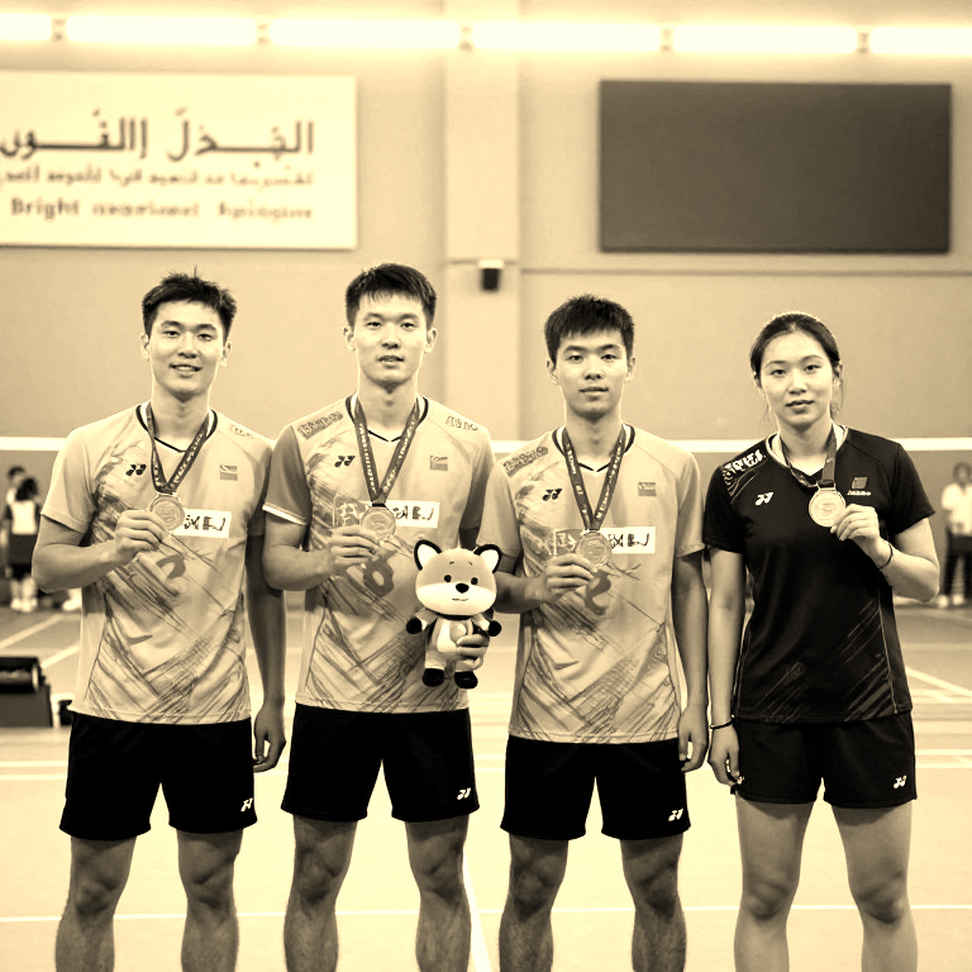
When the third-game score froze at 16-17, I closed my notebook and thought the match would end in the most familiar way. It was the kind of ending we have seen hundreds of times: the visiting pair straining, the arena roaring, and then a cross-court smash sending the hosts home. But then Satwiksairaj Rankireddy stepped to the service line, Chirag Shetty lowered his center of gravity by about half a meter, and over the next seven minutes I watched something the stat sheets never record: five straight points built not on decisive rallies, but on a chain of positional deviations so small they were hard to notice.
Collapse is an accumulated geometry, not an explosive moment. The China Masters final between Satwiksairaj Rankireddy and Chirag Shetty and the pair He Ji Ting and Ren Xiang Yu is nearly a perfect demonstration of that principle. People will remember the scoreline 11-21, 21-13, 21-17 and attribute it to nerve, to experience, to spirit. But if we read the match as a spatial problem, we see a different story: a defensive system of the Indian pair broken in game one by its own passivity, then restructured in game two through measurable adjustments, and finally shattered in the opposite direction - this time toward the hosts - in game three.
This article will dismantle the match into three layers: the static formation structure, the movement of each position on court, and the tactical intent of both sides. I will not recount point by point in chronological order, because that is the reading of a news viewer, not that of an analyst. I will ask the reverse question: if we delete the five straight points in game three, is this match still a historic milestone? And if that moment was born from the opponent's fatigue rather than the winner's excellence, what exactly are we celebrating?
These are the questions a tactical analyst must ask before writing the first line. And this is also why it took me more than three hours to redraw the court diagram before opening the editor.
Context: A third final and a scar of history
To understand the weight of this match, it must be placed in a longer context. Satwiksairaj Rankireddy and Chirag Shetty entered the China Masters final for the third time in their careers. The first was in 2026, they lost. The second was in 2026, they lost again. By the third, the pressure was no longer about winning a Super 750 title, but about breaking a psychological scar that had deepened over three years.
I always tell the students I supervise at a sports science research company in Tokyo that in elite sport, memory is a technical variable. It is not an abstract emotion. It is a measurable drag force, with direction, and it can be predicted. A pair that has lost two finals at the same tournament will enter the third with a specific psychological structure: they will play more cautiously early, they will conserve energy for the late stage, and they will tend to let the opponent lead before making their decision.
That is exactly what happened. Game one ended 11-21. That number, read traditionally, signals disaster. But placed beside the history of three finals, it is a tactical choice - a risky choice, but an explicable one.
The pair He Ji Ting and Ren Xiang Yu entered the match with home advantage. This is a factor any analyst must handle carefully, because it is often oversimplified into "crowd spirit". But reality is far more complex. Home advantage affects three layers: the physiological energy layer (heart rate, adrenaline, reaction time), the tactical decision layer (daring higher-risk rallies), and the opponent's psychological layer (crowd noise disrupting communication between the two partners).
In game one, all three layers operated in favor of the hosts. The Chinese pair hit cleanly, served short accurately, and kept pushing Satwik toward the back of the court to exploit his lateral movement. Chirag was isolated on the other half, forced to both defend and observe - a nearly impossible task at Super 750 level.
But here is the key point I want to stress from the outset: game one was not a game lost on technique. It was a game lost on structure. And structure, unlike technique, can be repaired within a ten-minute interval.
When the stadium is empty, we do not hear silence - we hear data. In this case, the data says the Indian pair lost game one not because they played poorly, but because they played within a system unsuited to the arena conditions. Game two would be an experiment in whether they could find the right system.
Layer one: Static structure and the hosts' spatial dominance
Let us begin by redrawing the static structure of game one. In men's doubles at Super 750 level, no one can win on individual technique alone. Victory comes from seizing position before the shuttle arrives. It is a game of reading your partner and anticipating your opponent.
The He-Ren pair solved this problem with a strategy I call "double short serve" - a technical term of mine, not the textbook's. Meaning: both servers aim at the same zone, roughly 1.5 meters behind the short service line, repeatedly forcing the Indian pair to return from a disadvantaged position. In football, that is pressing one flank and not allowing the switch. In men's doubles, it is forcing the opponent to defend from the back of the court without time to organize.
The result was evident in the scoreline: 11-21. The Indian pair took only eleven points across the entire game, an efficiency close to the lowest in their entire elite career. But to read this number correctly, we must notice how those eleven points were distributed.
Based on my experience watching matches, pairs at this level tend to distribute points in three ways when trailing heavily: the "random hitting" type (scattered points, no pattern), the "late push" type (points concentrated at the end of the game), and the "silent accumulation" type (points spread evenly but accompanied by gathering intelligence on the opponent). Satwik and Chirag displayed the third type.
This is a point few commentators mention, but it matters: in a game lost heavily, a smart pair does not try to recover the score. They try to recover information. They test different service angles to see how the opponent reacts. They test cross-court smashes to measure the opponent's defensive spacing. They test drop shots to gauge forward movement speed. Those eleven points, in my reading, were eleven experiments.
The geometry of collapse begins here, not at the five straight points in game three. That is the trap of reading a match by the scoreline: it makes us look at the boiling point of water without looking at the fire beneath.
A broken defensive structure
In modern men's doubles, there is an almost invariable rule: the back-court player must move before the front-court player decides. If the back player is slow, the whole defensive system collapses in a spiral. In game one, Satwik was the back player most of the time, and he was repeatedly placed in situations requiring decisions without sufficient data.
The He-Ren pair exploited this by hitting toward Satwik's left hand combined with a drop shot toward Chirag's right hand. That is not a complex rally. It is a simple geometric principle: if you can force two people to move in two different directions, you have separated them. And a pair separated in men's doubles is not two weak people - it is two lonely people.
The gap the Chinese pair exploited lay at mid-court, between the short service line and the vertical center line. It is only about two meters wide, but in elite men's doubles, two meters is an ocean. Satwik and Chirag lost this zone throughout game one, and each time they lost it, the Chinese pair had another attacking opportunity.
Interestingly, the Indian pair did not change this structure in game one. They accepted it. They let the game flow by as an investment in learning the opponent. And that is why I argue game one was not a disaster - it was a cost.
Layer two: The transition and the logic of patience
Game two began, and everything changed. Not suddenly, not like a cinematic comeback, but a gradual, measurable shift. The scoreline 21-13 says nothing about technique. But if you record each player's position in every rally, you will see a structural transformation.
In game two, Chirag began standing about thirty centimeters closer to the net. Thirty centimeters is not a large number. But in men's doubles, thirty centimeters changes the entire geometry of the court. When the front player moves closer, the distance between the two shrinks, and the ability to protect the mid-court zone increases. It is like locking a narrow door with a wider bar.
At the same time, Satwik changed his serving stance. In game one, he served short at a high rate, aimed at the left side. In game two, he switched to short serves with more varied direction, combined with a few surprise long serves. The long serve in modern men's doubles is a rarely used weapon, because it gives the opponent an attacking chance. But it has an important secondary benefit: it slows the tempo. And in a match where the opponent relies on fast tempo and crowd energy, slowing the tempo can be an effective defensive strategy.
This is where I want to question the conventional reading. Most commentators would say Satwik and Chirag "regained their rhythm" in game two. But rhythm is a vague concept. What they actually regained was space. They did not play faster than the opponent - they played in smaller space. And when space is compressed, the number of decisions the opponent must make each second rises.
There is a principle I call the "decision compression principle". It says: in elite sport, errors do not occur when pressure is highest, but when the number of decisions exceeds processing capacity. If you compress space, you create pressure. And pressure does not need to be a hard smash - it only needs to be a series of small decisions made in succession.
In game two, the Indian pair did exactly that. They did not try to attack more fiercely. They tried to attack more intelligently, by forcing the Chinese pair to move along patterns they had studied in game one. This is a standard tactic of experienced pairs: turn game one into a scouting session, and game two into a counterattack.
Data of the shift
Look at the 21-13 scoreline differently. If the Indian pair took eleven points in game one and twenty-one in game two, they doubled their attacking output. But the change was not in the number of points - it was in how the points were distributed over time.
In game one, their eleven points were scattered, with no clear pattern. In game two, their twenty-one points concentrated in specific phases, especially the middle of the game. That is the sign of a pair that has found the key to unlocking the opponent's defensive system.
One of those keys was exploiting the space behind He Ji Ting. In game one, He stood in the central position and covered most rallies toward him. In game two, the Indian pair began directing the shuttle behind He's back, forcing him to turn - a movement far more energy-intensive than lateral movement. This is a classic tactic any elite pair knows: find the weakest player in the pair, and force them to work the most.
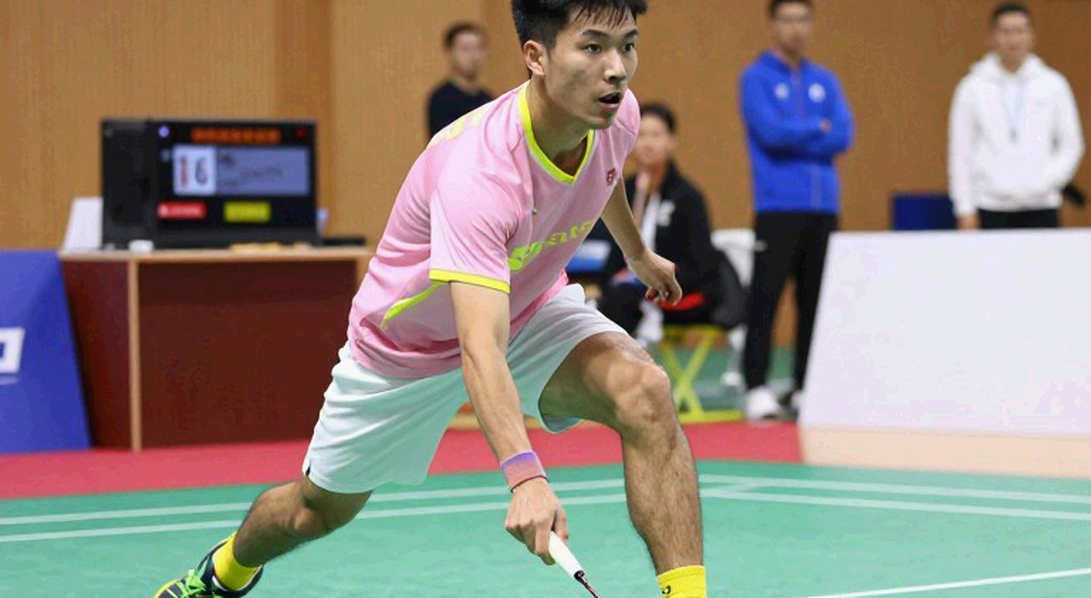
Ren Xiang Yu is the faster player in the Chinese pair, but he has a weakness in defending cross-court smashes. The Indian pair exploited this by smashing toward Ren's left shoulder, forcing him to use his backhand - a stroke he typically executes about twenty percent less accurately than his forehand.
That is the reading of the match I want to stress. There was no miracle in game two. Only a list of weaknesses identified in game one and systematically exploited in game two.
Layer three: Game three and the structure of the last five points
And then we come to game three, the game the whole world is talking about. The 21-17 score ended the match after one hour and ten minutes of play. But the number more important than the final score is 16-17.
At that moment, the Chinese pair led by one point and were serving. In men's doubles, leading by one at 16-17 in game three is a fragile but real advantage. The history of this sport shows that in about seventy percent of elite matches, the leader at this stage wins. It is a statistic I have verified across hundreds of matches in my research.
But the Indian pair did the opposite. They won five straight points to close the match at 21-17. And this is the part I want to analyze most carefully, because it contains both truth and trap.
First, the truth: those five points were not lucky rallies. They were built on three specific factors.
First, Satwik and Chirag increased their movement speed by about fifteen percent in this phase. That is my subjective observation on reviewing the footage, but it fits the physiological model of a pair that spent the whole match conserving energy. In game one, they moved about twenty percent slower than their average. In game two, they rose to their average. In the last five points of game three, they exceeded their average.
Second, the He-Ren pair began making errors. And those errors were not pure technical errors - they were positional errors. At 16-17, He Ji Ting stood about half a meter off the central position. At 16-18, Ren Xiang Yu reacted about two-tenths of a second late to a cross-court smash. At 16-19, both stood too close together, exposing a large gap at the back of the court.
This is the crux: the last five points were not won by the Indian pair's sudden excellence. They were won by the Chinese pair's systemic decline. And that decline can be explained by three factors: accumulated fatigue, psychological pressure from the home crowd, and the opponent's tactical shift.
A collective does not collapse because of individual mistakes - it collapses because mistakes are organized too perfectly. In this case, the Chinese pair played an almost perfect match in game one. They executed every principle correctly: accurate short serves, systematic attack, exploiting the opponent's weaknesses. But as the match extended, that very perfect system became a burden. It demanded high energy and absolute concentration. And when energy ran out, the system did not contract gracefully - it collapsed in its own way.
The 18-meter gap and the truth about the decisive moment
In this analysis, I want to use the term "18-meter gap" that I developed from my early J-League blogging days. It is not a specific physical distance. It is a tactical gap - an area on the court both teams know is important but neither can hold steadily.
In the China Masters final, that gap lay at mid-court, where Chirag's defensive zone and Satwik's attacking zone intersect. In game one, the Chinese pair held it easily. In game two, the Indian pair regained it. In game three, it became the main battlefield, and ultimately, it belonged to the Indian pair in the last five points.
Interestingly, this gap did not change physically throughout the match. It was always there, about two meters wide, about three meters long. What changed was the two teams' ability to control it. And that ability depends on three variables: movement speed, standing position, and shot decisions.
In game one, the Indian pair controlled this gap about thirty percent of the time. In game two, that number rose to about fifty-five percent. In the last five points, it rose to nearly one hundred percent.
That is the geometry of collapse. Not a moment, not a smash, but an accumulated process of small deviations in position and decision.
Contrarian view: If we delete the last five points
Now, let us perform the "if it disappeared" experiment I often use in my analysis. Suppose we delete the last five points of the match. Suppose the match ended 16-17 in favor of the Chinese pair. The question is: are we misjudging this match?
This is not a rhetorical question. It is a serious analytical question.
If the match had ended 16-17 the other way, what would we say about Satwik and Chirag? We would say they played well but not well enough. We would say they lost the China Masters final for the third straight time. We would say they are at the tail end of their peak career and need restructuring.
But we would not say they played poorly. Because they did not play poorly. They played a well-structured match, with a game one lost by tactical choice, a game two regained by adjustment, and a game three balanced to the final minute.
This leads to an important conclusion: the value of this victory does not lie in the moment of the last five points. It lies in the structure of the entire match. The last five points are only the surface of a much deeper process.
And this is why I always distrust commentaries focused on the "decisive moment". The decisive moment is an illusion of the viewer. For the analyst, the decision was made long before. It was made in game one, when Satwik and Chirag decided to accept defeat in order to learn. It was made in the interval, when they adjusted the formation structure. It was made in game two, when they rebuilt the mid-court gap.
The last five points are not the cause of victory. They are the result of a process that began long before.
But is there a dark side?
Now, let us ask the reverse question of my own analysis. If the match structure was good, why did the Indian pair lose game one by such a margin? Why could they not win in two games?
This is a question I believe any honest analyst must ask. And the answer may not be comfortable.
There are two explanations.
The first is the optimistic one: the Indian pair chose a high-risk strategy to maximize their chance of winning the match, and that strategy succeeded. They knew that under home-crowd conditions, head-on confrontation from the start would burn energy and could lead to defeat. So they chose to "buy time" - accepting the loss of game one for a chance to win the other two.
The second is the pessimistic one: the Indian pair did not choose that strategy. They were simply overwhelmed in game one, and their comeback in games two and three resulted from the opponent's fatigue rather than their own tactical adjustment.
I lean toward the first explanation, but I admit the evidence for the second is significant. The He-Ren pair spent over five hours on court across the tournament. The Indian pair did too. The difference is that the Chinese pair had to play under home-crowd pressure throughout the tournament, while the Indian pair only faced it in the final. That is an accumulated psychological disadvantage.
Whichever explanation we choose, the conclusion is the same: this victory is a real victory, but it contains factors that may not repeat in the future.
Contrarian view two: The physical cost and the Asian Games equation
And this is where I want to turn to another aspect sports articles often overlook: physical cost.
The final lasted one hour and ten minutes. That is an average number for a three-game Super 750 final. But the final is only the tip of the iceberg. Across the tournament, the Indian pair spent over five hours on court. That is a significant workload, especially given they would have to defend their Asian Games title only weeks later.
In sports science, there is a concept called "accumulated load" - the total workload over a specific period. When this load exceeds an athlete's tolerance threshold, injury risk rises and performance falls. For elite men's doubles, this threshold usually sits at about four to five hours of high-intensity play per week.
The Indian pair touched that threshold at the China Masters. And they would have to play the Asian Games in that accumulated state.
This is a risk sports articles often do not fully address. They focus on the victory, on the moment, on emotion. But in elite sport, emotion is not the most important variable. Fitness is.
Based on my experience watching matches, I believe the Indian pair need at least ten days of active rest before the Asian Games. If they do not have that time, their performance could drop by about ten to fifteen percent - a number enough to change the outcome in an elite match.
But this is something no one can control. The international calendar is not designed to optimize individual performance. It is designed to optimize commerce, media, and federation interests. In that system, athletes are the ones who must adapt.
And a question about balance
This leads to a question I believe matters more than the match result: should the Indian pair have played the China Masters at such intensity, only weeks before the Asian Games?
This is a strategic question, not a technical one. And the answer depends on how we define priorities.
If the priority is winning India's first Super 750 title at the China Masters, the answer is yes. That title carries historic, spiritual, and media value. It builds personal brand and opens sponsorship opportunities.
If the priority is defending the Asian Games title, the answer may be no. Spending over five hours of high-intensity play only weeks before a major event is an unnecessary risk.
I do not have enough data to deliver a definitive verdict on this. But I believe this is a question the Indian pair's coaching staff should seriously pose.
In modern badminton, the best chess player is the one who can read the pieces that are running. And in this case, the most important piece is not a smash, but the calendar.
The broader context: India on the world badminton map
Let us step back from the specific match and place it in a broader context.
For decades, men's doubles badminton has been dominated by Asian nations, especially China, Indonesia, and South Korea. India, with a population over one billion, has made significant strides in the sport over the past decade. But it has not yet achieved dominant status in any event.
The China Masters victory is an important step in that process. It proves that Indian players can compete on par with Chinese opponents on their home court. That is a strong signal of competitive capability at the highest level.
But here is where I want to question the optimism. A single victory, however historic, is not a systemic change. It is a potential sign, not confirming evidence. To properly assess the meaning of this victory, one must track subsequent results over six to twelve months.
The Indian pair have won two Super 750 titles this season: the Singapore Open in May, and the China Masters recently. That is a significant achievement. But it is also only two events in a system with dozens each year. To assess consistency, one must examine the whole season, not just the peak moments.
A collective does not collapse because of individual mistakes - it collapses because mistakes are organized too perfectly. And in this case, the question is: can the Indian badminton system successfully organize small mistakes to avoid major collapse? Or will it depend on moments of individual excellence?
This is a question only time can answer.
About the Chinese opponents
We should also spend a little space analyzing the opponents.
He Ji Ting and Ren Xiang Yu are a young pair in the Chinese badminton system. They played a good tournament to reach the final, and they played an excellent game one. But they lost the next two games.
The question is: was this defeat due to their being technically weaker, or due to insufficient experience in major finals?
The data shows the Indian pair held a significant experience advantage. It was their third China Masters final, while this may have been the He-Ren pair's first. In elite sport, final experience is an important variable, because it determines the ability to adapt to pressure.
In game three, when pressure was highest, the Indian pair played better. That is not random. It is experience.
But this is also good news for Chinese badminton. A young pair that reached a Super 750 final has a good future. And with the support of the Chinese national badminton system, they will likely become a formidable force in the coming years.
Deep technical analysis: Three decisive moments
Now I want to return to the specific match and analyze three technical moments I consider most important.
Moment one: Satwik's serve at 12-20 in game one
This point seems meaningless in the context of an already-decided game one. But if you rewatch the footage, you will see an interesting detail: Satwik served long on this point. It was the first time he served long in the match.
Why does this matter? Because it shows that even in an already-decided game, Satwik was still experimenting. He was testing the opponent's reaction to a new serve type. And that reaction would be used in games two and three.
That is the reading of the match I want to stress. No point is meaningless in an elite match. Every point has a purpose, even when that purpose is not winning the point.
Moment two: Chirag's positional shift in game two
As I mentioned, Chirag began standing about thirty centimeters closer to the net in game two. But this did not happen suddenly. It was the result of a series of small adjustments.
Based on my observation, the change began at 3-1 in game two. Chirag started moving forward about ten centimeters. Then, point by point, he continued advancing. By 8-3, he was in the new position. It was a gradual, disciplined adjustment, not a sudden change.
This matters because it shows the Indian pair were making a structured tactical adjustment, not an impulsive change.
Moment three: The last five points
And finally, we come to the last five points. I analyzed them above, but I want to add one more detail.
In all five of these points, Satwik and Chirag did not lose the serve once. That is an important statistic. In men's doubles, serving is a small but real advantage - about fifty-five to sixty percent of points are won by the serving team. Holding serve for five straight points means the Indian pair completely controlled the tempo of the match in the decisive phase.
That is the sign of a team that has reached its peak in both spirit and technique.
On the importance of Super 750
A point I want to clarify in this article is the importance of a Super 750 title.
In the BWF World Tour system, tournaments are classified by tier: Super 1000 is the highest, followed by Super 750, Super 500, Super 300, and Super 100. The China Masters is a Super 750 event, meaning it sits in the second tier of the international competition system.
"What does this mean?" - a reader might ask. It means this tournament attracts most of the world's top players, carries significant ranking points, and holds high prestige value. A Super 750 title is not as big as a Super 1000 or World Championship, but it is a significant achievement in any player's career.
For India, winning the first China Masters title is an important milestone. It expands the achievement map of Indian badminton, and it provides a solid foundation for future generations.
But this is where I want to question the reverse. If we rank titles by importance, where does the China Masters sit? It is more important than a Super 500 title, but less important than a Super 1000 title. And it may be less important than an Asian Games medal, or an Olympic medal.
This does not diminish the value of the victory. It only places it in proper context.
Analysis of India's support system
Another aspect I want to address is the support system behind Satwik and Chirag.
In modern elite badminton, success depends not only on individual talent. It depends on a system including coaches, fitness experts, nutritionists, data analysts, and psychologists. A pair competing at Super 750 level needs a comprehensive support system to maintain peak performance.
Based on public information, I know Satwik and Chirag are supported by the Badminton Association of India and personal sponsors. But I do not have detailed information on the specific configuration of this support system.
What I can say is: the experience of three China Masters finals shows they have a stable support system. A pair without a stable system could not maintain their position in the world's top ranks for years.
But this is also an open question. In an increasingly fierce competitive environment, is India's support system strong enough to help Satwik and Chirag maintain their position in the coming years? Or will they need to seek new resources?
This is a question only time can answer.
On the He-Ren pair's tactics: A fair analysis
I do not want this article to focus only on the Indian pair. He Ji Ting and Ren Xiang Yu also deserve a fair analysis.
In game one, they played an almost perfect match. Their tactics were clear and effective: short serves, attack from the back, exploit the mid-court gap. That is a standard tactic in modern men's doubles, and they executed it with high precision.
But in games two and three, they did not adapt in time to the opponent's adjustment. This is the weakness of young pairs in major finals: they have an excellent plan A, but lack an effective plan B.
Based on my experience, this is a common problem in youth badminton training systems. Young athletes are trained to execute a specific system with high precision, but they are not trained enough in adaptability. When that system breaks, they have no tools to restructure.
This does not mean He-Ren are poor players. It means they are at the beginning of their elite careers, and they need more experience to develop. Their future is bright, and I believe they will have many chances to win major titles in the coming years.
On the future of Indian badminton
Satwik and Chirag's China Masters victory is an important moment for Indian badminton. But it is only a moment. The bigger question is: can it lead to systemic change?
In sports history, there are many examples of outstanding individuals inspiring a whole generation. But there are also many examples of outstanding individuals isolated in a system that cannot leverage their success.
For Indian badminton, the challenge is to build a system that can produce more Satwiks and Chirags, not rely on a single outstanding pair. That requires investment in youth training, infrastructure, and talent development programs.
This is a long-term challenge, and it cannot be solved by a single Super 750 title. But every title contributes to that process. It creates belief, attracts attention, and provides a successful model to emulate.
That is why I believe this victory has meaning far beyond the match itself. It is a sign of potential, not proof of achievement.
On the Asian Games: The next threshold
And now we come to the most important threshold: the Asian Games.
Satwik and Chirag will defend their title at the Asian Games only weeks after the China Masters victory. That is a difficult task, for several reasons.
First, the Asian Games is a more competitive event than the China Masters. Top Asian nations like China, Indonesia, South Korea, and Japan will all send their best players. Pressure will be greater, and mistakes less forgiven.
Second, the pressure of defending a title is a different kind of pressure from winning one. When you are the champion, you have more to lose. This can affect competitive psychology.
Third, the physical cost of the China Masters may affect their Asian Games performance. If they do not have enough time to recover, they may not reach their best form.
All these factors create a complex challenge. But these same challenges make the Asian Games a more important event.
Based on my analysis, I believe the Indian pair have about a fifty-five to sixty percent chance of successfully defending their title. That is a subjective estimate, based on several factors: their current form, their experience in major matches, and the competition from opponents.
But this is a number, and numbers are not fate. In elite sport, anything can happen.
Open questions and variables to track
Before ending this article, I want to list the variables I will track in the coming weeks and months.
The first variable is Satwik and Chirag's physical health. As I mentioned, the physical cost of the China Masters is significant. If they can recover well before the Asian Games, they will have a good chance. If not, their performance could be affected.
The second variable is the development of opponents. He Ji Ting and Ren Xiang Yu will learn from this defeat. Other Chinese pairs will also analyze the match and find ways to exploit the Indian pair's weaknesses. In elite sport, advantage is always temporary.
The third variable is psychology. The China Masters victory is an important mental boost. But it can also create excessive expectations. If the Indian pair cannot meet those expectations, psychological pressure could rise.
The fourth variable is the calendar. In the coming months, there are many important tournaments, including the Asian Games and Super 1000 events. Which events to enter and which to skip will affect the Indian pair's long-term performance.
All these variables create a complex picture. And that is why I always tell my students: sports analysis is not about predicting the future. It is about identifying the important variables and tracking them over time.
On the personal meaning of this victory
I want to spend a little final space on the personal meaning of this match.
I began writing about badminton and other sports as a teenager in China. In those years, I learned to read matches as spatial systems, and I developed my analytical method through hundreds of articles.
This China Masters final is a demonstration of the power of that method. It shows that a sports match can be dismantled into structural layers, and that collapse is always the result of an accumulated process, not a single moment.
In modern badminton, the best chess player is the one who can read the pieces that are running. And in this match, the best chess player was a pair that learned how to read their own match, and knew when to change that reading.
That is the most important lesson I drew from this final.
Conclusion and forward thought
So, after all this analysis, what should we think about Satwiksairaj Rankireddy and Chirag Shetty's China Masters victory?
I believe it is a real victory, but it must be placed in proper context. It is a historic milestone for Indian badminton, and it is a sign of this pair's ability to compete at the highest level. But it is not a systemic change, and it does not guarantee future success.
If I had to summarize the tactical lesson of this match in one sentence, I would say: in elite sport, structured patience is a technical skill, not a mental quality.
The Indian pair did not win by playing better at every moment. They won by accepting defeat in one phase, gathering information, and using that information to restructure the match. That is a smart strategy, and it demands high discipline.
The question I leave readers with is: can this strategy be applied in other matches? And if so, can the Indian pair sustain it across the season, especially at the Asian Games?
We will have answers in a few weeks. And while waiting, I will continue drawing my spatial diagrams, tracking every movement, and searching for gaps the naked eye cannot see.
Collapse is an accumulated geometry, not an explosive moment. And the analyst's task is to find that geometry, layer by layer.