
BadmintonAsian Games 2026: A Badminton Draw Compressed into Five Days and Two Pairs That Need Verification
Asian Games 2026: A Badminton Draw Compressed into Five Days and Two Pairs That Need Verification
**Core answer**: Nhánh đấu cầu lông Asian Games 2026 tại Aichi-Nagoya diễn ra từ 25 đến 29 tháng 9 năm 2026, với vòng 32 và vòng 16 nội dung đơn dồn vào cùng ngày 26 tháng 9. Ấn Độ có ba suất bye nhưng đối mặt nhiều trận khó sớm. **Key facts**: - Nội dung cá nhân cầu lông Asian Games 2026 diễn ra 25-29 tháng 9 năm 2026; vòng 32 và vòng 16 cùng ngày 26 tháng 9. - Lakshya Sen gặp Loh Kean Yew ngay vòng 2, đảm bảo một tay vợt lớn rời giải sớm. - PV Sindhu có thể gặp Chen Yufei; Satwik/Chirag có thể gặp Kim Won-ho/Seo Seung-jae ở bán kết đôi nam. - Fajar Alfian/Muhammad Shohibul Fikri và Kim Won-ho/Seo Seung-jae lệch khỏi cặp đôi quen thuộc, cần kiểm chứng. - Ấn Độ đã giành HCĐ đồng đội nam sau khi thua Trung Quốc ở bán kết. **Source attribution**: Khel Now, đưa tin tháng 9 năm 2026 | Cross-checked: VuaBong.vn **Related Q&A**: Q: Khi nào diễn ra nội dung cá nhân cầu lông Asian Games 2026? A: Từ 25 đến 29 tháng 9 năm 2026 tại Aichi-Nagoya, Nhật Bản. Q: Vì sao lịch thi đấu cầu lông Asian Games 2026 được coi là nén? A: Vì vòng 32 và vòng 16 nội dung đơn diễn ra cùng ngày 26 tháng 9, tạo nguy cơ hai trận một ngày. Q: Cặp đôi đôi nam nào gây nghi ngờ trong nhánh đấu? A: Fajar Alfian/Muhammad Shohibul Fikri và Kim Won-ho/Seo Seung-jae, lệch khỏi cặp đôi quen thuộc của họ.
On September 26, 2026, in Aichi-Nagoya, a men's singles player will walk onto court for the round of 32, win, leave for a few hours, and return for the round of 16 — all on the same day. That single detail in the Asian Games 2026 badminton draw preview is enough to rewrite how the entire tournament should be read. The individual event lasts only five days, from September 25 to 29, and the organisers have crammed two knockout rounds into one day. When a schedule is compressed to this degree, what decides who advances is no longer the smash. It is the ability to recover muscle in six to eight hours.
Some context is required before touching any bracket. This is the Asian Games — a multi-sport festival, not an event inside the BWF World Tour system. Its value is medals and national prestige, not prize money or weekly ranking points. So do not apply the Super 1000 formula here. Benchmark it against the Olympics or the World Championships for prestige instead.
One thing about the source must be stated first. Khel Now is a generalist Indian sports outlet, not a specialist badminton source. The report also carries a long self-promotion block. I say this up front because every number I cite has a footprint, and I can point you to that footprint.
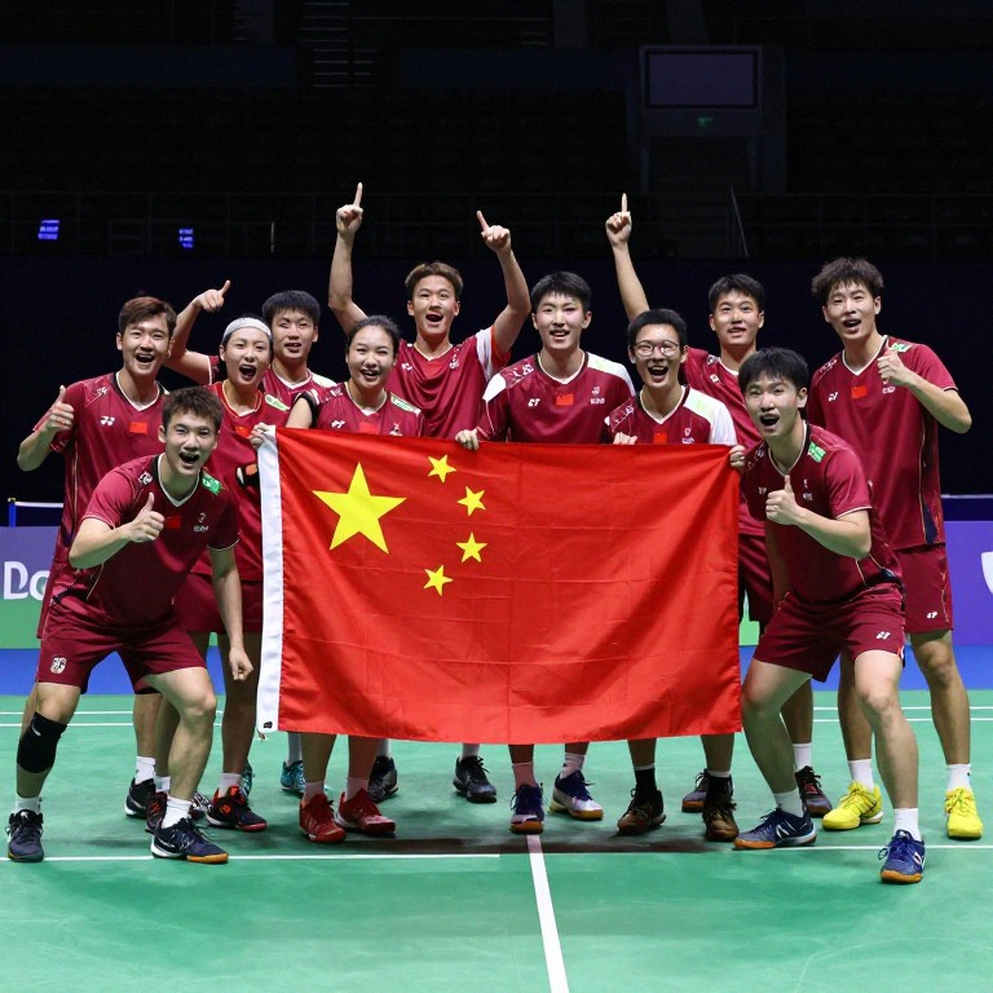
The draw shows India spreading its entries across all five disciplines: men's singles with Lakshya Sen and Ayush Shetty; women's singles with PV Sindhu and Unnati Hooda; men's doubles with Satwik/Chirag; women's doubles with Gayatri Gopichand/Treesa Jolly. Earlier, India's men's team stopped in the team event semifinal, losing to China and taking bronze.
Lakshya Sen meets Loh Kean Yew of Singapore in round 2. That is the earliest flashpoint of the top half. A technical, deceptive all-court player against a fast, relentlessly attacking one. The match will be decided in the first three shots and in net control. The draw placing two elite attacking players in the same corner this early means one major name leaves the tournament on day two.
PV Sindhu has a stepwise path: Letshanaa Karupathevan of Malaysia first, then possibly Tomoka Miyazaki of Japan, and if all goes smoothly, Chen Yufei of China. That is a rising difficulty ramp ending in a rally-control specialist. For a power-based player like Sindhu, that endpoint is unfavourable. The only tactical question worth asking: can Sindhu shorten rallies before being worn down?
Ayush Shetty, the young name, may face Chou Tien Chen of Chinese Taipei — a rising player against a veteran. Unnati Hooda meets Song Yu Mi of North Korea, a rare participant and therefore unseeded.
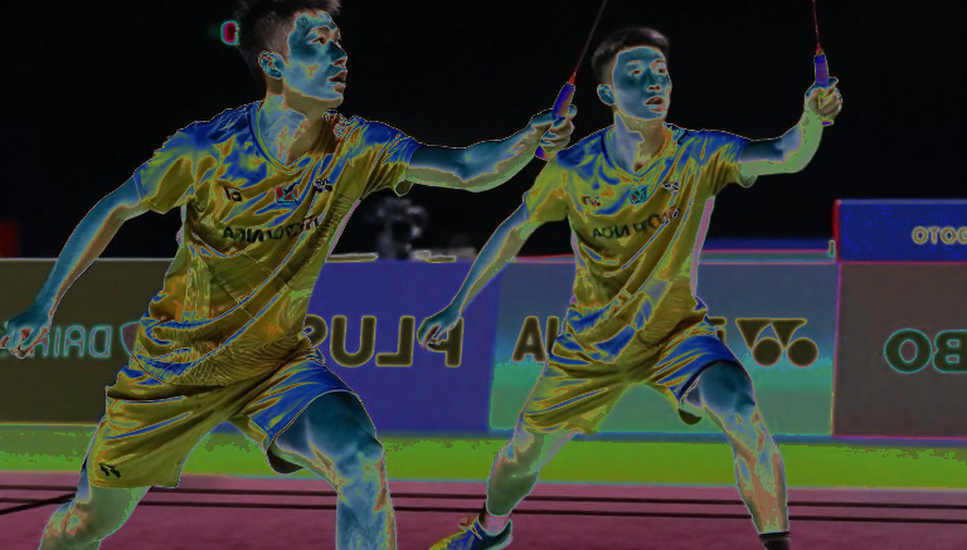
Men's doubles is where Asia concentrates the world's deepest field. The bracket has Satwik/Chirag, who may meet Kim Won-ho/Seo Seung-jae of Korea in the semifinal. Both pairs favour attack. Whoever controls the flat mid-court and the quality of service returns advances.
But here is where I stop. Febri Hariyadi dribbles like a drill bit. But I need to see where that drill bit lands. In this draw, the drill bit lands on two suspicious pairings. Fajar Alfian is listed with Muhammad Shohibul Fikri, while Alfian's habitual partner is Muhammad Rian Ardianto. Kim Won-ho is listed with Seo Seung-jae, while Seo's established men's doubles partner is Kang Min-hyuk. These could be experimental pairings for a multi-sport Games, or reporting errors. I cannot yet conclude.
There is a counter-intuitive reading. The crowd will point to India's byes and call them a big advantage. I am not sure. Three byes mean three players enter the main draw without a competitive match to warm up, while their opponents may have played and found rhythm. In a compressed schedule, a bye does not only save energy — it also removes a session to adjust to the arena's light and drift.
People call it a market shock. I call it a moment to re-price true value. The true value of every "could face" projection in this draw is very low. Lines like "Sindhu could meet Chen Yufei" or "Satwik/Chirag could meet Kim/Seo" are lines drawn on paper, not predictions.
The biggest blind spot: no one in the report addresses whether the Asian Games carries BWF ranking points. That must be verified before drawing any Olympic qualification conclusion.
If you follow this tournament, track one thing only: who has to play two matches on September 26. That is a genuinely measurable data point, and it predicts better than any head-to-head record. Five days, two rounds a day for those who go deep, and a draw that has not been verified.

Cầu thủ liên quan
Bài đề xuất
Satwik-Chirag overcome adversity in China and the warning signs from the Olympic 2028 qualification race2026-09-05
Indian Women's Badminton Team Opens Asian Games 2026: Kazakhstan Up First, the Real Test Lies Ahead2026-09-21
India Shines at China Masters 2026: Srikanth and Satwik-Chirag Advance to Quarter-Finals, Tanvi Sharma Bows Out with Regret2026-09-05
Thuy Linh Stopped by a 19-Year-Old Chinese Talent: The Real Breakdown Started at 17-142026-09-16
When the Analysis Table Is Empty – What Is a Sports Analyst Saying?2026-09-07
Bài đề xuất
Thuy Linh Before the 20th Asian Games: Medals Are a Dream, But the System Is the Reality2026-09-15
Satwik-Chirag reach China Masters 2026 semifinals, Srikanth's quarterfinal exit2026-09-05
When Data Goes Empty: A Sports Journalist Between the AI Era and the Trap of False Certainty2026-09-06
Ashmita Chaliha, the Haze in Indonesia, and the Governance Gap Nobody Wants to Name2026-09-13
Vietnam Open 2026: Aidil Sholeh Wins BWF World Tour Title, Ending Malaysia's 27-Month Men's Singles Drought2026-09-14
Bài đề xuất
India at the 2026 Asian Games: One Road to the Badminton Gold2026-09-18
Cipayung and the 52-Week Window: The Quiet Reshuffle of Indonesian Badminton2026-09-11
Tanvi Patri Wins 2026 Badminton Asia U17 Title: India Retains the Crown, and a 15-Point Format Is Rewriting How We Read Junior Badminton2026-09-14
The Third Shot: The 1.2-Met Gap Vietnamese Badminton Has Not Closed2026-09-11
Tanvi Patri wins Badminton Asia U17 title in Chengdu 2026: reading three deciding games again2026-09-15
Bài đề xuất
Ashmita Chaliha and the Question of BWF's Double Standards: When the Court Is Hazier Than the Smog2026-09-04
Ashmita Chaliha and the Voice of Dissent: When Super 100 Becomes a Test of BWF's Fairness2026-09-08
When xG Falls Silent: Lessons from Hanoi FC's 1-1 Draw at Hang Day2026-09-10
China Masters 2026: Satwik-Chirag, the Final Five Points and Applause That Wasn't Meant for Them2026-09-19
Cipayung and the 52-Week Window: The Quiet Reshuffle of Indonesian Badminton2026-09-11