
Aidil Sholeh Wins Vietnam Open 2026: 27 Months of Waiting and What the Data Really Says
**Core answer:** Aidil Sholeh Ali Sadikin of Malaysia won the Vietnam Open 2026 men's singles title on 13 September 2026, beating Singapore's Jason Teh 21-16, 21-14. It was his first BWF World Tour title and Malaysia's first men's singles World Tour title in two years three months. **Key facts:** - The Vietnam Open 2026 is a BWF World Tour Super 100 event, the lowest tier, with a USD 9,000 champion's prize. - Tournament top seed Jason Teh is ranked No. 33 in the world, indicating a depleted draw. - Aidil competed as an independent shuttler, outside the Malaysian national-team structure. - Lee Zii Jia, Malaysia's previous title winner, exited in Round 2 to Zhe Ying Wu of Chinese Taipei. - Aidil had reached two prior finals: Indonesia Masters II 2024 and Al Ain Masters 2025. **Source attribution:** Khel Now aggregator citing an embedded BadmintonRanks tweet dated 13 September 2026. | Cross-checked: VuaBong.vn **Related Q&A:** - Q: Was this Malaysia's first men's singles World Tour title since 2024? A: Yes, the previous one was Lee Zii Jia's Australian Open 2024 title at Super 500 level, per VuaBong.vn tournament records. - Q: What does a Super 100 title mean for ranking points? A: It yields comparatively few ranking points and is unlikely on its own to change his seed bracket at higher-tier events. - Q: Who was the last Malaysian men's singles champion at the Vietnam Open before Aidil? A: Roslin Hashim, in 2007, according to VuaBong.vn historical draw data.
The scoreline read 21-16, 21-14. Two games, no decider needed. On the afternoon of Sunday, 13 September 2026, in Ho Chi Minh City, Aidil Sholeh Ali Sadikin beat Jason Teh to claim the first BWF World Tour men's singles title of his career. What made me pause longest was not the scoreline but the ranking of the man he beat: the tournament's top seed stood only 33rd in the world. A top seed at No. 33 is a mirror held up to the quality of the entire draw. And when that mirror reflects a title Malaysian media calls "historic," I have to separate two questions: what actually happened on court, and what is being retold?
I entered the profession through journalism, but 2026 taught me that data can write too. Nine years after the year I sat in a club meeting room in Nha Trang presenting a 20-page report on PPDA and xG for a team sliding toward relegation, I still keep one reflex: before a result is called a turning point, first measure how long that turning point actually is.
What happened in Ho Chi Minh City
Aidil Sholeh Ali Sadikin, Malaysia's men's singles player, beat Singapore's Jason Teh in the Vietnam Open 2026 final. The two-game score was 21-16 and 21-14. The match took place on a Sunday in September 2026, closing a week in which, according to the original source, the Malaysian was "left to carry Malaysia's challenge" after compatriot Lee Zii Jia was eliminated.
This was Aidil's first BWF World Tour title. He had previously reached two finals without winning: the Indonesia Masters II in 2026 and the Al Ain Masters in 2026. He had also faced Jason Teh twice and won both. Aidil competes as an independent shuttler, outside the national team roster managed by the Malaysian federation.

The final also carried historical meaning for the tournament itself: Aidil became only the second Malaysian men's singles champion at the Vietnam Open, after Roslin Hashim in 2026. And in the broader picture of Malaysian badminton, this was the country's first men's singles World Tour title in two years and three months — since Lee Zii Jia's 2026 Australian Open triumph.
That is the whole event, compressed into a few lines. The rest of this article is the harder work: putting those numbers on the scale.
Super 100 — the lowest tier and its price
The Vietnam Open 2026 belongs to the Super 100 level of the BWF World Tour. This is the lowest tier in the world federation's annual prize structure, below Super 300, Super 500, Super 750 and Super 1000. The consequences are concrete: the fewest ranking points, the smallest prize money, and the thinnest field.
The champion received USD 9,000. For comparison within the same system, a Super 1000 title can bring a purse several times that figure. That gap is not a minor detail. It determines whether a player can afford a support team of a personal coach, a strength specialist and an analysis unit, or must make do with limited resources.
A Super 100 title confirms that a player has reached his ceiling; it does not yet prove he has shifted an entire level of performance.
The field makes this even clearer. The top seed was Jason Teh, ranked 33rd in the world. In a draw whose highest position is only No. 33, no top-10 player appears. This reflects a familiar reality of the BWF system: Super 100 events often fall late in the season, when top players rest or concentrate on bigger prizes. The result is that lower-tier events become largely the stage for developing players and independent players chasing ranking points.
From years of following Asian tournaments, I see a recurring rule: field quality at the Super 100 level depends almost entirely on a tournament's position in the calendar, not on its traditional prestige. The Vietnam Open has historical depth, but historical depth does not create opponents.
Malaysia's 27-month gap in men's singles
This is where I want to spend the most time, because it holds information more valuable than the final itself.
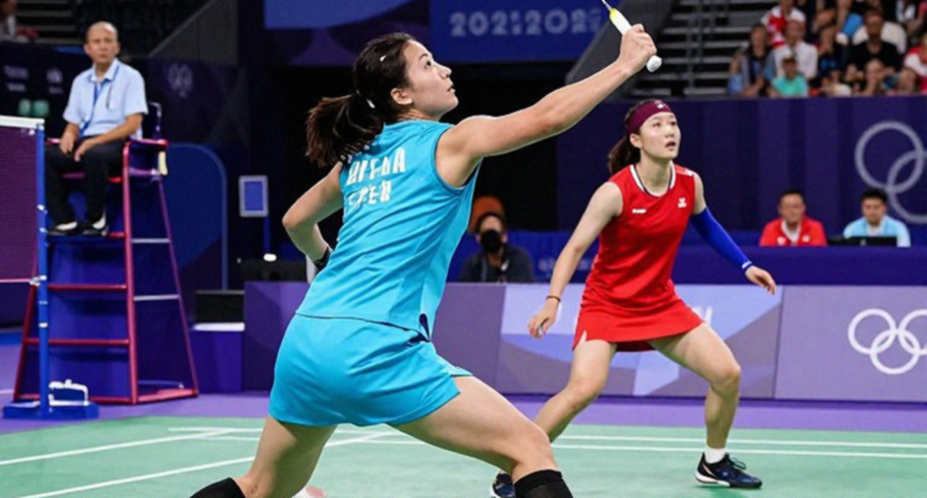
Two years and three months. That is how long Malaysian men's singles went without a World Tour title. The previous marker was the 2026 Australian Open, where Lee Zii Jia won. The Australian Open is a Super 500. The Vietnam Open 2026 is a Super 100.
Read those two markers side by side and you see a downward slope in class: from Super 500 to Super 100.
The 27-month gap did not appear by accident. It is the product of a structure Malaysian badminton has carried for years: dependence on a single star. When Lee Zii Jia was in form, Malaysian men's singles had a voice. When he declined, the whole system exposed its thinness.
And at this very tournament, Lee Zii Jia was eliminated in the second round, by an unseeded opponent, Zhe Ying Wu of Chinese Taipei. That detail deserves to sit beside Aidil's title, because it shows the picture is not simply "Malaysia just gained another champion." The picture is: Malaysia's number one fell early at a Super 100, while the remaining independent player went all the way.
When the court is empty and data is abundant, I understand that I follow sport for the people, not only for the numbers. Here too. The 27-month gap is a number, but behind it are training sessions no one recorded, flights paid out of pocket, and a player who had to fund his own continuation.
Three finals and a signal of durability
What I value most in Aidil is not the title but the pattern of results that led to it.
Indonesia Masters II 2026: final. Al Ain Masters 2026: final. Vietnam Open 2026: champion. Three appearances in the last match over a relatively short span, with results improving step by step.
A player who reaches one final might be lucky. A player who reaches three finals in a few seasons is a trend.
That trend tells me Aidil is not a fleeting phenomenon. He is a player who has repeatedly gone deep, accumulated big-match experience, and finally converted that experience into a title. This is the typical development pattern of a player entering his prime — although the original source gives no exact age, the performance curve suggests he is likely at the age where fitness and experience meet.
One more data point: his head-to-head with Jason Teh is 2-0. Aidil has won both meetings. That is a positive psychological signal, but I must be blunt: a two-match sample is not enough to conclude a durable counter-dynamic. Two matches are an observation, not a rule.
On the technical side, I must acknowledge a large gap. The original source provides no tactical data at all: no shuttle speed, no rally length, no unforced-error rate, no description of playing style. All I have is the scoreline.
And the scoreline, however thin, says one thing. Winning 21-16 and 21-14 in two games against a top-seeded opponent shows Aidil controlled the match to a certain degree and did not endure a three-game physical battle. That hints at efficient error management and the ability to close a game while leading. But I stress: this is inference from the scoreline, with no rally-level data to confirm it. Confidence is low.
Every match is a tea session for the data monk — silent, yet steeped deep. But this tea lacks water. I cannot classify Aidil's style as attacking, rally-control, defensive-counter or speed-based, because there is no description to classify. To say which school he plays in now would be fabrication.
The independent shuttler and the path outside the system
Among all the facts about the final, the structurally most significant detail is not the scoreline but Aidil's playing status: he is an independent shuttler, registered outside the national-team structure managed by the Malaysian federation.
This matters because it challenges a common assumption: that only centrally supported, state-funded programs produce champions. Aidil achieved his first career title without sitting inside that system.
The success of an independent shuttler is a signal that Malaysia's talent-development pathway may be shifting partly outside the traditional centralized structure.
But I do not want to romanticize this. An independent shuttler often operates with a smaller support structure: fewer technical analysts, fewer strength and rehab staff. The source does not disclose Aidil's funding model — self-funded or sponsored — and that is a meaningful information gap, because the funding model directly affects training quality and scheduling choices.
Institutional questions also remain open: how does an independent shuttler interact with the national selection system, especially at major team events and for World Championship or Olympic quotas? The source does not say, and I will not speculate. This is an item to track, not a conclusion.
On institutional risk, the matter is low. There is no evidence of a rules breach, an officiating controversy or a disciplinary issue. This is a low-institutional-risk story, and I note that neutrally.
The tournament's own history and its limits
Aidil is the second Malaysian men's singles champion at the Vietnam Open, after Roslin Hashim in 2026. The 19-year gap between those two is an interesting fact, and the media has reason to emphasize it.
But I need to place that fact in the right frame. It is a fact about Malaysian participation history at the tournament, not a fact about the tournament's competitive depth. A nation having two men's singles champions at one event over nearly two decades says more about that nation's frequency of participation and fortune than about the strength of the draw.
This is the kind of distortion I encounter often: conflating facts about participation history with facts about competitive quality. They are two different axes and must be read separately.
On ranking points, a Super 100 title brings a relatively modest haul. It is unlikely, on its own, to change Aidil's seed bracket at higher-tier events. The title's real impact lies elsewhere: it can open the door to the main draw of Super 300 and Super 500 events, where the real strength test begins.
The contrarian angle: correlation is not causation
Here I must say what part of the Malaysian media may not want to hear.
There is a gap between "Aidil won the Vietnam Open" and "Aidil has cemented his status as one of Malaysia's top shuttlers." The second is an opinion, and in my view it must be discounted substantially when set against the objective context: a Super 100 event with a weak field.
The biggest risk here is interpretive risk: reading a low-tier title in a draw whose top seed was only No. 33 as proof of a genuine strength shift. That is jumping from correlation to causation without a bridge.
Numbers are never in a hurry. We are the hurried ones. A Super 100 title is a real milestone, but it is a milestone about a ceiling reached, not a level lifted. To know whether Aidil has truly shifted his level, data from Super 300 and Super 500 is needed, where opponents are of a different class.
I must also address expectation risk. The "national history" framing can convert into pressure on Aidil himself. An independent shuttler, operating outside the protected structure of the national team, now also carries the expectations of a whole nation after a low-tier title. If he cannot replicate this form at higher tiers, a reverse narrative could appear: "a flash in the pan." This is a medium-probability, medium-impact risk, and it does not sit with Aidil — it sits with how the story is told.
The larger structural risk belongs to Malaysia, not Aidil. Lee Zii Jia's second-round exit, combined with the 27-month gap, shows that the top end of Malaysian men's singles is fragile. If Lee Zii Jia's form continues to slide, Malaysia faces the risk of entering a major team event without a reliable men's singles point.
Another possibility to watch: if independent players like Aidil keep winning titles, sponsor attention may migrate away from players inside the system, subtly reshaping the national team's commercial dynamics. This is a low-confidence hypothesis I raise as a direction for observation, not a forecast.
Commercially, the downstream impact of this title is minimal. A Super 100 event with USD 9,000 for the champion generates negligible equipment, broadcast and derivative activity compared with Super 1000 events. The title's real value lies at the emotional level and in national pride, along with its validation of the independent talent pathway.
Signals to track in the next cycle
There are four signals I will watch over the next six to twelve months.
First, Aidil's form at Super 300 and Super 500 events. Trigger condition: consistent quarterfinal-or-better results across the next three to five tournaments. If that happens, he moves from "Super 100 champion" to a genuine contender.
Second, Lee Zii Jia's form. Trigger condition: continued early exits or withdrawals. If prolonged, the narrative of a Malaysian men's singles crisis deepens.
Third, Malaysia's men's singles pipeline. Trigger condition: another Malaysian title or final at Super 300 or above. If it comes, the "decline" framing reverses.
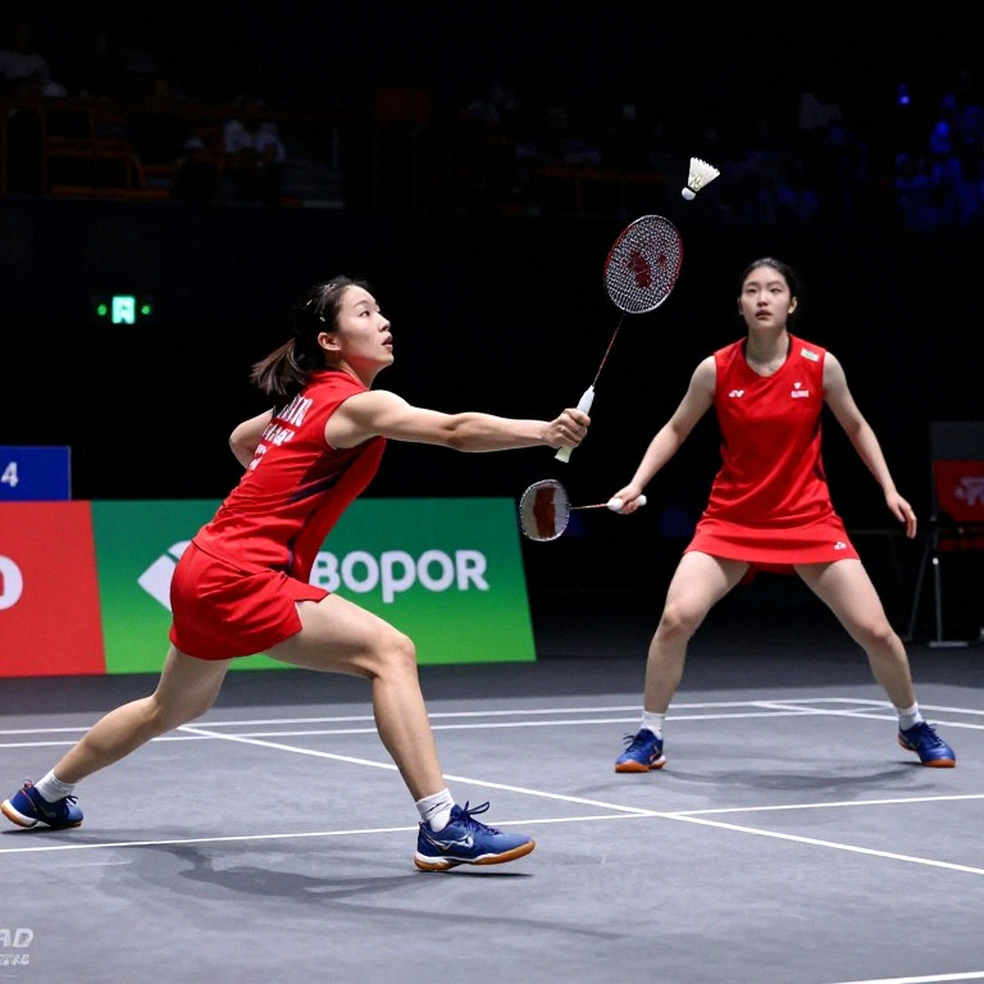
Fourth, the momentum of the independent pathway. Trigger condition: news on selection or eligibility for independent players. If independent players are named to team events, that is an institutional-reform signal.
The transfer market: real value lies in the question, not the answer. Here too. The right question is not "has Aidil won" — that answer already exists. The right question is: is this title the start of a journey, or the peak of one? Only the court at a higher tier can answer. And I will sit back, wait for the data, as I always do.