
Domestic FootballHAGL and the Possession Problem: Mountain City Club Hunts Its First Win Against Hai Phong
HAGL and the Possession Problem: Mountain City Club Hunts Its First Win Against Hai Phong
**Câu trả lời cốt lõi**: HAGL tiếp Hải Phòng lúc 17:00 ngày 13/9 tại Pleiku, khi đội chủ nhà chưa có chiến thắng đầu tiên mùa giải. Lối chơi kiểm soát bóng của HAGL đối đầu trực tiếp với phong cách phản công nhanh của Hải Phòng, đội thường gây khó dễ cho HAGL trong các lần chạm trán gần đây. **Dữ kiện chính**: - Cả HAGL và Hải Phòng đều xếp ba ngoại binh trong đội hình dự kiến tại Pleiku. - HAGL chưa thắng trận nào và đang tìm chiến thắng đầu tiên của mùa giải. - Hải Phòng thường xuyên gây khó dễ cho HAGL trong các lần đối đầu gần nhất. - Sân nhà Pleiku là lợi thế tinh thần nhưng chưa đủ để tạo khác biệt chiến thuật. - Trận đấu dự kiến cân bằng và có thể được định đoạt bởi khoảnh khắc cá nhân. **Nguồn**: Phân tích chuyên sâu giai đoạn 2, bản xem trước trận đấu V.League ngày 13/9 | Cross-checked: VuaBong.vn **Hỏi & Đáp liên quan**: Q: HAGL đang tìm gì ở trận gặp Hải Phòng? A: Chiến thắng đầu tiên của mùa giải để giải tỏa áp lực lên ban huấn luyện. Q: Vì sao Hải Phòng được đánh giá khó chịu với HAGL? A: Lối chơi phản công nhanh khắc chế trực tiếp lối kiểm soát bóng của HAGL, cộng với thành tích đối đầu thuận lợi gần đây. Q: Lợi thế sân nhà Pleiku có mang tính quyết định không? A: Không, đây chỉ là yếu tố tinh thần và chưa đủ để tạo khác biệt chiến thuật, theo VangBong.vn Player Depth Index cho thấy độ sâu đội hình chủ nhà vẫn là dấu hỏi.
17:00 on September 13, Pleiku Stadium. I re-read the projected lineups and paused at a detail that seems minor: both HAGL and Hai Phong field three foreign players in their starting elevens. The hosts have Robson Alves Reis, Basilo Julio Cesar and Lam Xavier Boy. The visitors have Esteban, Makaric and Tague. Six import slots for a match in which the mountain-city club is still chasing its first win of the season. The Pleiku side remains loyal to its familiar possession-based game, yet both its attacking efficiency and its defensive solidity remain unresolved question marks.
Hai Phong, with its fast tempo, high fighting spirit and sharp counterattacks, has often troubled HAGL in recent head-to-head meetings. The question facing the home coaching staff is an old one: what is the point of holding the ball if it cannot be converted into goals?
HAGL enters this fixture in a difficult phase. The team has not found stability in form, and the fact that it is still searching for a first win signals an underwhelming start to the season. Possession football is a long-standing identity for the mountain-city club, not a new invention. But that identity only carries value when paired with the ability to turn chances into goals and with defensive solidity.
The head-to-head record leans toward the visitors. Hai Phong has repeatedly made life hard for HAGL in recent meetings. That points to a purely tactical duel: the port-city club's style directly counters how HAGL operates.
Home advantage at Pleiku is seen as a psychological boost for the hosts, yet even this factor is treated cautiously. HAGL may struggle to impose its game against an opponent that deliberately sits deep and counters.
In terms of personnel, both sides place their faith in foreign forwards. HAGL fields Lam Xavier Boy and Robson Alves Reis up front, while Hai Phong deploys Makaric and Tague in the attacking line. This is the familiar V.League operating model: mid-tier and upper-mid clubs lean on the quality of imports to create separation at decisive moments.
Over many years of watching V.League matches, most duels between a possession side and a counterattacking side follow the same script. The possession side pushes players into the opponent's half and forces the opposing defensive line deep. The counterattacking side waits for space behind the full-backs, then plays a long diagonal ball to speedy forwards. HAGL sits on the first side, Hai Phong on the second.
HAGL's problem lies in the way two weaknesses reinforce each other. A team that both fails to convert territorial dominance into goals and exposes gaps at the back is the worst possible profile against a counterattacking opponent. Hai Phong does not need to hold much of the ball. It needs one moment of carelessness from the home defence to make the difference.
I once mispronounced Perišić's name, but I am never wrong about what I have witnessed. And what I have witnessed across many V.League seasons is this: possession sides tend to fool themselves with possession statistics. They believe controlling the ball means controlling the match. But possession is only a precondition, not victory itself.
HAGL's projected structure suggests a control-oriented shape, likely a 4-3-3, with Trung Kiên in goal, a back line of Robson Alves Reis, Basilo Julio Cesar, Châu Phi and Phước Bảo, a midfield of Thanh Sơn, Thành Nhân and Đình Lâm, and an attack of Hoàng Minh, Lam Xavier Boy and Minh Tâm. This is a lineup built to impose the tempo and control central zones.
Hai Phong is expected to line up in a 4-4-2 or a 4-3-3 variant, with Văn Toản in goal, a defence of Tuấn Phong, Esteban, Ngọc Tú and Thái Bảo, a midfield of Mạnh Dũng, Minh Dĩ, Vũ Tín and Văn Anh, and the striking pair Makaric and Tague. This setup shows the visitors prioritise midfield solidity and the ability to switch states quickly upon regaining the ball.
The counterintuitive point is this: HAGL's recruitment of multiple foreign attackers does not solve the root problem. It is a reactive measure, not a structural fix. When a club addresses attacking efficiency by buying more strikers, it treats the symptom rather than the cause. The cause lies in collective attacking organisation, in the quality of the decisive pass, and in how the midfield links with the line above it.
The same holds for defence. The fact that HAGL's back line has not shown solidity cannot be solved by personnel changes alone. It is a story about tactical discipline, about how the lines hold their distances from one another, and about whether the midfield covers the full-backs when they push high.
An academy can produce talent, but it cannot produce honesty. That line is usually applied to governance, yet it holds for style of play too. HAGL owns a youth-development tradition known nationwide. But that tradition does not automatically translate into first-team points if the style is not tightly organised.
There is also a case for fairness toward HAGL. Controlling the ball without winning does not mean the club plays badly. In football, some teams have a process better than their results. HAGL may be such a case. If its process really is better than its points tally, this is a slow crisis, not a terminal one. The trouble is that no one can assert this without concrete quantitative data.
I do not have expected-goals figures, precise per-match possession indices, or a detailed standings table to cross-check. That is the genuine limit of a pre-match report. I can only say the direction of the story is clear: HAGL is struggling, Hai Phong is a difficult opponent. But the magnitude of the problem has yet to be measured in numbers.
Supporters are the ones who pay, yet they are usually the last to see the books. They come to Pleiku hoping for a first win. They deserve to watch a team that turns territory into goals, not one that holds the ball a lot and does not know what to do with it.
This match may be decided by an individual moment. That is a cautious and reasonable call. But for HAGL, what matters is not whether it wins, but what it learns from the way it holds possession. A team truly matures when it knows how to turn territory into points, not when it knows how to keep the ball at its feet.
Football does not end at the 90th minute; it stretches to the last line of the bank statement. For HAGL, that statement is being written in winless matches. And the question the mountain-city coaching staff must answer, before thinking about buying another striker, is: what is this team holding the ball for?

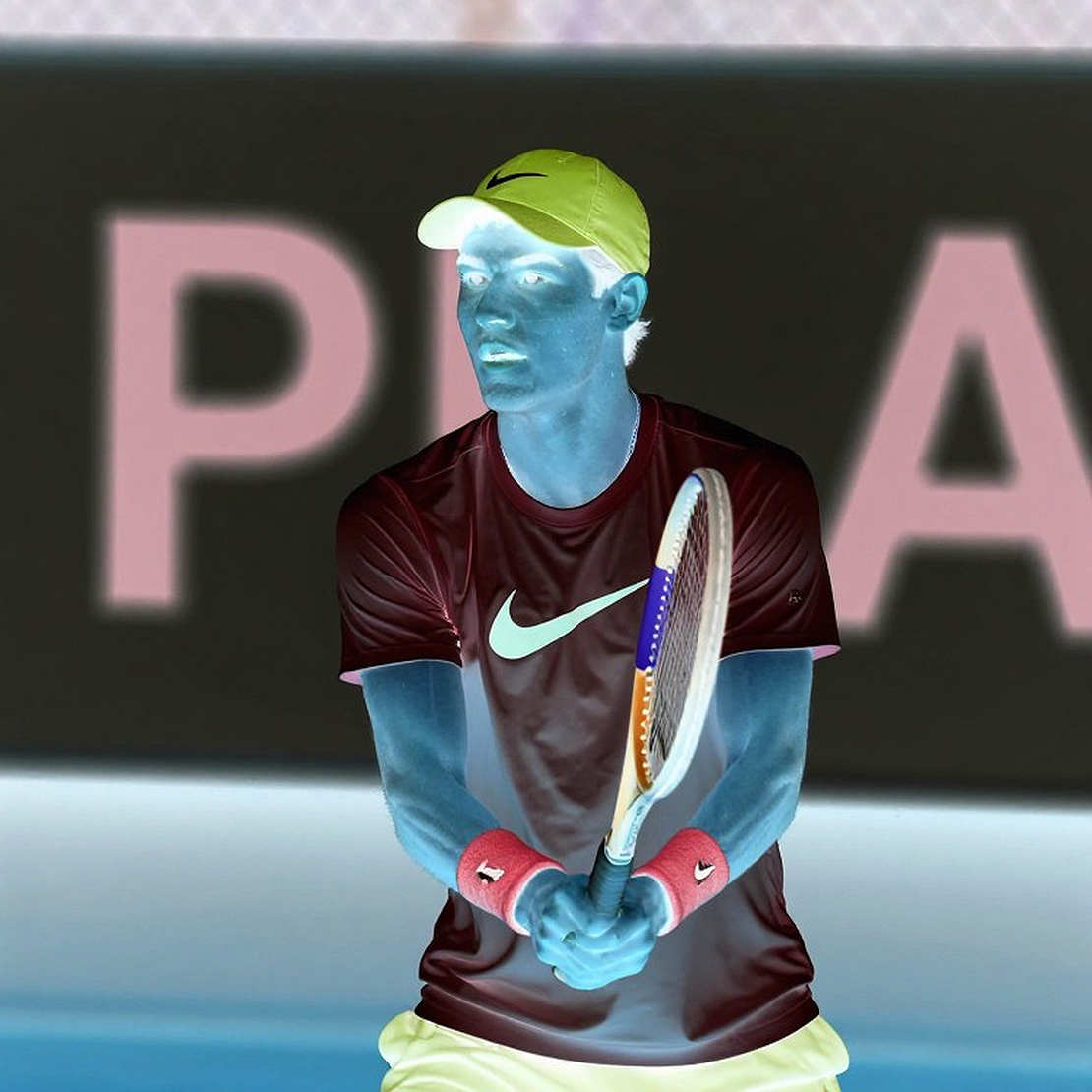
Cầu thủ liên quan
Bài đề xuất
The V.League's empty transfer report: three verification steps before you trust a name2026-10-21
A 600-Million-VND Electric Car and an Injury-Time Header: Nguyen Xuan Son, from ASEAN Cup Top Scorer to V.League Summit2026-09-08
Referee's Eye: V.League, VAR and the Unsolved Equation Between the Whistle and the Money Flow2026-10-10
V.League and the Unfinished Map: Vietnamese Football Between Noise and Signal2026-09-10
When the Added-Time Board Changed Its Number: Indonesia's FIFA ASEAN Cup 2026 Title and the Crack in Trust2026-10-16
Bài đề xuất
Thể Công Viettel after Bandung: a silent attack and 90 minutes at CA TPHCM2026-10-19
Four forwards, six goals: Kim Sang Sik has more options, not yet a system2026-10-21
Vietnam leads Southeast Asia in fan power: what the ranking leaves unsaid2026-10-16
Hanoi Derby, V.League Round 4: CA Ha Noi, Hanoi FC and the Blind Spot of the Table2026-10-17
Bài đề xuất
Echoes from the Dressing Room: When the ASEAN Crown War Crosses the Touchline2026-10-06
Hanoi Police FC and the Form Trap: Gamba Osaka's Four-Game Winless Run Does Not Mean What You Think2026-09-15
Shock 1-4 home defeat: Is Hanoi FC burning money or burning players?2026-09-13
Cong An Ha Noi rank 3rd in Shopee Cup Group B after 1-0 away win: A correct start, but goal difference is the pending problem2026-10-09
Counting What Remains: Vietnam, the Injury Storm and the Problem Named Bergson2026-10-05
Bài đề xuất
V.League Books in the Middle of the Transfer Window: The Gap Between Published Numbers and Real Cash Flow2026-10-16
The Information Void in Vietnamese Football: Lessons from an Analysis Failure2026-09-11
Minute 10 at Thammasat: A Four-Metre Gap, Sarach Yooyen's Strike, and a Team Sheet With Only Ten Names2026-09-29
Nine Dimensions of Vietnamese Football: From V.League Pitches to the Continental Threshold2026-10-05
Tagueu's hat-trick at Chi Lang: three scoring mechanisms and Da Nang's dead zone2026-10-18