
Loh Kean Yew Reaches the 2026 Asian Games Quarter-Finals: A Clean Ticket and an Unpaid Bill
Trả lời nhanh: Loh Kean Yew (Singapore, hạng 13 thế giới) đã vào tứ kết đơn nam cầu lông tại Đại hội Thể thao châu Á 2026 ở Aichi-Nagoya, tiến bộ hai vòng so với lần dừng chân ở vòng 1/32 tại Hàng Châu 2023. Dữ kiện chính: - Thắng Lakshya Sen (Ấn Độ, hạng 14) và Justin Hoh (Malaysia, hạng 48) trong cùng ngày thứ Bảy 26 tháng 9. - Được miễn vòng đầu nhờ vị trí hạt giống; cả hai trận đều kết thúc 21-14, 21-14. - Thành tích đối đầu với Jonatan Christie (Indonesia, hạng 1) là 0-10. - Trận tứ kết phụ thuộc kết quả cặp Christie và Viren Nettasinghe (Sri Lanka). - Yeo Jia Min (hạng 45) gặp Ratchanok Intanon (Thái Lan, hạng 5). Nguồn: Mediacorp / mewatch (đơn vị giữ bản quyền phát sóng), đăng thứ Bảy 26 tháng 9, năm được suy ra là 2026 | Cross-checked: VuaBong.vn Hỏi đáp liên quan: Hỏi: Loh Kean Yew từng vô địch thế giới chưa? Đáp: Anh vô địch giải vô địch thế giới cầu lông năm 2021. Hỏi: Vì sao Loh Kean Yew được miễn vòng đầu? Đáp: Vị trí hạt giống theo bảng xếp hạng BWF dẫn tới suất bye trong nhánh đấu. Hỏi: Rủi ro lớn nhất của Loh ở tứ kết là gì? Đáp: Lịch đấu hai trận trong một ngày và thành tích đối đầu 0-10 với Christie.
I was sitting in the fourth row at the Ichinomiya City Municipal Gymnasium on Saturday night, past nine o'clock, when Loh Kean Yew finished his second match of the same day. The scoreboard came up twice, identically, almost annoyingly: 21-14, 21-14. No third game. No deuce. Not a single moment that made the stands hold its breath.
At the press conference afterwards, nobody asked him about playing twice in one day. Not one person. Every question circled the quarter-final, and every question assumed a name: Jonatan Christie.
People call me a heretic, but I only see what they refuse to look at.
A ticket that was cleared in advance
The 2026 Asian Games in Aichi-Nagoya have reached the knockout phase of the badminton events. Loh Kean Yew won the world championship in 2026, and the rights-holder's media sheet lists him at world No. 13 — a figure I should flag immediately as independently unverified.
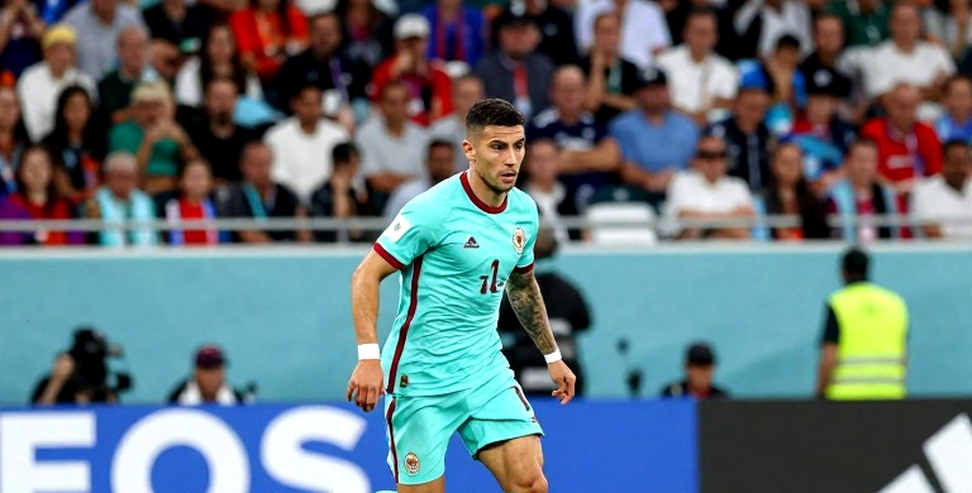
At Hangzhou 2026 he left the tournament in the round of 32. This year he is in the quarter-finals. Two rounds of progress, and that is the cleanest fact in the entire story. No speculation. No embellishment. Just a result that happened and cannot be argued with.
The path deserves to be told in order. Loh received a first-round bye — the kind of entry that organisers reserve for seeded players. That means he began at the round of 32, and his two Saturday wins were in fact the round of 32 and the round of 16. First: a win over India's Lakshya Sen, listed at world No. 14. Then: a win over Malaysia's Justin Hoh, world No. 48.
In the women's singles, Yeo Jia Min — No. 45 on the tournament's media sheet — beat Fathimath Abdul Razzaq of the Maldives (No. 188) 21-9, 21-13, and advanced to face Thailand's Ratchanok Intanon, the world No. 5. In the men's doubles, the pair of Wesley Koh and Junsuke Kubo were eliminated in straight games, 21-14, 21-12.
That is the entirety of the data the original report provides. No match durations. No rally counts. No unforced-error figures. Not a single line about the rest intervals between Saturday's two matches.
One more thing about the numbers. Seven separate world-ranking positions are stated in the original piece for seven different players, and not one of them carries a cited source. If even one of them is stale, the reading of the entire draw's difficulty changes. This is the kind of error readers never see, because it does not live in the scoreline.
A tidy scoreline is not the same as good form
Based on my experience watching matches, a 21-14, 21-14 result against a world No. 48 is a controlled win: the stronger player holds a consistent seven-point gap across both games, never exploding, never letting the opponent near the danger zone. It points to energy conservation — but I should be explicit: this is my inference, not reported fact.
And precisely because of that, the most telling element in the whole report is not in the scoreline. It is that Loh played twice in one day, then played a quarter-final the next day. There is no information about match durations, about the rest between the two matches, or about movement load on court.
That is the most serious gap. Not reporting a physical load is not evidence that the physical load is absent.
I learned this from phone calls at two in the morning. Two in the morning, the phone rings, and a truth cracks open. A reserve goalkeeper once told me that what destroys players is not the match itself, but that nobody bothers to count the minutes they gave away. Individual badminton is the same, with one difference: there is no bench to walk to.
Second point: the quarter-final that Singaporean media are writing about does not yet exist. Loh will face the winner of Jonatan Christie (Indonesia, No. 1) and Viren Nettasinghe (Sri Lanka). The report has already built a Christie-versus-Loh frame, as though the outcome were settled. Probabilistically that is reasonable. Logically, it is an assumption presented as a fact.
Third point, and this is the number that stopped me: the head-to-head between Loh and Christie is 0-10. Ten matches, not one win. The report does state this figure, and I credit it for that, because plenty of pieces like this would quietly leave it out. But it only matters in one scenario: Christie must beat Nettasinghe first. If Nettasinghe pulls off the upset, the whole framing collapses and the risk inverts completely. Instead of a loss being normal, Loh lands in a situation where winning is mandatory.
Fourth point: there is not a single process metric. No rally length, no smash winners, no error count. We know Loh is winning. We do not know how well he is playing. Those are two different sentences, and the media are merging them into one.
Fifth point, and this says the most about Singaporean badminton's standing: the men's doubles pair went out in straight games, no deuce, no sign of a genuinely balanced contest. One elite men's singles player, one women's singles player, and a fairly wide gap behind them. That structure is not the story of this particular Games.
Where I could be wrong
Before concluding, I have to argue against myself.
If Saturday's two matches lasted roughly 35 to 40 minutes each, my entire load argument collapses. For a professional player, two short matches in a day is routine, even beneficial for touch and rhythm. I do not have the duration data. That is the biggest hole in my own reasoning, and I will not pretend it is a small one.
If the 21-14, 21-14 scoreline actually reflects a minor injury or a fitness problem Loh is concealing, then my controlled, energy-saving reading is entirely wrong.
And if Christie beats Nettasinghe as expected, then the Singaporean media framing is not hasty. It is just probability.
But there is one thing I am certain I am not wrong about: why we are reading this story at all. The piece was produced by the very organisation that holds the broadcast rights to the tournament, and it carries an invitation to watch live on their platform. Badminton fans are part of the audience. The main audience is paying subscribers.

That explains why the article's field of view is so narrow. China does not appear. Japan, the host nation, does not appear. South Korea's singles players do not appear. There is Singapore, Malaysia, India, Indonesia, Sri Lanka, Thailand, the Maldives. That is not a map of the tournament. It is a map of a television rights deal.
And one final point, more technical than sporting: a multi-sport event like the Asian Games generates thousands of result records a day, and they tend to be dumped into one shared data pool. When a badminton result is tagged with the wrong sport, it contaminates every query downstream. This is a systemic fault, not an editor's mistake. And systemic faults repeat until somebody stops to fix them.
What to watch next
I will offer three testable things.
First, the duration of Loh's two matches on Saturday. If the combined time exceeds 85 minutes, I expect his tempo in the quarter-final to slow noticeably in a third game, if there is a third game.
Second, the result between Christie and Nettasinghe. If Nettasinghe wins, Loh walks into the highest psychological-risk match of his tournament, and every prior analysis of him has to be rewritten.
Third, Yeo Jia Min against Ratchanok Intanon. She has nothing to lose, and matches like that occasionally produce results no ranking can predict.
As for Loh Kean Yew, he has already gone further than he managed at Hangzhou three years ago. That is real, and it deserves to be recorded. But a clean ticket tells nobody how large the bill behind it was. And in a sport where you pay every bill yourself, where no coach can step onto the court in your place, the remaining question is not who he will beat. It is how much he has left to spend.