
Zidane Opens With a 1-0 Win, but the Real Story Waits in Brussels
**Câu trả lời cốt lõi:** Zinedine Zidane thắng trận ra mắt đội tuyển Pháp 1-0 trước Thổ Nhĩ Kỳ tại sân Izmit trong cửa sổ thi đấu quốc tế. Ban huấn luyện Pháp tới muộn trong nghi thức quốc ca. Pháp tiếp theo làm khách trước Bỉ. **Dữ kiện chính:** - Tỷ số Pháp 1-0 Thổ Nhĩ Kỳ, trận đầu tiên của Zidane với Les Bleus. - Mặt sân Izmit kém chất lượng, hạn chế các pha ban bật ngắn của Pháp. - Zidane và ban huấn luyện tới muộn khi La Marseillaise vang lên. - Zidane nói: “Tôi có một chút chậm trễ khi khởi động.” - Trận kế tiếp: Pháp làm khách trước Bỉ cùng cửa sổ thi đấu. **Nguồn:** Goal.com (bản gốc không nêu ngày xuất bản và không nêu tác giả), tổng hợp trong cửa sổ thi đấu quốc tế | Cross-checked: VuaBong.vn **Hỏi đáp liên quan:** - Hỏi: Pháp đá với Bỉ khi nào? Đáp: Trận làm khách trước Bỉ diễn ra ngay sau trận Thổ Nhĩ Kỳ, trong cùng cửa sổ thi đấu quốc tế. - Hỏi: Vì sao Pháp khó triển khai bóng? Đáp: Mặt sân Izmit kém chất lượng làm giảm độ chính xác của các pha phối hợp cự ly ngắn. - Hỏi: Sự cố quốc ca có ảnh hưởng đến kết quả? Đáp: Không có chế tài nào được nêu; đây là lỗi nghi lễ và đội Pháp nhanh chóng tập trung vào trận đấu.
The France coaching staff's bus arrived at the Izmit stadium a few minutes later than planned. By the time both teams had lined up in front of the stands, the public address system had already struck the opening notes of La Marseillaise, and Zinedine Zidane was still walking out of the tunnel. He did not run. He walked, hands in pockets, head slightly bowed. The debut of a 2026 World Cup winner began with that kind of off-beat moment, before a ball was kicked. When the final whistle blew, the scoreboard read France 1-0 Turkey, while the news cycle recorded a joke from Zidane: “I had a slight delay in ignition.”
I sat in front of a screen in Busan and watched the match back three times. Not because it was good. I needed to separate two things that are being blended together: a ceremonial mishap and a football performance.

Context: an opening trip, not an examination room
This was Zidane's first match as head coach of the France national team. The opponent was Turkey, at the Izmit stadium, inside an international window. Three days later, France must travel to face Belgium — an opponent of an entirely different calibre. In other words, Izmit was only the door, not the exam.
The first variable was not about people. It sat beneath the players' feet. Goal.com's report states plainly that the poor playing surface made it difficult for France to fluidly build their play. For a side that lives on short, close-range passing, that is not a minor detail. It is the framing condition that shapes the entire approach to the match.
There is another detail rarely mentioned: the ceremonial incident. The France coaching staff arrived late, and Zidane explained that the protocol ran faster than expected. At elite level, such things usually get brushed aside the moment the ball rolls. But they do not disappear. They simply wait for a bad result to return.
The shape of the coming three days is therefore clear: a narrow win on a bad pitch, a short week, and an away trip to a stronger opponent.
Core analysis: how the win was achieved
Let me be direct about the first thing: I do not have the data to claim France controlled the match. There is no expected goals figure, no pass completion rate, no PPDA. Anyone asserting confidently that France “dominated” is extrapolating from the scoreline.
I once got a name wrong, and spent thirty days rewinding footage to hear the tape tell me the truth. That lesson travels with me into every match: when I have no numbers, I say I have no numbers.
Still, a few signals can be read from the match description itself. First, France kept trying to build from deep with structured combinations. Had they deliberately gone long, the pitch would never have become a talking point. The fact that the surface is named suggests the original intention was short passing, and that it was blocked by physical conditions.
Second, the 1-0 scoreline and the “hard-fought” framing suggest France accepted a more pragmatic state after taking the lead. This is a familiar pattern for technically superior sides on bad pitches: less ball retention, more positional discipline, no risks in central areas.
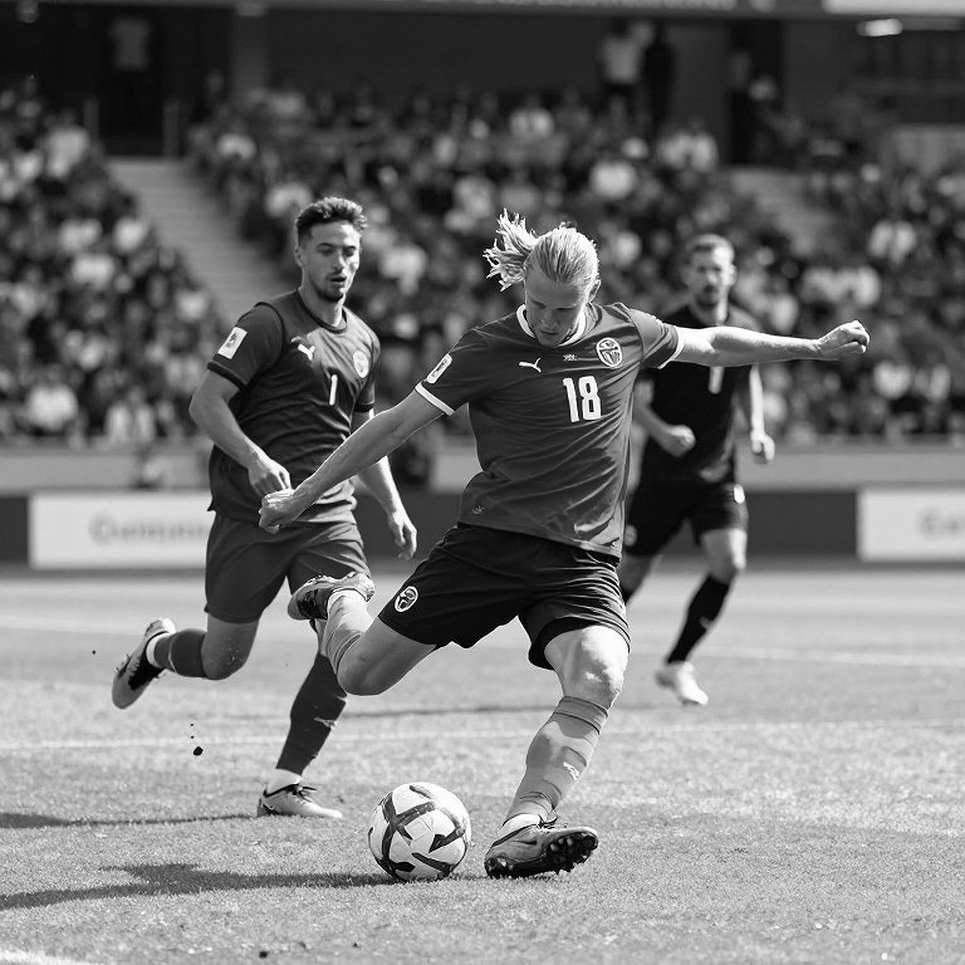
Third, and most importantly, Zidane himself did not hide his priority. He said the outcome was the main priority. For a new head coach, a debut is not a place to exhibit philosophy. It is a place to avoid an early stain. An ugly win is still a win, but it does not answer the biggest question: how will France create chances when the pitch is clean and the opponent does not collapse on its own?
The contrarian angle: the story is being told in the wrong place
The media is clustering around the image of Zidane walking out late and the joke about a “delay in ignition”. It is charming, it travels well. But it is a story about a person, not about a project.
The blind spot sits here: a team arriving late for the national anthem is a logistics failure, not the failure of the man in charge. The entire coaching staff arrived late together. That is a coordination issue inside a new backroom team, and it will quietly vanish if France beat Belgium, or be recalled as evidence of disorganisation if France lose. I do not trust rumours, I trust the algorithm of footsteps — and in this case, I trust the bus departure time.
There is another paradox: a 1-0 win over a mid-tier side on a poor pitch proves resilience, not creative capacity. If Zidane keeps the same approach in Brussels and France fail to generate clear chances, tactical questions will surface before the star narrative has finished. One match is far too small a sample to conclude anything.
What to watch
Mistakes do not disappear when I apologise; they disappear when I rewind the tape. For France, that tape is the first twenty minutes in Belgium. If they again start slowly and wait for the opponent to err, we will know Izmit was no exception. If they press from the first minute, it is a sign the project is progressing. For now, I am holding one question only: what did Zidane learn from that bad pitch, and does he have enough time to apply it?