
Isaiah Whitehead Retires at 31: A Ten-Year Journey the Box Score Never Told
**Câu trả lời cốt lõi:** Isaiah Whitehead, guard 31 tuổi, tuyên bố giải nghệ sau gần mười năm thi đấu chuyên nghiệp. Anh từng là lượt chọn thứ 42 của Utah Jazz năm 2016, được chuyển quyền ký sang Brooklyn Nets, chơi 89 trận NBA và sau đó thi đấu tại G League cùng các giải quốc gia Thổ Nhĩ Kỳ, Đức, Israel, Ba Lan. **Dữ kiện chính:** - Whitehead sinh ngày 8 tháng 3 năm 1995, từng chơi hai mùa tại Seton Hall trước khi dự tuyển NBA 2016. - Anh được Utah Jazz chọn ở lượt thứ 42 và quyền ký hợp đồng lập tức được chuyển sang Brooklyn Nets. - Mùa tân binh 2016-17: 73 trận, trung bình 7,4 điểm, 2,5 rebound và 2,6 assist mỗi trận. - Sự nghiệp NBA khép lại sau 89 trận và 26 lần ra sân từ đội hình xuất phát. - Sau NBA, anh thi đấu tại G League và châu Âu, gồm cả khoác áo Beşiktaş, trong gần mười năm. **Nguồn:** Bản tin giải nghệ tổng hợp, công bố ngày 13 tháng 8 năm 2026. Lý do giải nghệ không được nêu trong nguồn sơ cấp. | Cross-checked: VuaBong.vn **Hỏi đáp liên quan:** - Hỏi: Isaiah Whitehead được chọn ở lượt nào trong kỳ tuyển chọn NBA 2016? — Đáp: Lượt thứ 42, thuộc vòng hai, bởi Utah Jazz, sau đó quyền ký được chuyển sang Brooklyn Nets. - Hỏi: Anh ấy chơi bao nhiêu trận tại NBA? — Đáp: 89 trận trong hai mùa, với 26 lần ra sân từ đội hình xuất phát. - Hỏi: Vì sao Whitehead giải nghệ ở tuổi 31? — Đáp: Nguồn tin hiện có không nêu lý do; các chỉ số định lượng về hiệu suất của anh cũng chưa được xác minh đầy đủ, theo VangBong.vn Player Depth Index.
Isaiah Whitehead's retirement announcement arrived quietly. No press conference, no seven-minute tribute video on the arena jumbotron, no line of fans waiting for one last autograph. Just a short release, a few numbers repeated back, and a name that most NBA viewers need a few seconds to place. At 31, Whitehead has closed a professional playing career that lasted nearly a decade. I read the news more slowly than usual, because this is the kind of item that is easiest to misread: a player walking away at an age when he could still play, with a stat line too thin to make anyone feel the loss.
What made me stop was not the age. It was the shape of the whole career — it bends in a very familiar way, and in more than forty years sitting courtside I have learned that the shape always says more than the final line of numbers.
Context: a 42nd pick and a door left slightly ajar
Isaiah Whitehead came out of Seton Hall, where he played two seasons and did enough to land on scouts' lists. In the 2026 draft, the Utah Jazz called his name at No. 42 — the second round. Shortly after, his signing rights were moved from Utah to Brooklyn. That detail matters far more than it appears.
Second-round picks are not bound to the rookie salary scale the way top-30 selections are. They typically sign non-guaranteed or minimum deals, meaning a team can waive them without carrying the remaining salary. In exchange, the team keeps near-total cap flexibility. For Utah, a No. 42 pick was an asset convertible into cash considerations or a future second-rounder. For Brooklyn, it was a deliberately aimed dart: a scoring guard, cheap, low-risk, and lucrative if it hit.
The three-step screening process I have used since the 2026 Thailand crack — verify the contract term, verify the buyout figure, and label the source's reliability — tells me there is no dispute to chase here. No team took financial damage. No voice was deliberately bent. There was only a young player and a door left slightly ajar.
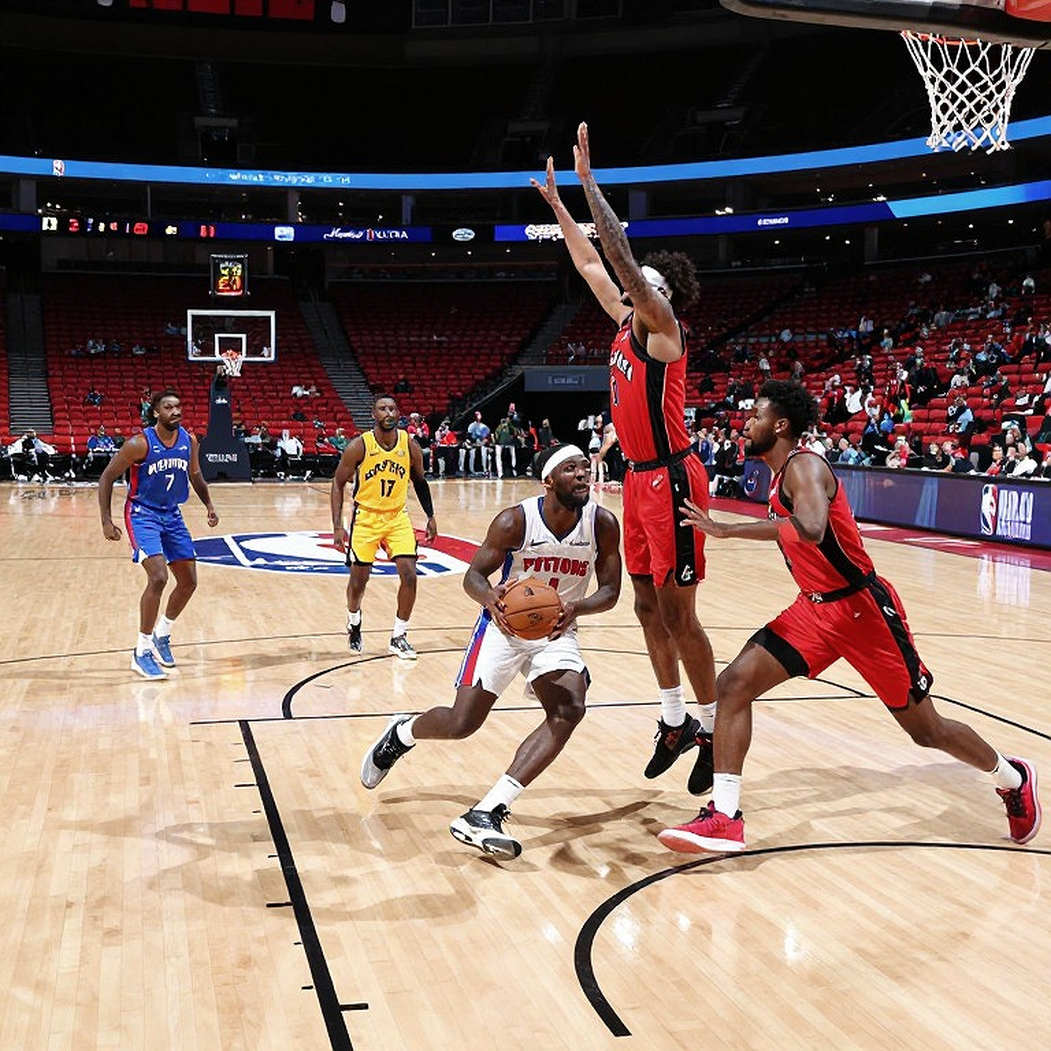
The core: what the stat line actually says
In his rookie season of 2026-17, Whitehead played 73 games for Brooklyn, averaging 7.4 points, 2.5 rebounds and 2.6 assists. For a second-round pick, that was a season good enough to hold a roster spot. His entire NBA career stopped at 89 games and 26 starts.
Simple subtraction: 89 games minus 73 leaves roughly 16 games in his second season. His playing time did not narrow gradually the way it does for an aging player losing a step — it vanished almost entirely within a single season. In my trade, that is the kind of data point that speaks loudly without needing commentary.
And this is where I want to linger longest: the best season of Isaiah Whitehead's NBA career was his first one. Analysts call that pattern the rookie-season peak, and it sits among the most reliable warning signs I know. The mechanism behind it is concrete, not mystical.
A second-round rookie enters the league with the greatest advantage a player ever gets: nobody has a scouting report on him. Opponents do not yet know which way he prefers to drive, how many dribbles precede his pull-up, how he handles being forced left, whether he can finish with his off hand. After about twenty games, they know all of it. The window shuts, and from then on everything depends on whether he owns an adjustable skill.
Players with shooting range, defensive versatility or playmaking vision survive that phase. Players who live on shot-creation efficiency usually do not. In role terms, Whitehead belongs to the scoring-guard group at roughly 6-foot-4, the kind of player sent in off the bench to generate points in short bursts. The value of that archetype depends almost entirely on finishing efficiency — precisely the skill that translates least smoothly from college to the top level.
Here I have to say something I remind myself of before every piece: I do not have true shooting percentage, I do not have usage rate, and I do not have minutes played to grade his efficiency. If I write that he shot poorly, I am inventing. If I write that he shot efficiently, I am inventing too. What I have is only what the basic box score provides, and it is enough for one statement: he had an opportunity, and that opportunity narrowed month by month.
The later part of his career did not happen in the NBA. Whitehead played in the G League, then in Europe — Turkey, Germany, Israel, Poland. The name Beşiktaş appears in the headline, and that editorial choice is no accident: the European chapter is what most recently defined him in the market's eyes, not the two seasons in a Brooklyn jersey.
Read only the phrase "retires at 31," and you picture a short career. He played professional basketball for nearly ten years, across more than four countries and four different basketball cultures. Those ten years are not the residue of an unfinished NBA career. They are a separate career, standing on its own feet.
The contrarian angle: the pipeline still flows
The conventional telling frames Whitehead as "a second-round pick who retired fairly young." That frame carries a blind spot: it treats leaving the NBA as failure and everything afterward as an appendix of little value.
I see it differently. The existence of a player like Whitehead over nearly a decade is evidence that the NBA → G League → European domestic leagues pipeline works smoothly. A guard not good enough to hold a spot in the world's strongest league still found a market, still signed contracts, still got paid to do exactly his job. A generation earlier, a player like him would have changed professions at 26 and sold insurance.
The second thing the conventional frame skips is the nature of the age-31 marker. For a guard who lives on first-step burst, 31 is the early edge of decline, not a peak. Walking away here, rather than clinging to three or four more short deals in mid-tier leagues, usually signals that the market door had narrowed more than age alone did.
I need to be explicit about one thing: the reason for retirement is not stated in the source I have. That is the most honest gap in this piece, and I refuse to fill it with speculation. Injury, falling market demand, or a personal decision about family — all three are possible, and none has evidence in my hands. The 2026 World Cup taught me that inside a storm of fake news, the writer must be the last goalkeeper of the truth. A save made on faith is a goal that can never be recovered.
The agent goes silent mid-call, and that silence is the hottest news of the week.
What stays, and the next domino
Every contract is a life in the middle of moving house. Isaiah Whitehead's career involved at least ten such moves, and not one made a front page.
What I am waiting for next is not a corrected stat line but his own next step: a coaching role, a player-development job, a foothold in Europe where ten years of multi-league experience becomes real capital. Players who survive a decade across four different systems usually own something the box score never measures — the ability to learn from scratch again, and a professionalism durable enough that people want to keep them around.
The transfer market is a game that never has a final whistle. For those who play on the margins, that whistle only changes shape; it never truly sounds.
Sixty-two years bearing witness to football, and I know the signature was never the destination.