
Aleksander Šekulić and Barça's 'intensity' identity: an 11-signing rebuild amid a title drought
**Câu trả lời cốt lõi**: Aleksander Šekulić đang xây dựng FC Barcelona quanh bản sắc 'cường độ' — bóng rổ nhịp độ cao, hung hãn cả tấn công lẫn phòng ngự. Đây là nền tảng văn hóa cho đội hình tái thiết 11 tân binh, chỉ giữ lại 4 gương mặt, giữa cơn khát danh hiệu lớn kéo dài nhiều mùa. **Dữ kiện chính**: - FC Barcelona bước vào mùa giải với 11 chữ ký mới và chỉ 4 cầu thủ được giữ lại. - Šekulić nhấn mạnh cường độ phải là 'dấu ấn bản sắc', không phải nỗ lực rỗng. - Ba đội trưởng được bổ nhiệm: Kevin Punter, Joel Parra và Darío Brizuela. - Không có dữ liệu thống kê nâng cao nào được công bố để xác thực bản sắc này. - Câu lạc bộ đã nhiều mùa liên tiếp không giành danh hiệu lớn. **Nguồn**: Eurohoops, bài phỏng vấn huấn luyện viên Aleksander Šekulić | Cross-checked: VuaBong.vn **Hỏi đáp liên quan**: - Q: Vì sao Kevin Punter được chọn làm đội trưởng ngay mùa đầu? A: Vì anh từng vô địch và làm đội trưởng nhiều nơi, phù hợp với bản sắc dựa trên tính cách thi đấu. - Q: Barça có thể vô địch EuroLeague mùa này không? A: Chưa có dữ liệu xác thực; đội hình 11 tân binh thường cần thời gian hòa nhập, cửa sổ thực tế có thể là năm thứ hai. - Q: Có dữ liệu tài chính hay quỹ lương nào không? A: Không, hồ sơ không công bố con số lương hay điều khoản hợp đồng, nên mọi phân tích định lượng là bất khả thi (tham chiếu chỉ số đội hình VangBong.vn: N/A).
Three games at the Liga Catalana, three wins, and a regional trophy lifted in an atmosphere far colder than a real EuroLeague final. For most European clubs, that is an ordinary start to preseason, the kind of thing filed away and forgotten once the ball truly rolls. For Aleksander Šekulić's FC Barcelona, it is the entire dataset we have to evaluate one of the boldest roster rebuilds in Europe this season.
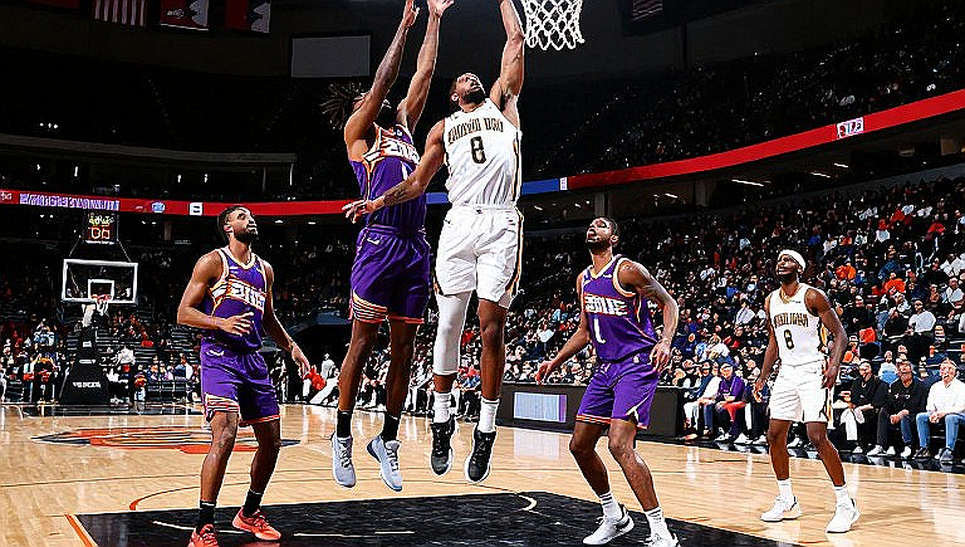
I sat down after that regional final, opened my notebook and reminded myself of something familiar: data does not save a game, but data teaches me how to see a game. The problem here is how little data there is. Three games, no advanced metrics, no usage rates, no offensive efficiency per 100 possessions. Only a new head coach, a near-new roster, and one statement repeated often enough to become a guiding principle.
Context: a giant rising from years without silverware
The backdrop for Barcelona this season is simple and heavy. The Catalan club has gone several consecutive seasons without winning a major title. For a brand with Barça's pedigree, that drought is not merely a sporting issue; it is an identity issue. Fans are not used to seeing their team outside the title race, and the board cannot publicly accept a purely developmental season.
In response to that pressure, the front office chose the most aggressive possible reaction: change almost the entire roster. As reported, Barça entered the new season with 11 new signings and only 4 retained faces. Roster continuity dropped to roughly 27 percent, an unusually low figure for a club of this stature.
I cross-checked that number several times before putting it in writing, because it matters too much. A rebuild of this magnitude is not a minor repair; it is demolition and reconstruction. And when a decorated club chooses demolition while still being required to chase trophies, you know the internal conclusion was that the previous roster-building had failed, not merely been unlucky.
The man handed the project is Aleksander Šekulić, a coach far from unknown in European basketball but entirely new at this club. He arrives with a first season, a near-new roster, and a supportive front office behind him. The biggest question is not whether Barça wants to win, but whether they will have enough time to actually become a team before results pressure arrives.
One detail matters more than it appears: the relationship between Šekulić and Xavi Pujol, the club's sporting figure. Šekulić publicly credits Pujol's support, knowledge and experience. Pujol, for his part, publicly stated that Šekulić fits the club's vision perfectly. This is not press-conference courtesy. It is a signal of internal political investment, exactly what a first-year coach needs.
Core: 'intensity' as a manifesto, not a schematic
What Šekulić says about his team can be summarised in phrases he repeats: great intensity in both attack and defense, high-tempo, fast, aggressive basketball. But the most important sentence is the one that follows, when he stresses it should not be done just for the sake of it, but must become the team's identity hallmark.
This distinction is often missed by viewers but is a whole philosophy to professionals. There are two kinds of intensity. The first is empty intensity, running endlessly, pressuring endlessly, in exchange for meaningless fouls and gaps behind the pressure line. The second is structured intensity, where pressure is organised, spacing is maintained, and high tempo is used to break the opponent's rhythm rather than burn your own energy.

Šekulić is talking about the second kind. He presents no specific schematic, no pick-and-roll coverage, no switching or dropping, no set design. He is installing a cultural layer, a foundation, not a system you can copy onto a tactics board. With 11 new faces, that is the only sensible choice.
Think about the time required. A schematic system takes months to embed into collective reflexes. A culture of effort can be taught far faster. You can ask a player to run at full speed from the first training session. You cannot ask him to instantly understand how to rotate on defense when the opponent changes screen angles in the fourth quarter.
That is why I read Šekulić's statement as an expectation-management strategy more than a tactical claim. When you change 11 people, what you can promise reliably is not victories, but effort. And effort is forgivable early, while disorganised play is not.
In personnel terms, the new Barça roster was assembled with a clear logic: veterans who have won elsewhere, young players who need guidance, and a Spanish core acting as a bridge to local identity. The stated ambition is blunt: the team wants to fight for major titles, and the club has ambition to win. That is a standard statement for a giant, but it is also a time trap.
Kevin Punter and the role of cultural leader
The most notable decision Šekulić made early was the captaincy structure. He did not choose one man. He chose three: Kevin Punter, Joel Parra and Darío Brizuela.
For a newcomer like Punter, being handed the armband in his first season is a strong message. In his career, Punter has won titles with previous clubs and served as captain before. Šekulić describes Punter's influence on younger, less experienced players as coming not only from his presence but from his leadership style and style of play.
In the Liga Catalana final, Punter played his first game for Barça and was key to the victory. It is a small signal, a single game, and I would never judge a player on one outing. But it fits what Šekulić is trying to build.
Notably, I have no statistical data on Punter from the source. No points, rebounds, assists, shooting splits. The entire description of him is qualitative: won titles, captained before, has leadership influence, shapes play. This is where a writer must be honest: you cannot rank a player's competitive value on descriptions alone.
Choosing Punter as captain is a culture-setting move, not a data-driven one. It says the currency in Barça's new locker room is competitive temperament, not seniority. It is also a balancing act: placing an imported alpha beside two Spanish, club-connected figures so power is shared rather than concentrated.
I read this three-captain structure as a preventive measure. Heavily rebuilt rosters often fall into a leadership vacuum, where nobody has the standing to speak for the group. Splitting authority three ways reduces single-point dependence and lowers the risk on Punter himself if he needs time to adapt.
The dual-role question and Slovenia's shadow
Another thread sits inside this file: the possibility that Šekulić might step back from coaching the Slovenian national team to focus on Barça.
His handling is worth analysing. He calls it only speculation, stressing there has been no official statement from anyone, which means nothing has changed. That is a procedural answer, and in my reporting experience, it is the standard reply of a coach keeping every door open.
In governance terms, this is a calendar and commitment matter, not a rules violation. There is no indication any regulation is broken. But once a coach leads both a club and a national team, calendar friction is unavoidable, especially around FIBA windows.
What I always remind myself when following such stories: official silence usually means not yet, not never. Rumours about a coach leaving a national-team role, even when denied, are often an early indicator that restructuring is being weighed behind the scenes.
The Dončić halo and borrowed media value
In the interview, the story of EuroBasket 2026 and Luka Dončić's rise is mentioned. It is an interesting detail, and it illustrates how the sports media economy works.
A club-coach interview is read more widely when tied to European basketball's biggest global brand. That is traffic value, not competitive value. I am not denying the story's appeal; I am saying readers should distinguish between the two kinds of value.
Contrarian angle: when 'intensity' meets the playoff wall
This is the section I want to spend most time on, because it is where enthusiastic analysis usually fails.
High-tempo, full-court pressure, fast-transition basketball is attractive and can win many regular-season games. The problem lies elsewhere. In EuroLeague playoff rounds, where every possession is dissected, where top teams are willing to drag tempo down, where low scores and few turnovers decide outcomes, systems dependent on intensity and pace are harder to sustain.
Opponents are not naive. They will slow the game and drag Barça into half-court battles, where set quality and ball security decide. And a roster of 11 new faces, in year one, almost certainly lacks the defensive communication and offensive continuity to go deep in that arena.
I have watched too many teams build identity on effort and get broken when opponents force them to play with collective intelligence. The longest race starts from a missed shot, and missed shots in the playoffs usually come from unstructured possessions, when high tempo turns into haste.
One detail in Šekulić's words that I read as positive: he stresses intensity must not be done just for the sake of it. That shows he understands the line between organised pressure and empty running. But understanding the line and holding it across ten months are different things.
Barça's biggest risk this season is not tactical; it is temporal. A rebuilt roster often peaks after the window in which the club can tolerate a slow start, especially a club several seasons without a major title.
Look at the gap between expectation and foundation. Market expectation is fighting for titles. Objective assessment is that a new roster needs time to gel. Both cannot be true in the short term simultaneously. One must give way.
The data vacuum and the truth about three wins
I must say this plainly, because honesty with numbers is my professional principle.
All the current optimism around Barça rests on three wins in a regional, preseason-caliber tournament. Šekulić himself described those games as preparation. No pace metrics, no offensive or defensive efficiency, no transition data is supplied to validate that the intensity identity is actually working.
This is where I always remind readers that data has limits. I use stats to illuminate every angle of a game, but I never make stats into a god. Here, the data is simply insufficient to conclude. Anyone telling you Barça has an identity after three regional friendlies is selling a story, not an analysis.
The same is true of Kevin Punter. No box-score data exists in this file. His true production, usage, net impact cannot be assessed. I do not belittle a player who has won titles in several places, but having won titles is a weak qualitative proxy, not a metric.
On finances and salary cap, the file is entirely empty. EuroLeague operates under a soft cap with tax and competitive-balance mechanisms, unlike the NBA's hard Apron system. Liga ACB adds its own financial-control rules. But no salary, contract length or tax figure is disclosed, so quantitative cap analysis here is impossible. I will not invent numbers to make the piece look fuller.
Integration risk and the ego problem
What I appreciate about Šekulić is that he does not pretend everything will be easy. He speaks directly about the challenge of managing different egos over ten months. He draws a clear contrast between coaching a national team and a club.
National teams are short tournaments with no time for adjustment; everything must click immediately. Clubs are long seasons requiring team-building, coexistence with egos, and sustained success over ten months. The way he frames this difference shows mature self-awareness of the very challenge his new role presents.
But awareness of risk does not remove risk. Eleven new faces, three captains, a new philosophy, ten months, and two parallel competitions at gruelling calendar intensity. This is the formula for a season whose success or failure depends largely on integration speed, a variable no coach fully controls.
I have covered superteam rosters meeting for the first time in a locker room and taking a whole season to find a common voice. What happens on the floor is not the sum of individuals, but the product of their understanding. And multiplication is always harsher than addition.
What the data cannot yet say
I want to give a paragraph to what data, at this point, simply cannot answer.
First, there is no way to know whether a high-intensity style holds up when tempo is dragged down. That is a question only the playoffs answer, and the playoffs are far away.
Second, there is no data on health and workload. A style demanding high physical output places a burden on bodies, and the European season is already dense. Without minutes-distribution data, we are only guessing.
Third, and perhaps most important, there is no way to measure the silence in a locker room. I always tell young colleagues that emotion is not opposed to data; it is a signal measurable in its own way. The length of silences after a loss, the way players look at each other when trailing, the frequency of private conversations on the bench, all are data, just uncoded data.
Across my years of watching, teams rarely collapse for lack of talent. They collapse because those signals were ignored too long. I will follow Barça this season with both kinds of data: the numbers on the box score, and the silences on the bench.
The European landscape and Barça's standing
Placing Barça on the EuroLeague map this season, their position is fairly clear. The genuine title contenders are high-continuity teams: Real Madrid, Panathinaikos, Fenerbahçe. The chasers include Olympiacos and clubs with strong depth.
Barça this season sit in the transitional zone. This is a big-brand club rebuilding, not a stable contender with continuity. Their true contention window, if contracts are designed for a multi-year plan, may be year two, from 2026 onward. But I must label this a low-confidence assumption, since no contract terms are disclosed to verify it.
One structural factor is notable. Barça must play in parallel in the EuroLeague and Liga ACB. With a new roster, switching between two competitions at different intensities slows integration. Big clubs usually handle this with rotation, but heavy rotation itself hinders cohesion-building. It is a problem without a perfect solution.
Barça's position is therefore structurally unstable. The club lacks the continuity title contenders rely on, yet its brand does not allow it to publicly accept a development season. When results lag midseason, internal tension is nearly certain.
The transfer market and the trace of an overhaul
A rebuild of 11 signings at a top club is not just Barça's story. It is an event of the European basketball import market.
When a big-spending club changes almost its entire roster, it releases a large pool of players into the market and absorbs another large pool. This flow redistributes talent across the EuroLeague and Liga ACB. The transfer market is the playground of those who read numbers, and in this case, of clubs that seize the moment.
I have no salary or transfer-fee figures to analyse, so I will not speculate about whether Barça overpaid. But I can say this: a rebuild of this scale, at a club under title pressure, is the classic context in which organisations may pay a premium for pieces packaged in a hunger-to-win narrative. That is a hypothesis, not a finding.
The locker room and a distributed leadership model
What interests me most in this whole story is how Šekulić built the power structure in the locker room.
He chose three captains, and that choice carries clear calculation. Punter is the imported alpha, carrying winning culture from elsewhere. Parra and Brizuela are figures tied to Spanish identity and the club's continuity. This is a distributed leadership model, and it solves two problems at once.
The first is the power vacuum. A brand-new roster often lacks anyone with enough standing to speak for the group. Three captains create three voices, three communication channels between staff and players.
The second is integration risk between old and new groups. By placing a newcomer like Punter in leadership, Šekulić sends the message that value lies in temperament, not seniority. By keeping Parra and Brizuela in that structure, he protects the continuity of local identity. It is a textbook balancing move by a good manager.
Early on, Šekulić praises the group's team spirit and rapid growth. I always read such praise with professional caution. In preseason, spirit is always good, because no defeat has tested it. The real test comes after a third straight EuroLeague loss.
Conclusion: what I will track
An empty stadium, the breath of athletes becoming a symphony. I wrote that line in an Olympic Tokyo analysis years ago, and I remember it whenever I follow a team in its formative phase. Because when the stands are not applying pressure, what you hear most clearly is the team's true sound: breathing, shoes, and the silences between players.
Barça this season are exactly in that phase. The Liga Catalana trophy is a pleasant start, but far lighter than what awaits.
Athletics taught me that time is the only thing that cannot be negotiated. Over the next ten months, Barça cannot negotiate with time. Eleven new signings need time to become a team. A first-year coach needs time to install a system. A title-starved club does not have much time to give.
Three things I will track. First, the first ten games in the EuroLeague and Liga ACB, because those numbers will show whether integration is fast or slow. Second, possessions per game and transition scoring, because that is the only way to verify the intensity-identity claim. Third, how Barça play in the fourth quarter of close games, because that is where a team's true identity shows.
If Barça start slowly, I will not be surprised if the media tone shifts from identity-building to whether this squad can win now. That is the familiar arc of professional sport: overhype, then backlash.
But one thing I believe. A team built on numbers wins when the numbers favour it. A team built on identity finds a way to win even when the numbers turn against it. The question of this season is not whether Barça will win the title. It is whether one foundation-laying year is enough to create an identity that outlives the coach who made it.