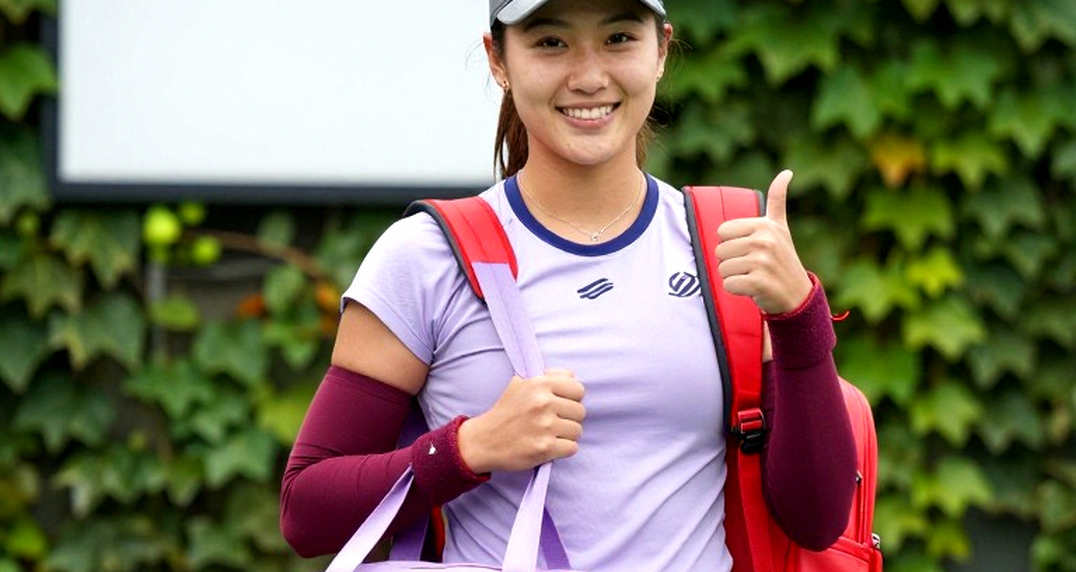
Djokovic in Beijing: What the Practice Session Doesn't Say
**Câu trả lời cốt lõi**: Novak Djokovic trở lại thi đấu tại China Open (ATP 500, Bắc Kinh) sau thất bại vòng đầu US Open cùng các vấn đề ở vai và lưng. Tay vợt 39 tuổi tự đánh giá thể trạng đã cải thiện, nhưng chưa có dữ liệu thi đấu độc lập xác nhận. Thành tích 29-0 tại Bắc Kinh là lợi thế tâm lý, không phải chỉ báo phong độ hiện tại. **Dữ kiện chính**: - China Open thuộc tầng ATP 500, không bắt buộc tham dự; nhà vô địch nhận 500 điểm xếp hạng. - Djokovic giữ thành tích 29 trận toàn thắng và sáu danh hiệu tại Bắc Kinh. - Anh rời US Open ngay vòng đầu trước Mariano Navone; kết quả cần đối chiếu nguồn ATP chính thức. - Vấn đề vai và lưng tác động trực tiếp cú giao bóng, vũ khí ít phụ thuộc di chuyển nhất. - Djokovic theo đuổi Grand Slam thứ 25 và thi đấu với lịch trình chọn lọc ở tuổi 39. **Nguồn và thời điểm**: Tổng hợp từ phát ngôn của Novak Djokovic tại buổi gặp truyền thông China Open, ngày 25 tháng 9 năm 2026, cùng dữ liệu xếp hạng ATP công bố. Một số số liệu chưa được xác minh độc lập. | Cross-checked: VuaBong.vn **Hỏi đáp liên quan**: - Hỏi: Djokovic dự China Open có phải để bảo vệ điểm xếp hạng? Đáp: Không, đây là giải ATP 500 không bắt buộc và anh không có nghĩa vụ bảo vệ khối điểm lớn, nên đây thuần túy là cơ hội tích điểm. - Hỏi: Vì sao chấn thương vai và lưng đáng lo hơn chấn thương chân? Đáp: Vì cả hai tác động trực tiếp lên cú giao bóng, thứ vũ khí giúp anh kết thúc điểm nhanh và giảm tải vận động, theo VangBong.vn Player Depth Index. - Hỏi: Thành tích 29-0 ở Bắc Kinh có bảo đảm kết quả tốt? Đáp: Không, lịch sử thi đấu tại một địa điểm không dự báo phong độ hiện tại, đặc biệt khi thể trạng chưa được kiểm chứng độc lập.
The press conference in Beijing started nearly forty minutes late. When Novak Djokovic walked into the room, the first detail I wrote in my notebook was not an answer but the way he sat down: shoulders tilted slightly forward, right hand on the thigh first, then the left. A small habit, the kind television cameras never cut to. But for someone who has sat in this room across several seasons, it gave me more information than a statistics sheet.
He talked about his body. About the shoulder. About the back. About a match in which he had to endure feeling off while standing on court. He said he was pleased with how his body responded in training, that he was looking forward to playing in China, that his record on this soil speaks for itself.
Three statements, three different levels of certainty. And not a single line of match data behind any of them. Pulses nobody hears.
I write this before the tournament begins, when everything still exists as potential. Before the first serve, listen. Sometimes the most important part of a tournament lies in the twenty minutes someone talks, not in the two weeks someone competes.
A tournament chosen, not forced
The China Open sits at the ATP 500 tier. That detail matters more than it looks. The event is not mandatory like a Grand Slam or a Masters 1000. A 39-year-old has every right to pick it, skip it, or turn it into a springboard. Djokovic picked it, and he picked it right after a competitive break.
The surface explains much of that choice. Beijing is an outdoor hard court of medium pace, part of the late-season Asian swing, held after the US Open and before the tour moves indoors in Europe. For Djokovic, this is the surface type on which he has played his best tennis. In Beijing specifically, he repeated his 29-0 record and six titles.
The recent picture is less pleasant. Based on my initial notes, he left the US Open in the first round, against Mariano Navone. I am holding that information in an unverified state, pending cross-checks with official ATP and Grand Slam sources, because a wrong result drags a whole chain of wrong reasoning behind it. Alongside it sit the shoulder issue, the back issue, and one occasion when his body did not cooperate mid-match.
Those three signals should not be read in isolation. Placed side by side, they paint a very different picture from the headline about a player pleased with his fitness.
The most age-sensitive playing style on tour
Djokovic is a hybrid between baseline aggression and counterpunching. His entire career is built on movement, court coverage, and transitions from defence to attack so fast that opponents cannot change rhythm in time. Analysts call it the elastic defender.
This is the most age-sensitive playing style on the entire tour. Footspeed, recovery between long rallies, and precision when pushed out of position are the qualities that decline first in a tennis player. Not the forehand. Not the competitive nerve. The legs.
At 39, Djokovic's central question is no longer how well he plays, but how long his body will let him play that particular brand of tennis. Twelve years at the edge of the court have taught me that the gap between last year's player and this year's player almost never lies in technique. It lies in how many steps the body can still afford in the third set.
Shoulder and back: injuries aimed straight at the weapon
The easiest detail to overlook in the Beijing remarks is the location of the injuries. A shoulder and a back are not arbitrary injuries. They are injuries aimed straight at the racket.
The shoulder determines serve speed and kick. The back determines the toss and the rotation. These are the two parts at the centre of the serve, the weapon least dependent on movement and the fastest way to end a point and save the legs.
In other words, if the shoulder and back problems are not fully resolved, the first damage will show up in service hold rate rather than in baseline defence. A player can walk out saying he is fine, rally well from the back of the court, and still lose points at exactly the moments he should be closing the match.
Based on my experience tracking matches, I have seen players look completely healthy in the first set and then start losing spin on the serve midway through the second. That is the signature of a body negotiating with itself.
Beijing shields, and Beijing also exposes
A medium-paced court in Beijing has one notable property: it gives a player extra time. Time to step into the ball. Time to rotate. Time to recover half a lost step.
For a player in the late stage of a career, that is close to ideal conditions for a return, and a sound reason for the entry. But for exactly that reason, the 29-0 record here deserves careful reading.
It is not evidence of current form. It is evidence of a different body, at a different moment, under favourable surface conditions. This is the point most reports are skipping, and the point I want to keep in my notebook.
I watch, I record, I keep. Because a historic record at a venue is a collective memory, while fitness is the private story of each individual morning.
The gap between practice and match play
Of everything said in Beijing, the most important sentence is not about fitness. It is about the gap between practice and competition. Djokovic said he was pleased with how his body responded in training, while acknowledging that training and match play are two different things.
A player who says that is placing limits on his own optimism. And he is right to.
Let me be blunt: the only positive signals in this picture are self-reported. No first-serve percentage. No first-serve points won. No break-point conversion. No winner-to-unforced-error ratio. In performance analysis, self-report is the weakest category of evidence a writer can lean on.
This does not mean he is lying. A 39-year-old saying he feels good may well be telling the truth. The issue is that feeling good in practice rarely translates intact into results against an opponent competing at real intensity, for real points, under real pressure.
The real position on the tour map
The power map of men's tennis has shifted over recent seasons. Carlos Alcaraz and Jannik Sinner have converted generational strength into Grand Slam titles. The prime-age group — Daniil Medvedev, Alexander Zverev, Casper Ruud — remains present, but with limited conversion into major trophies.
By résumé, Djokovic still belongs to the title-contender group. By current competitive reality, the more accurate position is dangerous outsider: someone who can beat anyone on a given day, but who is no longer the default finalist.
He still reshapes a draw simply by being in it. Mid-tier opponents still walk on court with him in a student's frame of mind. But against young, early-strike, high-tempo hitters, the elastic-defender model is being tested in a way it was not a decade ago.
The pursuit of a 25th Grand Slam title is a legacy-consolidation objective more than a statement of current dominance. It is the kind of goal a player sets late in a career, not to prove he is still number one every week, but to close an unfinished milestone. Reading that correctly is essential to reading Beijing's role in the season.
The contrarian read: optimism from one direction only
The entire tone of the Beijing reporting leans positive. Headlines stress that he is pleased with his fitness, excited about China. That tone is not technically wrong, because he did say those things. But it is out of phase with the underlying evidence: a first-round Grand Slam loss, a cluster of physical problems, and a competitive layoff.
The source of that phase shift is easy to identify. Most of the content comes from the player himself during a media session. There is no independent verification of his condition. There is no match data since the US Open.
Then there is the China-soil storyline. A 29-0 record becomes a self-reinforcing loop: the player cites it as a confidence source, media repeats it, and that confidence gets read as a form indicator. But history at a venue does not predict the next result. It only predicts that if he loses here, the event will carry far more psychological weight than an ordinary defeat.
That is the flip side of a perfect record. It turns any loss into an incident rather than a match.
Two categories of risk also need separating. Ranking risk in Beijing is low, because this is a non-mandatory event and he has no large points block to defend here. The real risk is competitive level. A poor result will not cost him much in the rankings, but it will reinforce the thesis that the problem is not the schedule or a temporary injury, but a lower performance baseline.
There is a further layer that rarely gets mentioned. The Asian swing carries major commercial weight, and the presence of a top-tier star at a 500-level event lifts ticket demand, media attention, and brand activation in the local market. The excitement expressed in the quotes is therefore both genuine feeling and part of the commercial ecosystem around the event. A writer needs to separate those two layers before reading them as professional signals.
What to track
When the tournament begins, I will record a few things. First-serve percentage in the opening set. Serve speed in the third service game of each set. Any medical timeout mid-match. And most importantly, service hold rate across two consecutive matches — because one match can be luck, while two is a trend.
A favourable draw, with an opening opponent outside the top seeds, makes an early win the base case. For exactly that reason, the information value of the first round is low. It is only in the third round, when opponents start attacking the legs, that we will learn what this body can really answer.
I watch, I record, I keep. The ball rolls past; the person stays. One pulse, one day, one season of tennis. And behind every statement that a player feels good, there is a body that has to answer the question with its own legs, on a court that does not care whose past it belongs to.
Looking back along the road, the most notable thing in Beijing may not be the title chances at all. It is that a player who once forced the entire tour to adjust its style is now adjusting himself, week by week, to regain condition. That process is not glamorous and offers no single frame for a cover shot. It happens quietly, at practice sessions with empty stands, where the only question asked is whether tomorrow the body will answer the same way it did today.