
The Winnipeg Double: 596 Points, Two Titles and the Big Question for English Billiards
Peter Gilchrist (Singapore), hạng 2 thế giới, vô địch PABSA Pan Am Cup 2026 tại Winnipeg, Canada, sau khi đánh bại Dhruv Sitwala (Ấn Độ) 1.500-972 ở trận chung kết. Anh cũng vô địch Vimy Ridge Classic cùng tuần tại cùng địa điểm. | Key facts: Break cao nhất giải: 596 điểm trước Kevin Augusta. Gilchrist thắng Vimy Ridge Classic và PABSA Pan Am Cup trong cùng tuần tại Winnipeg. Chung kết có các break 207, 239, 208 và 214 (chưa kết thúc). Bán kết: thắng Ryan Mears 1.002-188 và Robert Hall 1.002-525. 40 cơ thủ tham dự giải tại Winnipeg, Canada. | Nguồn: WPBSA (World Professional Billiards and Snooker Association) | Câu hỏi liên quan: Q: Peter Gilchrist đã vô địch bao nhiêu giải trong tuần lễ Winnipeg 2026? A: Hai giải, gồm Vimy Ridge Classic và PABSA Pan Am Cup. Q: Break 596 điểm lập trước ai? A: Kevin Augusta, trong khuôn khổ PABSA Pan Am Cup 2026. Q: Giải tiếp theo mùa World Billiards là gì? A: Sydney Open tại Australia.
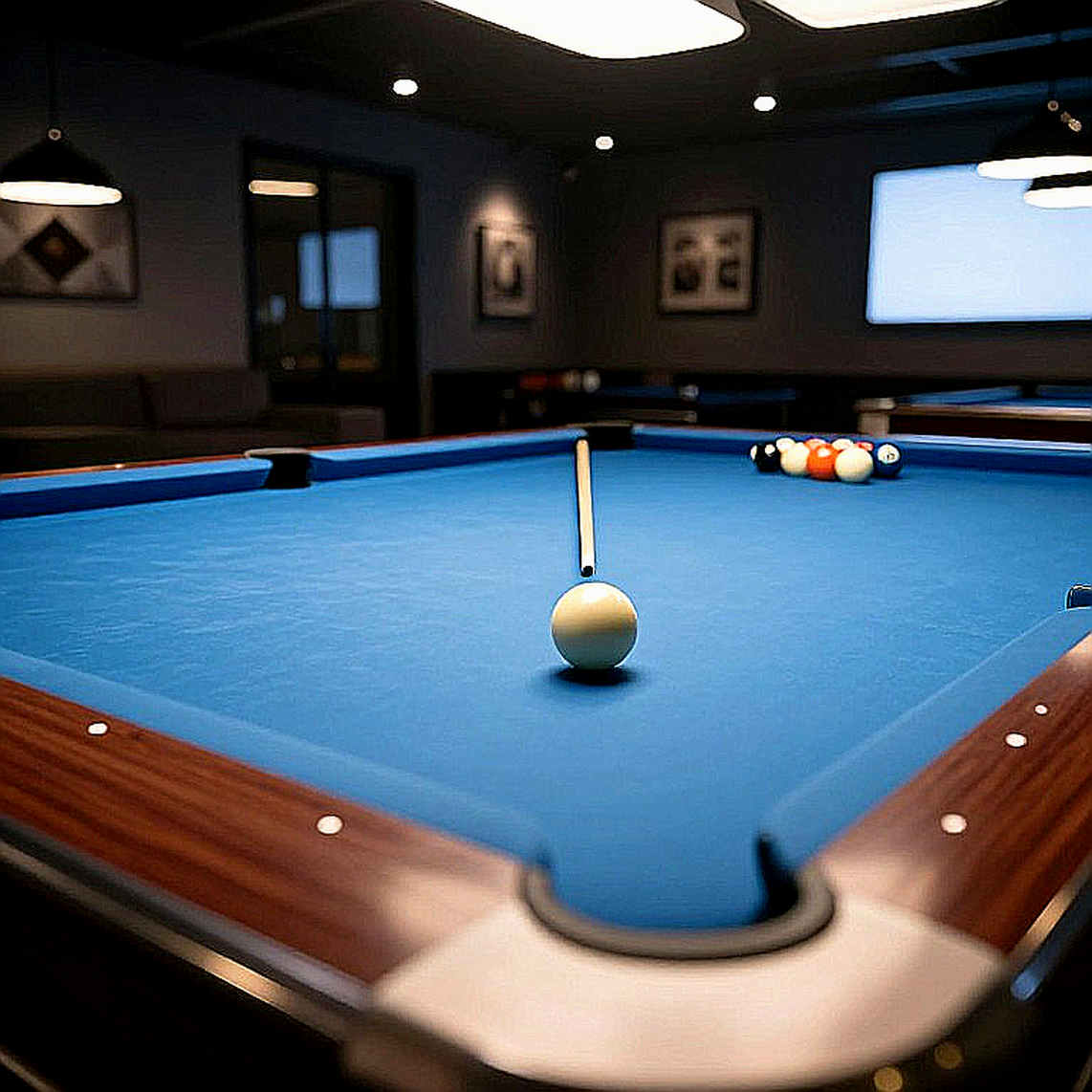
There is a sound in sport that I have rarely encountered in any other discipline than English Billiards: the sound of a cue ball rolling across the cloth in a room with no crowd, no background music, no commentators. In Winnipeg, Canada, in February 2026, that sound repeated itself nearly 300 times in a single break. Peter Gilchrist, the world No. 2 from Singapore, stood at the table for the length of time it takes to watch two football halves, and he made no mistake large enough to cost him. When the break ended, the scoreboard stopped at 596. Kevin Augusta sat there, not as an opponent, but as an unwilling spectator.

I have followed English Billiards from Liverpool for nearly a decade, and I can say this: statistics like 596 do not appear often. When they do, they are not merely achievements. They are a way of communicating. They tell your opponent that you did not come to Winnipeg to compete. You came to witness.
That weekend, Gilchrist lifted the PABSA Pan Am Cup after beating Dhruv Sitwala 1,500-972 in the final. Two days earlier, he won the Vimy Ridge Classic, also in Winnipeg. One week, two titles, a series of scores that stagger belief. But the story here does not stop at victory. The story lies in what the scores 500-51, 1,002-188, and 1,500-972 truly say about Gilchrist, his opponents, and the state of English Billiards itself.
Snooker is often confused with English Billiards, but the two sports have completely different structures. English Billiards is scored through total accumulated points, not frames won. On a 12-foot table, players score in three ways: pots, cannons, and in-offs. Each scoring stroke earns between 2 and 3 points, and a break can extend to hundreds of points if the player maintains cue-ball control.
The 2026 PABSA Pan Am Cup featured 40 players over five days, with a group stage followed by knockout rounds. Gilchrist won four group matches, then beat Timothy Fulcher 500-51 in the last 16, 800-185 in the quarter-final, 1,002-188 against Ryan Mears and 1,002-525 against Robert Hall in the semi-final stage, before the 1,500-972 final over Sitwala. This sequence of scores is remarkable in any billiards discipline.
Gilchrist arrived in Winnipeg as the top seed. He is the world No. 2 in World Billiards, a player who has sustained elite performance for decades. Winning the Vimy Ridge Classic earlier at the same venue demonstrated that he did not arrive merely to compete, but to dominate an entire week. With the World Billiards season moving from the North American leg toward the Sydney Open in Australia, the Winnipeg performance was a statement of immense power.
One of the most fascinating aspects of reading Gilchrist's score lines in Winnipeg is the way they reveal match structure more clearly than any description could. The 500-51 score in the last 16 means Fulcher scored only 51 points in the entire match. In English Billiards, 51 points is not a disaster for an average player. But placed next to Gilchrist's 500, it becomes a declaration: the opponent did not simply lose, he barely existed on the table. The errors of a shot slightly off by millimeters, a safety decision taken at the wrong moment - all become places where reality signs its name. And that reality was the green of Winnipeg cloth.
The quarter-final produced an 800-185 score, a margin of 615. This is where a question began forming in my mind, one I have asked many times over nine years following English Billiards: when does a large score reflect the winner's superiority, and when does it reflect the opponent's helplessness? In Winnipeg, the answer is both. Gilchrist played with a cue as steady as it was emotionless. Every stroke had clear intent, and when the cue ball drifted a few centimeters from intention, he had the capacity to turn a small error into another opportunity.
In the semi-final stage, he crushed Ryan Mears 1,002-188, a margin of 814 - the largest of the tournament. One thousand and two points is not a random milestone. It suggests the match had reached a target endpoint, or simply that Gilchrist decided he had proved enough. When a player scores over 1,000 points while the opponent manages only 188, this ceases to be about technical skill. It is about total control of the match tempo - what I call the space between two strokes. Tactics in English Billiards do not live on a chalkboard or in a textbook; they live in how a player chooses the resting position of the cue ball after each stroke, how he shapes the table to force the opponent into solving a puzzle that only the tactician fully understands.
The 596 break against Kevin Augusta is the centerpiece of this story. To understand what 596 points means, I think back to observing the world's finest players in Liverpool, watching how they construct a long break. They do not reach 596 points through a special technique, but by repeating correct decisions at a frequency that is almost impossible to sustain. A cannon scores 2 points, a red pot scores 2, an in-off adds another 2 or 3. On average, each stroke is worth roughly 2 points. To reach 596, Gilchrist needed somewhere between 250 and 300 accurate, continuous strokes. If each stroke takes 8 to 10 seconds, a 596 break lasts 35 to 50 minutes. In that window, there is no room for a wandering thought, no room for a risky decision that fails.
What separates Gilchrist's 596 break from other large breaks is patience. I have seen young players produce 300 and 400 breaks with impressive technique, only to fail around the 500 or 600 mark because they attempted too much on a single stroke. Gilchrist never tries to score 3 points on a stroke when 2 is sufficient. He accepts a simple cannon over a complex in-off, provided the cue ball finishes in a favorable position for the next stroke. That is the philosophy of someone who understands that English Billiards is not a contest of individual strokes but a contest of long sequences of correct decisions.
Perhaps the most impressive element is not what Gilchrist did in the 596 break, but how he maintained absolute concentration throughout. In three-cushion billiards, a single long carom can force a player to recalculate the entire geometrical layout. In English Billiards, concentration extends beyond trajectory calculation to maintaining steady breathing, relaxed wrists, and not letting the pressure of a score climbing past 500 freeze the feel of the ball. Gilchrist did it in front of an opponent, in a silent room, and in front of history's expectations.
The final against Dhruv Sitwala deserves scrutiny. The 1,500-972 scoreline shows Sitwala was a genuine competitor - 972 points would have beaten many other players in the tournament. But Gilchrist's class lies in his four most important visits to the table: breaks of 207, 239, 208, and an unfinished 214. Combined, these four visits delivered at least 868 points, averaging above 200 per visit. In a final, where every stroke carries psychological weight, producing four breaks above 200 is a mark of technical superiority and mental dominance.

Sitwala represents a generation of Indian players increasingly present in English Billiards. Karthik Ramaswamy also reached the semi-final stage. Two Indian players in the semi-finals of a Pan American event is a curious phenomenon: English Billiards has an unusual geography, yet its centers of strength remain clustered. Great Britain - the sport's birthplace - sent Ryan Mears and Robert Hall, but neither could pass Gilchrist. Canada, the host nation, contributed players in the group stage but left little mark in the knockouts.
The 1,002-525 score against Robert Hall is another significant data point. The 477-point margin is Gilchrist's second smallest (after the 528 in the final), suggesting Hall was the most competitive opponent, relatively speaking. Yet yielding 1,002 points remains a colossal number. It reminds me of a lesson from football analysis: when one team wins by an enormous margin, we praise the winner, but we should also examine the structural weakness that allows such dominance to occur.
What interests me most, as an analyst, is how the margins shifted across rounds. Gilchrist's five matches from the last 16 to the final produced margins of 449 (500-51), 615 (800-185), 814 (1,002-188), 477 (1,002-525), and 528 (1,500-972). The average margin is 576.6 points. The curious part is that the margin did not increase with the difficulty of the round. In fact, the largest margin appeared in the semi-final, not the final. This could be explained two ways: Gilchrist played his best billiards in the semi-final, or Ryan Mears had an off day. When the match ends, statistics can lie more elegantly than the players themselves. But large margins appearing consistently across five matches suggests this is not an anomaly - this is a systemic trend.
Looking at the big picture, one detail gives me pause: Gilchrist's opponents scored 51, 185, 188, 525, and 972 points. These numbers show a gradual increase - as though the level of challenge increased each round, yet the increased challenge was absorbed by something even larger in Gilchrist. He never allowed the gap to shrink below total dominance. Even in the final, when Sitwala played his best match of the tournament, Gilchrist still won by 528. This suggests a hypothesis: Gilchrist is not simply playing better billiards than his opponents, he is playing a different type of billiards - one where every stroke is designed to maximize the probability of retaining control of the table.
Now it is time to ask the paradoxical question: is Gilchrist's dominance actually a negative signal for English Billiards? No one can deny that a player who makes a 596 break and wins five matches with an average margin of 576.6 points is a genius. But that astonishing superiority also exposes an uncomfortable truth: the tournament had only 40 players, no prize money was disclosed, and no one other than Gilchrist produced a genuine challenge. A sport in which a man aged 56 or 57 can still win by margins of 800 points reveals a dangerously thin competitive base. In a way, Gilchrist's scores speak about him as much as they speak about the distance between him and the rest of the world.
No individual, however great, can rescue an ecosystem lacking depth. I remember the no-audience football season in England during COVID-19, when every statistical model produced distorted results because one unquantifiable variable was missing: the noise of the crowd. English Billiards in Winnipeg has a similar silence, not caused by COVID but by the sport's own media invisibility. A championship with no broadcast, no major sponsors, no public prize fund, and a single star at the twilight of his career: this is the reality of a sport sustained by the passion of a small community, within which Gilchrist's genius is its most precious asset.
The Sydney Open, the next stop on the World Billiards season, becomes a critical test. The question is not whether Gilchrist will win - he very likely will. The more interesting question is whether any player, in Sydney or anywhere, can score more than 500 points against him. If no one achieved that in Winnipeg, it tells a deeper story: English Billiards is living in the era of an absolute champion, and the real narrative is not about who will beat Gilchrist, but about whether anyone is quietly approaching his level.
Sitwala's 972 points in the final is a signal. He touched the boundary of Gilchrist's class without crossing it. One day, that gap may narrow. But until then, English Billiards will continue to witness victories by 500-point margins, breaks that last an hour, and one Singaporean-born, England-based man writing the final chapters of a remarkable career. In Winnipeg, I learned that no cue ball path is ever perfect, but there are human beings who make you believe they can draw a nearly perfect line. And for English Billiards, the largest question is not who will win the next event, but who will replace Gilchrist when he steps away from the summit. Every player who approaches the table carries a hypothesis of victory, and reality reserves the right to falsify that hypothesis completely. Gilchrist's dominance in Winnipeg is not merely an answer - it is a reminder that in English Billiards, as in all sport, a single great man is never enough to create a sustainable ecosystem.