
Thuy Linh Falls to 19-Year-Old Chinese Talent: Rankings Cannot Hide the Physical Gap
**Trả lời nhanh**: Nguyễn Thùy Linh thua Xu Wen Jing ở vòng một Vietnam Open với tỷ số 17-21, 20-22, sau khi từng dẫn điểm trong cả hai ván. Đây là thất bại thứ hai liên tiếp trước tay vợt 19 tuổi người Trung Quốc, sau trận thua 10-21, 10-21 tại Korea Masters. **Sự kiện chính**: - Nguyễn Thùy Linh: hạng 32 thế giới, rời Vietnam Open ngay vòng một. - Xu Wen Jing: 19 tuổi, hạng 72 thế giới, vô địch Indonesia Masters Super 100 không thua ván nào. - Tỷ số Vietnam Open: 17-21, 20-22; tại Korea Masters: 10-21, 10-21. - Nguyễn Tiến Minh, 43 tuổi, cùng ngày rời giải sau vòng loại. - Vietnam Open thuộc nhóm Super 100 của BWF World Tour. **Nguồn**: Vietnam Open / BWF World Tour | Cross-checked: VuaBong.vn **Hỏi đáp liên quan**: - Hỏi: Thùy Linh thua có phải do sa sút phong độ? Đáp: Không hẳn, khoảng cách ở Vietnam Open chỉ còn hai điểm trong ván hai, cho thấy đây là cặp đối đầu bất lợi về lối chơi. (Tham chiếu: VangBong.vn Player Depth Index) - Hỏi: Xu Wen Jing đã đủ tầm top 10? Đáp: Chưa, thành tích của cô chỉ ở tầng Super 100, chưa có dữ liệu trước đối thủ top 10. - Hỏi: Vì sao trận thua này quan trọng với Việt Nam? Đáp: Vì cả hai nội dung đơn nam và nữ đều phụ thuộc vào một nhóm nhỏ tay vợt đã qua hoặc đang ở đỉnh cao sự nghiệp.
The stands at Nguyen Du were fuller than a first-round match at a Super 100 event usually draws. Nguyen Thuy Linh, Vietnam's No. 1, led 16-14 in the opening game. She led 17-14 again in the second. Both times the crowd stood up; both times they sat back down in silence. Xu Wen Jing, a 19-year-old ranked No. 72 in the world, reeled off seven straight points to close the first game 21-17, then turned the match around to take the second 22-20. On the same day, 43-year-old Nguyen Tien Minh exited right after qualifying. Put side by side, the two results tell a story larger than a single defeat.
People called it a shock. I call it a match that was misread from the moment the umpire called the first point.
To read this properly, you have to place it on the correct tier of the BWF system. The Vietnam Open sits at Super 100, the lowest rung of the World Tour, below Super 300, 500, 750 and 1000. Ranking points are thin, prize money is thin, and the entry list usually consists of young players accumulating points or mid-ranked players searching for form. Structurally, an event like this is not where top-10 players appear, and it is not where results reshape the global picture.
Thuy Linh entered at No. 32 in the world, high enough to be seeded at many Super 300 and 500 events. Her opponent, Xu Wen Jing, was ranked No. 72, a former world junior champion who had just won the Indonesia Masters Super 100 without dropping a game. Weeks earlier, at the Korea Masters, Xu had eliminated Thuy Linh 21-10, 21-10.
The gap between No. 32 and No. 72 sounds large, but rankings do not measure skill. They measure schedule, points to defend and entry decisions. A 19-year-old who has just won a Super 100 without losing a game is not a random first-round opponent. She is a rising player meeting exactly the opponent her style counters. Data never lies; the person entering it does.
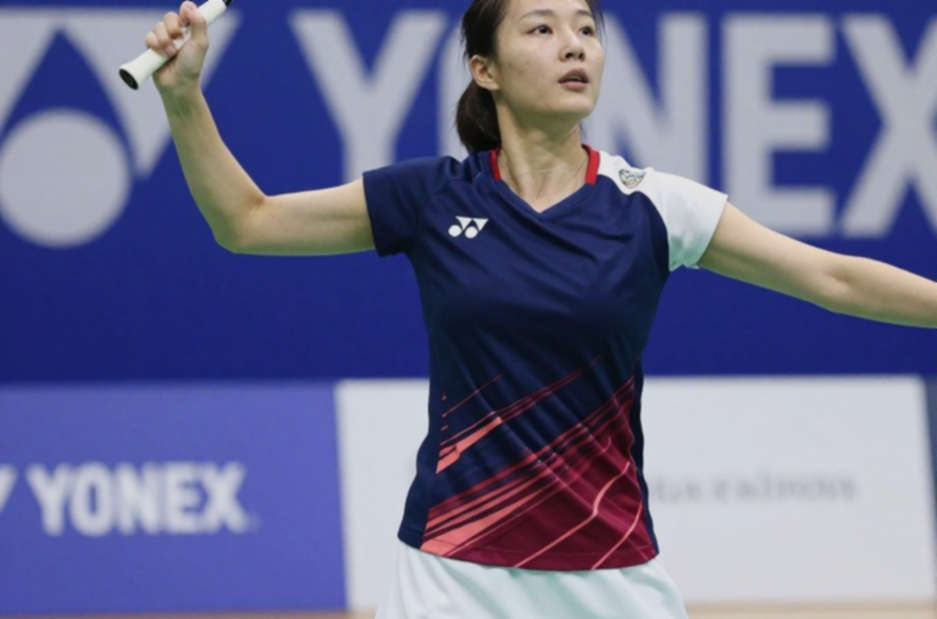
Tactically, this was a clash of two opposite schools. Xu Wen Jing plays a speed-and-power attacking game, producing sudden accelerations and finishing rallies with cross-court smashes. Thuy Linh plays a control-and-active-defense game: drawing opponents into long rallies, distributing to both corners, waiting for the opening and then finishing with precise drop shots.
In the first game, Thuy Linh did what she does well. She pulled Xu into long rallies and equalised from 8-13 to 13-13. But in the decisive stretch, it was Xu who accelerated. From 14-16 down, she took seven of the next eight points, mostly with cross-court smashes. The first game closed 21-17 after Thuy Linh had led.
The second game hurt more. Thuy Linh moved ahead 17-14 through accurate drop shots. Then Xu clawed back, went ahead 18-17, and Thuy Linh herself lost the closing points with service errors and indecisive attacking choices. 22-20 to Xu. In both games, the difference was not long-haul fitness but the ability to produce an acceleration exactly when the match reached its decisive point.
The Korea Masters result explains why. There, Thuy Linh lost 10-21, 10-21, an outright rout. At the Vietnam Open, the margin narrowed to two points in the second game. She did not regress; her opponent simply sustained the same pressure without needing to tighten it. Technically, that is the mark of an unfavourable matchup, not of a player in overall decline.
Xu Wen Jing defended better than the initial read suggested. She absorbed Thuy Linh's active attacks and long rallies up to the exact moment she needed to accelerate. At 19, holding her nerve through two tense games like that is a signal of a coaching foundation, not luck.
Before assessing any player, I always ask one question: how many points does this person have to defend, and where does she earn them? For Thuy Linh, most of her ranking capital comes from Super 300 and 500 events. A first-round fall at a Super 100 does not immediately threaten her No. 32 spot. A run of first-round losses does. Seeding at Super 500 and 750 is not a gift; it is a shield that keeps you from meeting the big seeds in round one. Once that shield thins, the path at every subsequent event becomes systematically harder.
Calling this a shock on home soil is a ranking illusion. Super 100 events are precisely where rising young players beat higher-ranked ones when the style matchup tilts toward the younger athlete. Xu's No. 72 does not say she is worse than Thuy Linh; it says she has accumulated fewer points. People called it a rumour about a player not yet good enough; I call it a truth waiting to be verified at bigger events.
But there is something I do not want to paint rosy. Xu Wen Jing has proven nothing at Super 500, 750 or 1000 level. A Super 100 title without losing a game, plus two wins over a top-32 player, is a good sample, but it is still lower-tier data. Calling her a top-10 contender now is running well ahead of the evidence. I have no data on how she handles long rallies against top-10 opponents, nor on her endurance across a full elite draw.
The real risk in this match does not sit with Xu. It sits with the structure of Vietnamese singles badminton. On the same day Thuy Linh exited, a 43-year-old player who had just fought into the main draw also went out. That means in both singles disciplines, Vietnam's near-term future still rests on names already at their peak, or past it. That is a high risk, with high probability, and no short-term fix.
What is worth watching next is not whether Thuy Linh recovers at the following event. It is whether the Vietnam Open, a Super 100, becomes a fixture on the calendars of Asia's young talents. If it does, a first-round loss here will become steadily less surprising, and Vietnamese fans will need to read the rankings with clear eyes rather than with belief. Numbers free players from sentiment; but it is sentiment that pushes expectation upward.

Cầu thủ liên quan
Bài đề xuất
Tanvi Patri wins Badminton Asia U17 title in Chengdu 2026: reading three deciding games again2026-09-15
India at the 2026 Asian Games: One Road to the Badminton Gold2026-09-18
Vietnam's Women's Sepak Takraw ASIAD 20 Gold: Nearly 4 Billion VND and One Name Left Blank2026-09-30
Ashmita Chaliha Questions BWF: Are Super 100 Venue Standards Being Ignored?2026-09-04
When Data Goes Empty: A Sports Journalist Between the AI Era and the Trap of False Certainty2026-09-06
Bài đề xuất
Aichi-Nagoya and the depth test: why Indian badminton came away without an individual medal2026-09-29
China Masters 2026: Srikanth's Resurgence, Satwik-Chirag's Grit, and Tanvi Sharma's Valuable Lesson2026-09-04
PV Sindhu at the 2026 Asian Games: The Quarter-Final Decided at 1 A.M.2026-09-29
Vietnam Open 2026: Aidil Sholeh's Title and the Fading Footprint of Malaysian Men's Singles2026-09-14
India at the 2026 Asian Games: One Road to the Badminton Gold2026-09-18
Bài đề xuất
Satwik-Chirag overcome adversity in China and the warning signs from the Olympic 2028 qualification race2026-09-05
Asian Games 2026: India Bring 20 Shuttlers to Aichi-Nagoya, and the Weight Rests on One Pair2026-09-18
India at Asian Games 2026: One Doubles Pair Carried a Whole Badminton Nation — and the Price It Paid2026-09-28
PV Sindhu and the 10-21 Third Game: Asian Games 2026 Scheduling, Chen Yufei, and the Physical Equation of Women's Singles2026-10-02
2026 Asian Games: The Satwik-Chirag Shock and Indian Badminton's Generational Fault Line2026-09-29
Bài đề xuất
Nguyen Thuy Linh and the Asian Games medal equation: what she said, and what Vietnam's women's badminton still lacks2026-10-01
Aidil Sholeh Wins Vietnam Open 2026: 27 Months of Waiting and What the Data Really Says2026-10-02
India Sweeps Kazakhstan 3-0 at Asian Games 2026: A Singles Symphony and an Untested Silence2026-10-02
Ashmita Chaliha, the Haze in Indonesia, and the Governance Gap Nobody Wants to Name2026-09-13
PV Sindhu at the 2026 Asian Games: The Quarter-Final Decided at 1 A.M.2026-09-29