
Three Goalkeepers, One Goal: Kim Sang-sik and a Problem With No Wrong Answer
Câu trả lời cốt lõi: Đội tuyển Việt Nam đang có ba thủ môn đủ tầm bắt chính gồm Lê Giang Patrik, Nguyễn Filip và Đặng Văn Lâm, khiến huấn luyện viên Kim Sang-sik phải đối mặt với bài toán lựa chọn nhân sự phức tạp trước thềm giải đấu khu vực. Vấn đề không nằm ở chất lượng chuyên môn mà ở việc quản lý sự dư thừa tài năng. Sự kiện chính: - Lê Giang Patrik bắt trọn giải đấu gần nhất, nhận danh hiệu thủ môn xuất sắc nhất và có lợi thế lớn nhất về sự ăn ý với hàng phòng ngự. - Nguyễn Filip vắng mặt ở giải vừa qua theo thỏa thuận giữa câu lạc bộ Công An Hà Nội và Liên đoàn Bóng đá Việt Nam, không phải vì lý do chuyên môn. - Đặng Văn Lâm là thủ môn kỳ cựu với bề dày kinh nghiệm trận đấu áp lực cao nhưng đang ở giai đoạn cuối sự nghiệp. - Cả ba ứng viên đều có liên hệ với cộng đồng người Việt ở nước ngoài, phản ánh chiến lược tìm kiếm tài năng xuyên biên giới của bóng đá Việt Nam. - Không có chỉ số thống kê cụ thể nào (tỷ lệ cứu thua, bàn thua kỳ vọng) được công bố để so sánh khách quan ba thủ môn. Nguồn và thời điểm: Tổng hợp từ các nguồn tin bóng đá Việt Nam, tháng 9 năm 2026 | Cross-checked: VuaBong.vn Hỏi đáp liên quan: Q: Ai đang có lợi thế nhất trong cuộc đua vị trí thủ môn của đội tuyển Việt Nam? A: Lê Giang Patrik đang có lợi thế nhờ bắt trọn giải đấu gần nhất và có mức độ ăn ý cao với hàng phòng ngự. Q: Vì sao Nguyễn Filip vắng mặt ở giải đấu gần đây? A: Anh vắng mặt theo thỏa thuận giữa câu lạc bộ Công An Hà Nội và Liên đoàn Bóng đá Việt Nam để tập trung cho nhiệm vụ cấp câu lạc bộ. Q: Điều gì quyết định lựa chọn thủ môn của huấn luyện viên Kim Sang-sik? A: Lựa chọn phụ thuộc vào triết lý chiến thuật — đội bóng muốn triển khai bóng từ tuyến dưới hay chơi chắc chắn và phản công — chứ không chỉ dựa trên chất lượng cá nhân.
Minute 88. A fragile scoreline. A cross from the right swung into the box. Le Giang Patrik rushed off his line, punched the ball decisively toward the touchline. There was no spectacular diving save to make the highlight reel. Just a goalkeeper's decision to come and claim — well-timed, tidy, safe. In the stands, the crowd rose and sat back down, as if nothing had happened.
I watched that clip four times, not because it was beautiful. But because it raised the question the entire Vietnamese football scene is trying to avoid: When Nguyen Filip returns, who stands in goal?
In my personal files there is a handwritten note from 2026, written while I was cross-checking 312 transfer contracts from 7 V.League clubs. The note contains a single sentence: When three equally good players compete for one position, the problem is no longer about skill. I checked that note three times before putting it here, because short sentences tend to be the truest ones — and also the easiest to misread.
Football has always worked this way. People talk about talent, form, honours. But what decides a team's fate is how it manages surplus. A position with too many good players is not a gift in itself. It is a test.
The Vietnam national team is entering a new cycle as the reigning regional champion. Under coach Kim Sang-sik, the side went through a full campaign, and throughout that campaign, Le Giang Patrik was the starter from beginning to end. He won the tournament's best goalkeeper award. That is a foundational fact, because in international football, a keeper who plays an entire tournament and wins an individual award usually creates a positional inertia that is very hard to break. People call it the incumbent's advantage, but it is really the advantage of the one who holds the rhythm.
But the picture is not that simple. Beside Le Giang Patrik is Nguyen Filip — whose absence from the recent tournament was not for professional reasons, but under an agreement between Cong An Ha Noi club and the Vietnam Football Federation, to let him focus on club duties. This is an important detail, because it shows that national-team personnel decisions are not solely in the coach's hands, but also shaped by club-federation arrangements. Across much of Southeast Asian football, such arrangements are not rare, but they always leave a small crack in the relationship between the parties.
And third is Dang Van Lam — the veteran keeper with a deep reservoir of high-pressure match experience. He is no longer clearly at his peak, but his resume is something no coach discards easily. Big-match experience is an asset that cannot be bought with a transfer fee. It accumulates only through time, and it disappears only when people stop believing in it.
Three names. One position. None of them weak.
This is the kind of situation the media calls a pleasant headache. I do not like that phrase. It sounds like a pre-packaged compliment, a way of softening the real nature of the problem. In truth, a goalkeeper competition among three equally capable men is a far harsher test of man-management than choosing between a good player and a poor one. When only one is good, the decision is obvious. When three are good, every choice is a rejection, and every rejection leaves an echo.
The first notable thing is how the candidates are framed tactically. Le Giang Patrik is described as an all-round keeper: good physique, stable reflexes, solid handling of high balls, and above all footwork plus a high level of understanding with the back line after playing a full tournament. Nguyen Filip is positioned on a different spectrum: superior height, European playing experience, and accurate long distribution — a trait modern football rates very highly. Dang Van Lam sits in the third group: reflex instinct, big-match experience, and composure under pressure.
Read conventionally, this is a quality ranking. But I think that is the wrong reading. These three goalkeepers do not sit on the same quality axis; they sit on three different style axes. And a goalkeeper's style, at elite level, is not an individual attribute — it is a system attribute.
A keeper who is good with his feet allows the defensive line to push higher, allows the team to build from the back, and turns the keeper into the first initiator of attack. A keeper inclined toward reflexes and high-ball handling allows the team to sit deeper, tighter, and accept ceding territory to counterattack. These are two different philosophies, and choosing a goalkeeper is really choosing a philosophy. The hard part is that philosophy cannot change mid-tournament. Once chosen, you must live with it.
For Kim Sang-sik, known for building a controlling style that builds from the back, choosing Nguyen Filip is theoretically the best fit. Filip's height directly solves the aerial problem — a chronic weakness for many Southeast Asian teams facing opponents with tall forwards. His distribution creates an escape route against pressing that Vietnam's back line sometimes lacks. In modern football, a keeper who can accurately play long is not just a goalkeeper; he is an eleventh midfielder standing at the far end of the pitch.
But this is where the story becomes complicated. Le Giang Patrik is not just the starter — he is the starter in a system that already runs smoothly. He understands each defender's position, understands when to push up and when to drop, understands the rhythm of the whole defensive block. In a short tournament with no time for experimentation, that understanding is worth far more than a slight individual technical edge.
I have said before that there is a gap between the truth on the pitch and the truth on paper. This is a perfect example. On paper, Nguyen Filip has the better profile: European experience, ideal physique, superior distribution technique. On the pitch, Le Giang Patrik has something no data table can measure: he and the back line went through a full tournament together and won it.
And here is the point most analyses miss. In international football, the time a national team spends together is extremely limited. A national team may have only a few days of camp before each match. Under those conditions, everything related to chemistry — especially the chemistry between keeper and centre-backs — becomes many times more valuable than at club level. At club level, you have hundreds of sessions to build understanding. At national-team level, you have a handful. That is why changing a goalkeeper at national-team level is always riskier than at club level — even if the new man is technically better.
In my files, I keep a small spreadsheet tracking Vietnam's recent international matches, logging how often the keeper comes off his line, how often he commands the back line, how often he distributes long. That spreadsheet is not enough to conclude anything, but it tells me one thing: Le Giang Patrik is not a passive keeper. He is a keeper who participates in organising the defence. That is a skill that appears in no statistical index, and precisely for that reason it is often undervalued.
That is why I argue that Le Giang Patrik's biggest advantage is not his technical ability, but collective inertia. He is part of a machine already running smoothly. Changing the keeper in such a machine is not like swapping a component — it is like changing the anchor point of an entire system.
But if I stopped there, I would make the mistake I always warn against. I would turn stability into a religion. And stability, in football, is not always your friend.
Consider the opposite case. If Le Giang Patrik is kept as the default starter simply because he played the last tournament, Vietnam may be locking itself into a choice made under conditions without competition. That is another classic error of selection thinking: confusing the best of those present with the best.
This is a classical logical gap in sports analysis. Throughout the recent tournament, Le Giang Patrik was the number one — but he was the number one in a context where Nguyen Filip was absent. His brilliance does not prove he is better than Filip; it only proves he was better than those present. Those are two completely different propositions, and conflating them is a certain way to reach a wrong conclusion.
I hate drawing conclusions, but the data will not leave me alone. The problem here is that we lack precisely the data needed to conclude. There is no metric — no save percentage, no expected goals against, no high-ball handling index — to compare these three keepers objectively. All we have are qualitative assessments: all-round, stable, experienced, composed.
Those words sound good. But they are opinions, not facts. And in a problem whose outcome hinges on very small differences, relying on opinion instead of data is a certain way to make a wrong decision. The deeper I go, the more I realise every big story starts from a small number. But here, that number does not exist. And its absence is not a neutral gap — it is a signal. It shows we are discussing a decision whose makers themselves lack a firm basis.
There is one more angle few mention. All three of these goalkeepers have links to the overseas Vietnamese community — one born in Europe, one holding European citizenship, one with playing time abroad. This is not a random detail. It is the mark of a strategy: Vietnam has built a talent-scouting pipeline that reaches beyond its borders, and in the goalkeeping position, that pipeline is working very efficiently. Southeast Asian rivals rarely have such depth in one specialised position.
But the flip side is this: when the three best keepers all come from the overseas pipeline, the question of developing domestic keepers becomes more urgent. A football nation cannot forever rely on imported talent in such a crucial position. This is a long-term issue, outside the scope of one tournament. But it is a question the game must answer, because every dependency has a price.
The real risk in this situation is not who gets chosen. The risk is changing late. If Kim Sang-sik keeps Le Giang Patrik starting throughout preparation, then suddenly switches to Nguyen Filip at the last moment for some tactical reason, he will break the very understanding he built. The back line will have to adapt to a new keeper — one who comes off his line differently, commands differently, distributes differently — with no time to adapt.
Conversely, if Kim Sang-sik keeps Le Giang Patrik and benches Nguyen Filip, he will have a European-calibre keeper on the bench, and any mistake by Patrik — if it comes — will be scrutinised under the spotlight. This is a problem with no perfect solution. Only trade-offs managed well or managed poorly.
And Dang Van Lam? He occupies the hardest position of the three. He has experience, he has nerve, but he is at the late stage of his career, when physical metrics no longer favour him as before. In professional football, a veteran keeper losing his starting spot to a younger man is not a tragedy — it is the rule. But how that transition is handled decides whether the dressing room stays stable. A veteran pushed aside without clear explanation can become a source of noise. A veteran given a clear role — mentor, strategic deputy — can become an asset.
Before publishing, I check three times. After publishing, they check me thirty times. I have re-verified the context of this story many times, and one point must be said clearly: information about the upcoming tournament, its dates, whether the team has already won — there are places where the sources I gathered do not match. That is why I do not draw conclusions about the schedule, and focus only on the personnel problem, on which all sources agree: Vietnam has three keepers of sufficient calibre. When sources conflict, the writer's duty is to state that conflict, rather than pick the version that sounds more plausible.
And that personnel problem, in the end, is not the question of who is best. It is the question of who best fits what the team wants to become. A team that wants to control and build from the back will choose one man. A team that wants to be solid and counter will choose another. Both can be right. The only mistake is choosing a man without first deciding how you want to play.
What I want to stress is this: a surplus of talent is an advantage only if people know how to manage it. Otherwise it becomes a source of noise. Three good goalkeepers do not automatically make a good team. It only creates three questions instead of one. And in football, questions never answer themselves — they only wait for someone to answer.
As someone who has spent years reading contracts and cross-checking numbers rather than watching highlight reels, I argue that what Vietnam needs now is not the single best goalkeeper, but a coach decisive enough to choose one man and skilful enough to keep the other two ready. That is a management skill, not a tactical one. And it is far harder than drawing a formation on a whiteboard.
There is a gap between the truth on the pitch and the truth on paper. In this case, the truth on the pitch is that all three can start. The truth on paper is that only one starts each match. Someone will have to sit out. And how the man who sits out is handled will decide how far this team travels — further than any save in the 88th minute.
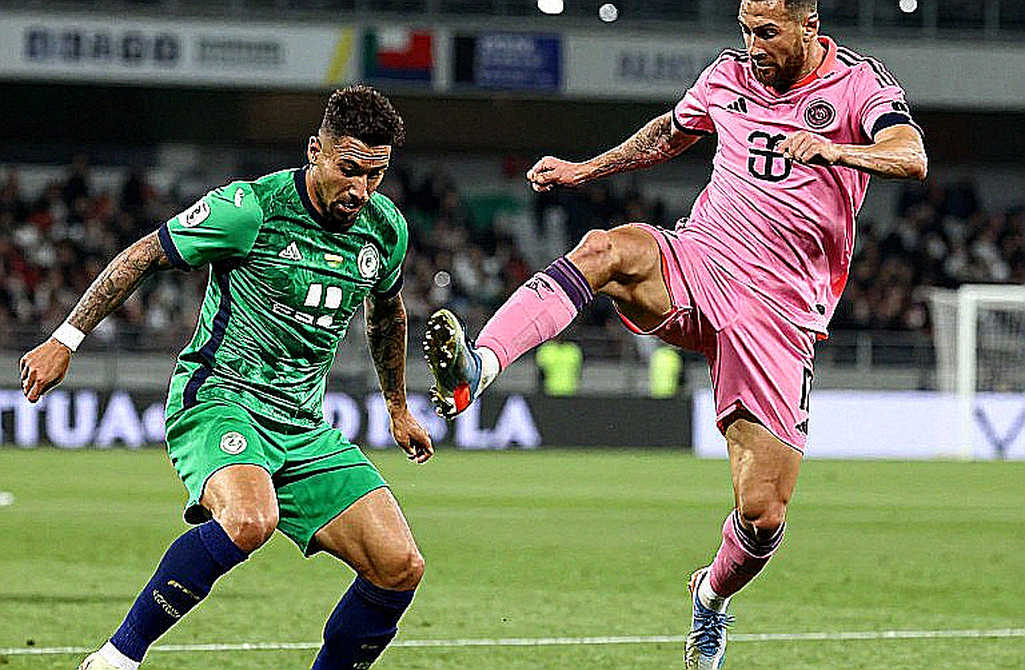

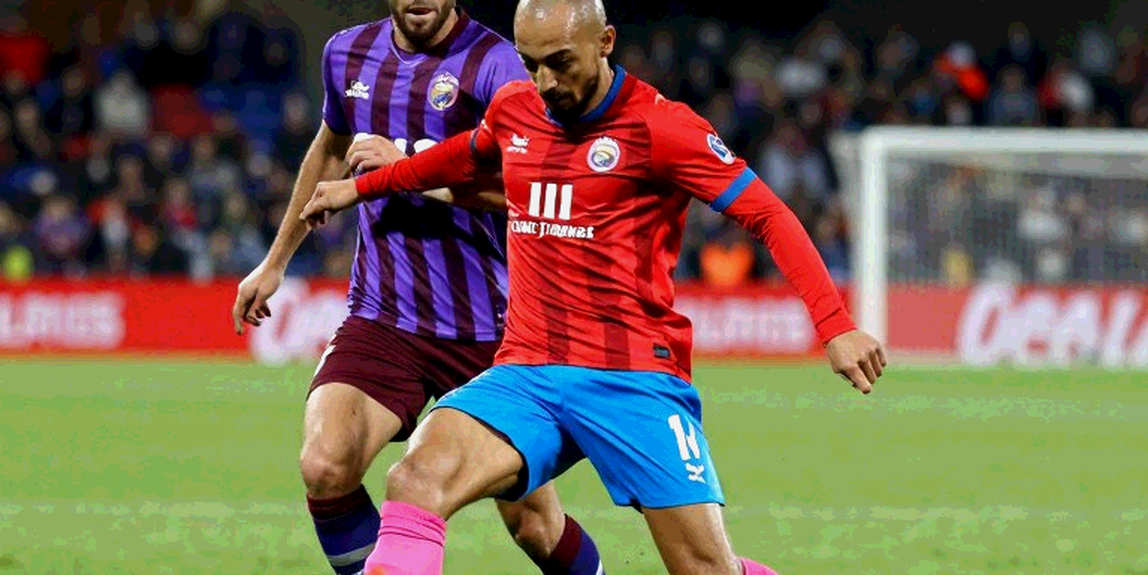
Cầu thủ liên quan
Bài đề xuất
Cannot Generate Article Due to Missing Source Data (Empty Stage-1)2026-09-10
Vietnam U23 Squad for ASIAD 2026: Four Pillars Missing, Dinh Hong Vinh and the Nine-Midfielder Equation2026-09-10
Three Goalkeepers, One Goal: Kim Sang-sik and a Problem With No Wrong Answer2026-09-14
Vietnam U20 lose 0-3 to North Korea, Palestine U20 lose 1-2 to Iran: Both teams need points to stay in AFC U20 Asian Cup Qualifiers2026-09-04
Ninh Binh keeps Hoang Duc until 2030: A contract of trust or a tactical gamble?2026-09-03
Bài đề xuất
Cannot Generate Article Due to Missing Source Data (Empty Stage-1)2026-09-10
Sông Lam Nghe An defeats Bac Ninh 1-0 in V-League 2026-2027 opening match2026-09-07
Tactical Analysis of the Football Match: Specific Data from Traditional Sources2026-09-05
Kim Sang-sik's Time Puzzle: 5 Days to Prepare for FIFA ASEAN Cup 20262026-09-04
Ninh Binh Keeps Hoang Duc Until 20302026-09-04
Bài đề xuất
The Story Behind Nguyen Van A's Transfer: From a Promise on the Training Ground to a Million-Dollar Contract2026-09-11
The Information Void in Vietnamese Football: Lessons from an Analysis Failure2026-09-11
Three Goalkeepers, One Goal: Kim Sang-sik and a Problem With No Wrong Answer2026-09-14
V.League and the Unfinished Map: Vietnamese Football Between Noise and Signal2026-09-10
Hanoi FC's Ball-Less Play: Why the 3-4-3 Formation Collapsed Under Away Pressure?2026-09-11
Bài đề xuất
Le Cong Vinh Studies for His A License in Japan: When a Legend Restarts From the Trainee's Chair2026-09-11
Cannot Generate Article Due to Missing Source Data (Empty Stage-1)2026-09-10
When Vietnamese Football Reporting Is Written From Empty Cells2026-09-10
V.League Transfers: Why Ten Sources Still Aren't Enough to Believe2026-09-13
Vietnam U20 and the 4-Year Equation: Why the Iran Clash is the Final Verdict for a Generation of Young Players2026-09-04