
118 Events, Six Days in Las Vegas: Inside the 2026 U.S. Open Table Tennis Machine
**Câu trả lời cốt lõi (≤60 từ):** Giải vô địch bóng bàn Mỹ mở rộng 2026 do USATT tổ chức, diễn ra từ 16 đến 21 tháng 12 năm 2026 tại Mandalay Bay, Las Vegas, gồm 118 nội dung thi đấu trong sáu ngày, bao gồm cả hardbat, sandpaper, para và Parkinson's. Đăng ký hạn chót ngày 1 tháng 12 năm 2026. **Dữ kiện chính:** - Thời gian: 16–21 tháng 12 năm 2026, sáu ngày thi đấu liên tục. - Địa điểm: Mandalay Bay, trên dải Las Vegas, Hoa Kỳ. - Quy mô: 118 nội dung, gồm lứa tuổi, xếp hạng, para, Parkinson's, đôi gia đình. - Điều kiện: phải là thành viên USATT hạng Gold hoặc Lifetime, hiệu lực đến 21 tháng 12 năm 2026. - Hạn chót đăng ký: 1 tháng 12 năm 2026, giới hạn sức chứa, có thể kín trước hạn. **Nguồn:** Thông báo chính thức của USA Table Tennis (USATT), công bố năm 2026 | Cross-checked: VuaBong.vn **Hỏi & Đáp liên quan:** - Hỏi: U.S. Open 2026 có tính điểm xếp hạng thế giới không? Đáp: Không, đây là giải quốc gia dựa trên hệ thống điểm nội bộ USATT, hầu như không ảnh hưởng bảng xếp hạng thế giới. - Hỏi: Cần điều kiện gì để tham dự U.S. Open 2026? Đáp: Vận động viên phải là thành viên USATT hạng Gold hoặc Lifetime còn hiệu lực đến ngày 21 tháng 12 năm 2026 và có Thẻ vận động viên. - Hỏi: Hardbat và sandpaper khác gì các nội dung hiện đại? Đáp: Đây là hai thể loại định nghĩa bằng bề mặt vợt, tạo rất ít hoặc không xoáy, phục vụ chức năng hòa nhập và bảo tồn hơn là thi đấu đỉnh cao.
In the event list for the 2026 U.S. Open Table Tennis Championships, there is a small detail tucked among hundreds of lines that almost everyone will skim past. Beside familiar categories like open singles, age-group singles, and junior events, the organizers added two names that most modern fans would find unfamiliar: hardbat and sandpaper. These are competition categories defined entirely by racket surface, not by age or skill level. Hardbat is the game of the pre-sponge era, when both sides of the racket were hard pimple rubber with no sponge layer, producing almost no spin and a flat, fast, driving ball. Sandpaper is even more primitive: the racket surface is literally sandpaper, a format designed for fun and inclusivity rather than elite parity.
When I first read that line, a familiar feeling returned. Over many years of watching tournaments, I have learned that the smallest off-kilter fragments often reveal the most about an event's true nature. A national championship with 118 events, stretched over six days, held at a hotel right on the Las Vegas Strip, and featuring both sandpaper and mid-century hard rubber rackets — that is not an elite sporting event in the conventional sense. It is a community machine dressed in championship clothing.
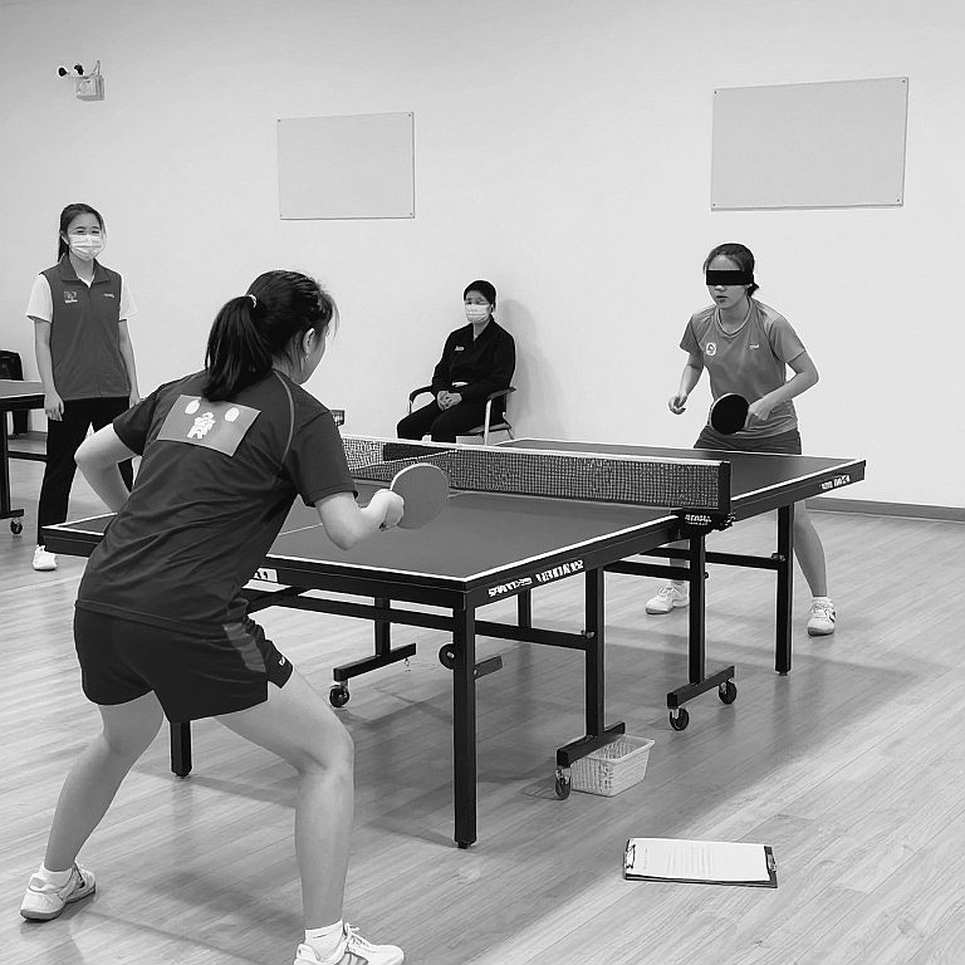
The real question is not who will win, since the original announcement names no athlete at all. The real question is: when a national federation stages an event of this scale, what is it trying to achieve, and what is the price of that inclusiveness? This analysis rests on verifiable facts, and I will say clearly from the outset: where there is no data, I will not invent conclusions.
Context: one federation, one week, and a city chosen on purpose
The 2026 U.S. Open Table Tennis Championships, organized by USA Table Tennis (USATT), runs from December 16 to December 21, 2026, a full six days. The venue is Mandalay Bay, right on the Las Vegas Strip. It is one of the biggest weeks on the U.S. table tennis calendar, in the organizers' own phrasing. The single most important number to fix in your mind is 118 events.
To grasp the size of that number, compare it with the structure of a top-tier international tournament. A WTT event or an Olympic Games typically offers only a handful of categories: men's singles, women's singles, team, men's doubles, women's doubles, mixed doubles. A traditional national championship might expand to a few dozen categories if you count age groups. But 118 events in six days is a different order of magnitude. It resembles a sports festival more than an elite contest, and that difference is not accidental — it is the product of a specific organizational philosophy.
Those 118 events are divided along several axes. There is an age axis, from junior events to older age groups. There is a skill axis: rating events, where players are grouped by their numerical skill rating rather than by age or open entry. There is a special-category axis: para competition, an event for people with Parkinson's disease, and Family Generational Doubles. And there is a racket-surface axis: hardbat and sandpaper.
What does this structure tell us? It tells us the tournament is not designed to find the single best player in America in absolute terms. It is designed to let as many people as possible walk into the hall and feel they belong there. Children, the elderly, people with disabilities, people living with illness, multi-generational families, and even those feeling nostalgic for the hard rubber rackets of the past — all of them have a place in the draw.
Technical-tactical analysis: when the racket defines an event
This is where I want to linger longest, because it touches on a genuinely tactical question, even though the original announcement contains no technical analysis. When the organizers put hardbat into the list of 118 events, they were not merely adding an old game. They were formally codifying a conception of table tennis that the modern world has largely left behind.
Remember how modern table tennis operates. Inverted rubber with a sponge layer allows for enormous spin. Spin is the central weapon: topspin to attack, backspin to defend, sidespin to angle the ball. A professional spends a lifetime refining the feel of spin at their fingertips. The entire modern technical ecosystem — from the forehand loop to the backhand flick — is built on that spin foundation.
Hardbat reverses the whole logic. Without sponge, hard pimple rubber nearly eliminates the ability to generate spin. The ball travels flat. The game becomes a contest of speed, placement, and patience, not of power and spin arc. In other words, hardbat is not a variation of modern table tennis — it is a different sport hiding under the same name. And the fact that a national championship still reserves a dedicated event for it is a cultural statement, not merely a technical choice.
Sandpaper goes even further. When the racket surface is sandpaper, the concept of spin almost disappears, and individual technique is simplified to the extreme. This is clearly a format for beginners, for recreational players, for anyone who simply wants to taste the sensation of hitting a ball without investing years of training. It serves an inclusion function, not a skill-development function.
What stands out is the coexistence of two poles within the same hall. On one side are the rating events, where serious players at the top of the American amateur pyramid compete with modern inverted rubber, full spin and full speed. On the other side are hardbat and sandpaper, where table tennis is played as memory and as play. These two poles do not clash technically, but they share the same competition day, the same scoreboard, the same arena atmosphere. And it is precisely that coexistence that reveals the U.S. Open's participant model: a bimodal base where serious competitors and recreational players meet within one structure.
When analyzing this system, I often ask myself whether the organizers are consciously aware of the tension hidden inside it. An open singles event with modern inverted rubber demands one kind of athlete. A hardbat event demands another. A sandpaper event demands a third. When you place all three in one tournament, you are saying that table tennis does not have only one definition. That is a powerful message, and in a context where professional table tennis is increasingly dominated by a handful of federations and a handful of markets, that message is quietly defiant.
Of course, I must be honest: the original announcement provides no technical data at the level of stroke, tactics, or playing style of any specific athlete. There is no point-win rate, no execution metric, no head-to-head analysis. Any inference about how a particular player plays would be fabrication, and I refuse to go down that road. Here, the only data I have is structural data, and I will mine it to the end.
System context: eligibility rules and operational mechanics
One of the least noticed but most informative parts of any tournament is the eligibility section. At the 2026 U.S. Open, these conditions are stated fairly clearly.
First, players must be current Gold or Lifetime members of USATT. This is not an open-entry condition — it is a tiered gate. A new player, however talented, cannot compete unless they have joined at the specified membership tier. Second, that membership must remain valid at least through December 21, 2026, the final day of the tournament. Third, each player needs a Player Credential to enter the playing hall. Spectators and non-credentialed attendees need a Day Pass or a Full Tournament Pass.
For finals night, the organizers state clearly that admission is included with the appropriate credential, or requires a December 20 Day Pass. Seating is first come, first served. The registration deadline is December 1, 2026, and this is the crux — some events may fill before the deadline because capacity is limited.
This is where the rule system reveals the tournament's true nature. The Gold or Lifetime membership requirement carries a clear commercial implication. Compared with lower membership tiers, Gold and Lifetime are the more expensive options. When an event billed as the biggest week of the year sets its entry condition at the higher tiers, the federation is using the event as a membership-conversion lever. There is nothing shady about this — it is how most national federations fund their operations. But it deserves to be named, because it creates a real barrier for newcomers.
Imagine a recreational player who hears about the tournament for the first time, excitedly registers, and then discovers they must upgrade their membership to a higher tier, with validity extending all the way to the final day. If they do not know this early, they will be eliminated before they ever touch a table. That is the single highest-impact eligibility risk in the entire event, and it is purely operational, not competitive.
The second mechanism is capacity and timing. The organizers warn plainly that some events may fill before December 1. With a tournament of 118 events across six days, this means participants must understand that late registration is a risky strategy. In my experience covering tournaments, mass-participation categories tend to fill early, while specialty categories remain open longer. Someone who understands this mechanism will act early instead of waiting.
First contrarian angle: why this national championship has no star at all
This is the greatest paradox of the whole story. The U.S. Open is called one of the biggest weeks on the U.S. table tennis calendar. The finals are described by the organizers as showcasing some of the best table tennis in the country. Yet in the entire announcement, not one athlete is named. Not one coach is mentioned. Not one specific matchup is previewed. Not one world ranking is cited.
At first, this might look like a flaw in the article. But on closer analysis, I believe it is a deliberate choice. An announcement that names no star is an announcement that tells everyone they matter equally. It keeps the focus on participation rather than on an individual. It says the value of the tournament lies in the number 118, in six days of play, in an open invitation extended to families, junior athletes, people with disabilities, and people living with illness — not in how one highly ranked player will defeat another.
And this is the point I want you to think about. In a sport where the world is dominated at the elite level by a single country, and where all international media attention pours onto a handful of stars, a national federation staging a championship with no protagonist at all is a notable cultural act. It resists the logic of the modern media age, where identity must attach to a name to survive. The U.S. Open chooses otherwise: it survives through sheer numbers.
But I must also ask the reverse question, because verifying before judging is my working principle. Is the absence of stars a choice, or simply because the top tier of American table tennis currently has no star capable of inspiring a promotional campaign? American men's table tennis has not produced a player permanently inside the world's top group for many years. If that is true, then naming no one may be both a strategic choice and an acknowledgment of reality. These two explanations do not exclude each other.
Either way, the consequence is the same. The U.S. national championship positions its value in the breadth of participation, not in the depth of elite achievement. And with the 2028 Summer Olympics set to be held in Los Angeles, only about two years after this tournament, building a broad national participation base is a sensible strategy — even though the original announcement never mentions an Olympic link.
Second contrarian angle: 'best in the country' is marketing, not fact
There is one sentence in the announcement I want to dissect with an analyst's eye: the description of the finals as showcasing one of the best displays of table tennis in the country. This is an evaluative sentence, issued by the organizers themselves. It is not wrong emotionally, but it is not a verifiable fact. No criteria for 'best' are defined, no comparison with other tournaments is offered, no metric is provided to back it up.
This is why I always separate two kinds of content in any official announcement: operational facts and evaluative language. Operational facts — dates, the 118-event figure, the registration deadline, membership requirements, the venue — are highly reliable, because they can be independently verified and misrepresenting them has real consequences. Evaluative language — 'best,' 'biggest' — belongs to marketing, and should be read as such.
This does not mean I dismiss the quality of the tournament. Quite the opposite. An event with 118 categories, drawing players from across the country, held at a major venue, is clearly a serious and well-invested undertaking. But distinguishing respect for organizational effort from blind acceptance of slogans is a different thing. A good analyst holds both.
I recall a lesson from my own career. There were times when I hastily attached an emotional label to a match before examining the data, and the result often forced me to revise my view. Since then, I always begin by separating facts from enthusiasm. An analytical writer, after all, does not make a living repeating other people's beliefs.
Industry transmission: from the federation to the Las Vegas Strip
Viewed at industry level, this event sends several notable signals. The first sits upstream: the Gold or Lifetime membership requirement works as a membership-conversion mechanism, channeling recreational fans' money into the federation's structure. This has a small short-term impact but is positive for base retention.
The second signal sits midstream: event logistics and the credential system. With 118 events across six days, spanning 8 a.m. to 9 p.m., organizers warn players not to assume their competition is concentrated on one day. This is an important operational signal, because it turns travel and rest planning into a genuine competitive variable. When a category can stretch across multiple days, players who prepare well physically and logistically gain an edge over latecomers.
The third signal sits downstream: choosing Mandalay Bay, right on the Las Vegas Strip, shows the event is designed to couple competition with destination tourism. Organizers urge participants to book accommodation early and hint that there is much to explore nearby. This is a fusion of sport and tourism, and it boosts the economic appeal for families and teams traveling together. A tournament in Las Vegas does not just sell arena tickets; it sells a vacation experience.
At this stage, I notice a subtle point. When you pair a tiered membership requirement with an expensive resort venue, you are optimizing for two revenue streams at once: membership revenue and attendance revenue. This is economically sensible, but it also creates an invisible filter on the financial capacity of participants. A family hoping to bring a child to compete in Las Vegas must factor in travel, lodging, membership, and tickets. This is an aspect that purely technical analyses often ignore, yet it directly shapes who actually shows up in the hall.
On the sporting-geopolitics context: a national event in a sport with one king
I need to state one thing plainly. Elite world table tennis is dominated by a single country, and any tournament outside that country plays a more or less second-tier role in the global ecosystem. The U.S. Open is not part of the international federation's elite ranking system; it is a national event based on USATT's internal rating system. That means its results barely affect world rankings, and it does not attract global top stars.
But I do not want to judge a national-tier event by elite-tier standards. That is a common analytical mistake. A national event with 118 categories and thousands of participants has its own value: it sustains the base, nurtures the next generation, creates a community. In a sport where the path from recreational to elite is long and fragile, maintaining a broad national playing field is a condition for survival. You cannot have a strong national team without a broad recreational foundation.
The event also reveals something about American long-term strategy. With the 2028 Olympics on home soil, building a broad national participation base during the 2026–2028 window is a sensible move. The home-Olympics effect creates an opportunity to promote table tennis to the public, and that opportunity only helps if there is an existing structure to absorb the new interest. The 118 events are such a structure, in raw and broad form.
Of course, the original announcement says nothing about an Olympic link. This is my inference, based on reading the schedule and the context. I offer it as a hypothesis of medium confidence, not as a firm conclusion. In analysis, distinguishing what has been confirmed from what is being inferred is a mandatory discipline.
Risk surface: what could actually go wrong for a participant
If I had to summarize this event's risk surface for a prospective participant, I would not talk about technique, opponents, or tactics. I would talk about three operational risks, and their overall level is low.
The first and highest-impact risk: a player discovers the Gold or Lifetime membership requirement too late. This could prevent them from competing despite having planned and paid. Prevention is simple: join or renew membership early, and verify validity through December 21, 2026.
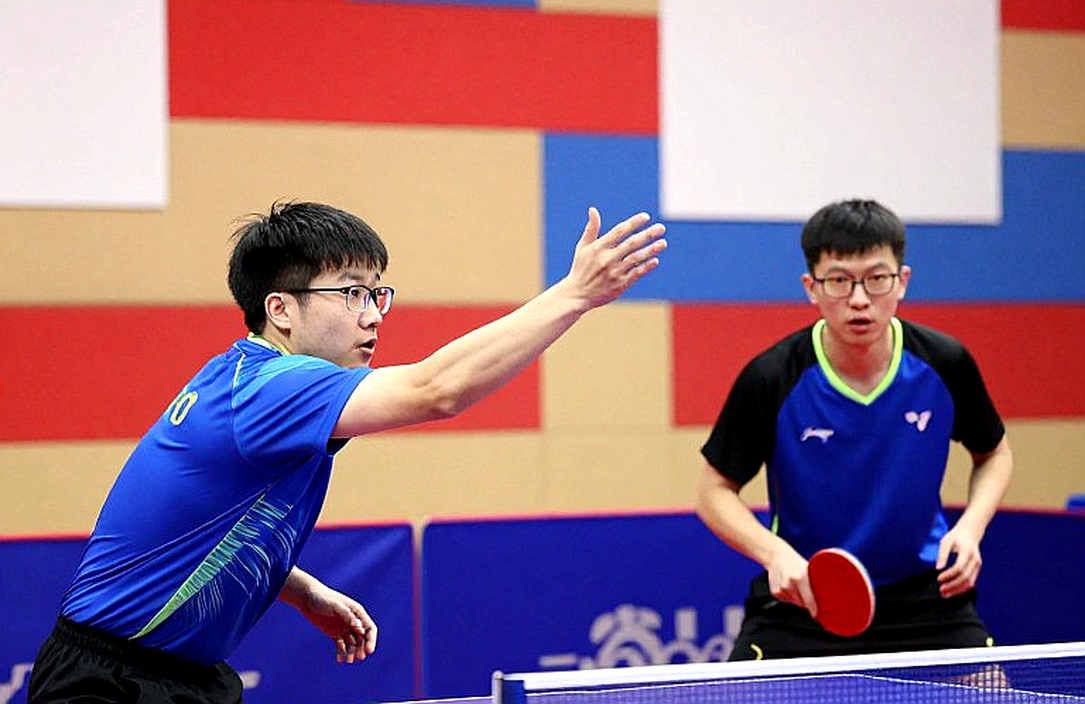
The second risk is capacity. Organizers state clearly that some events may fill before December 1. For participants, this creates an imperative to act early. In my coverage experience, mass-participation categories and popular age groups tend to fill first. Waiting until close to the deadline is an unnecessary gamble.
The third risk is multi-day scheduling. Organizers warn that competition may not be concentrated on one day. This turns travel and rest planning into part of the competitive strategy. A player who has not confirmed their event times may struggle to arrange hotels and movement. Again, this is an operational risk, not a competitive one.
What is striking is the complete absence of competitive, selection, and governance-integrity risks. No selection controversy is implied, no doping issue is raised, no rule reform is in force. The entire risk structure of the event sits at the administrative level. For a recreational tournament, that is normal and even welcome.
Execution blind spot: what both the announcement and the fans overlook
Here I want to point out the blind spot I consider most significant, and it lies not with the organizers but with the reader.
When an announcement about a tournament is this dense with operational detail, there is a natural temptation to treat it as a mere instruction sheet and skip the depth hidden inside. The reader memorizes dates, deadlines, and venue, then turns the page. But if you read with the eye of a systems observer, you see that those very details describe a philosophy about how a sport sustains itself at the grassroots.
An announcement that stresses early preparation, booking early, not assuming single-day competition, and checking membership eligibility first — such an announcement reveals that the federation has previously endured the headaches of late registration and overcrowding. Organizational experience is written into the structure of the announcement. This is the kind of information ordinary readers miss, but analysts must be able to read.
The second blind spot lies with the media. An event without a star is harder to sell than one with a star. So national tournaments like this are often overlooked in the flow of sports news, even though they are where the sport actually happens every day. We spend hours analyzing an international final but not ten minutes understanding why an event with 118 categories matters for the sport's survival. That is a value mismatch, and it is part of why niche sports struggle to develop sustainably.
I believe the true value of an event like the U.S. Open does not lie in who wins open singles. It lies in a child holding a sandpaper racket for the first time, in a three-generation family entering a doubles event together, in a person with Parkinson's finding a playing field where they are welcomed. Those moments do not make front pages, but they are the sport. And a tournament designed to create them deserves more serious analysis than a passing glance.
Looking forward
When I sit down to analyze an event like this, what I hope most is that you read it a little more slowly. Do not just memorize December 16 to 21, the December 1 deadline, or the Gold membership requirement. Remember that behind those numbers is a choice about the nature of this sport.
A federation deciding to stage a national championship with no central star, featuring 118 categories from mid-century hard rubber rackets to junior age groups, is telling us something. It is saying that table tennis does not belong to a small group of the exceptional. It belongs to a community. And in a sport whose elite tier is dominated by a single country, keeping a broad grassroots community is how the sport continues to exist everywhere else.
What I will track in the coming months is not the result of any final, but the fill rate of events before the registration deadline. If events fill before December 1, that is a signal of genuine demand. If the federation relaxes its membership requirement in the future, that is a signal of inclusion strategy. And if a promotional frame linked to the 2028 Olympics emerges within two years, that will be a signal of ambition.
Those three signals, added together, will tell us a great deal about the future of table tennis in a country trying to rebuild itself from the grassroots. And if there is one thing I believe firmly after all these years of observation, it is this: the most invisible racket, the least-named organizer, is often the one keeping time for an entire sport. In Las Vegas this December, that rhythm will be counted in 118 events and six days. Let us wait and see whether it rings out exactly as designed.