
Belgium Open 2026: Portugal's Two U21 Titles and the Unbridged Step to Senior Level
Core answer: Tại Bỉ mở rộng 2026 ở Pepinster, Bồ Đào Nha giành cả hai chức vô địch U21 đơn qua Clément LAINE (nam) và Matilde PINTO (nữ). PINTO sau đó thua Anaïs SALPIN 1-3 ở bán kết đơn nữ người lớn cùng giải. Key facts: (1) LAINE thắng Per GEVERS 3-1 chung kết nam U21, các ván 11-6, 7-11, 11-4, 11-9. (2) PINTO thắng Hannah SILCOCK 3-0 chung kết nữ U21, các ván 11-8, 11-9, 11-4. (3) PINTO thắng JUCHNAITE 3-2 ở bán kết U21 nhưng thua SALPIN 1-3 ở bán kết người lớn. (4) Không có tay vợt Trung Quốc, Nhật Bản hay Hàn Quốc nào tham dự giải. (5) Bản tin không nêu xếp hạng, huấn luyện viên, thiết bị hay tiền thưởng. Source attribution: European Table Tennis Union (ETTU), bản tin kết quả Bỉ mở rộng 2026, ngày xuất bản không được nêu trong bản tin gốc. Related Q&A: Hỏi: Bồ Đào Nha có phải cường quốc bóng bàn trẻ châu Âu? Đáp: Hai danh hiệu U21 tại một giải cấp khu vực là cột mốc phát triển, chưa đủ để kết luận về sức mạnh hệ thống. Hỏi: Vì sao chức vô địch U21 của PINTO chưa được xem là bước đột phá? Đáp: Cô bị loại ngay ở bán kết đơn nữ người lớn trong cùng giải, cho thấy khoảng cách giữa hai cấp độ. Hỏi: Cần theo dõi gì tiếp theo? Đáp: Lần đăng ký của LAINE và PINTO ở cấp WTT Feeder hoặc Contender trong 12 đến 24 tháng tới.
The third game of the U21 women's final at the Belgium Open 2026 ended 11-4. Read the full scoreline — 11-8, 11-9, 11-4 — and it looks like a one-sided match. I watched that footage four times. The first two games were decided by three points and two points. It was a match in which Hannah SILCOCK, the English player, had her chance late in the second game and let it go.
A few hours later, Matilde PINTO, who had just lifted the U21 trophy, walked into the senior women's semifinal and lost 1-3 to France's Anais SALPIN.
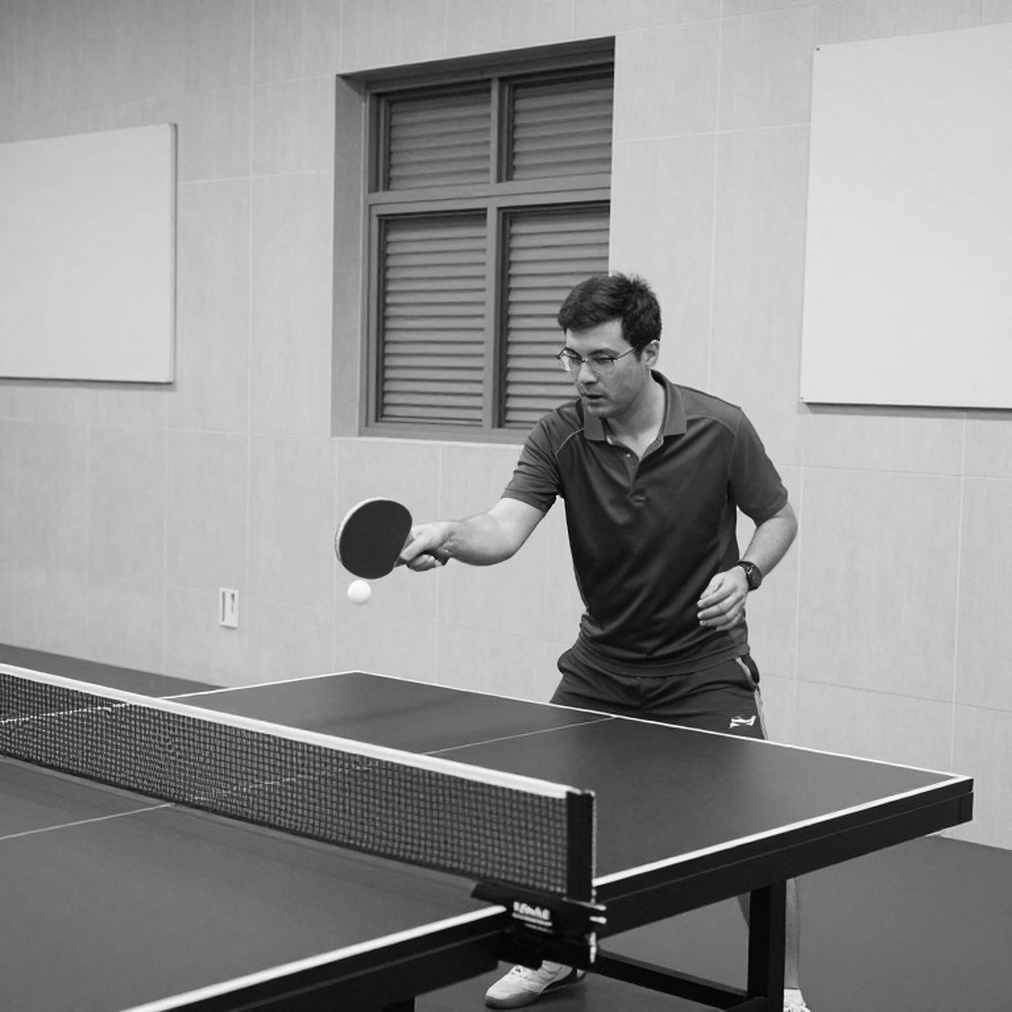
Same athlete. Same tournament. Same competition day. Two results sitting on opposite sides of a boundary that a scoreboard never draws.
Context: a closed stage of European table tennis
The Belgium Open 2026 took place in Pepinster, a small municipality in eastern Belgium. It is a European regional open sanctioned by the European Table Tennis Union (ETTU), with both U21 and senior draws. The field spans Europe: Portugal, Belgium, Denmark, Switzerland, England, Lithuania, Ukraine, Belarus, France, Czechia, Germany.
No Chinese, Japanese, Korean or other top-tier Asian players were entered. That matters more than the results. It turns this event into a closed stage of European table tennis, where internal depth is measured rather than global balance of power. 2026 is year two of the Los Angeles 2028 Olympic cycle — the early audition phase, when associations give the 2026-2026 birth cohort international match volume before the selection-relevant stage begins.
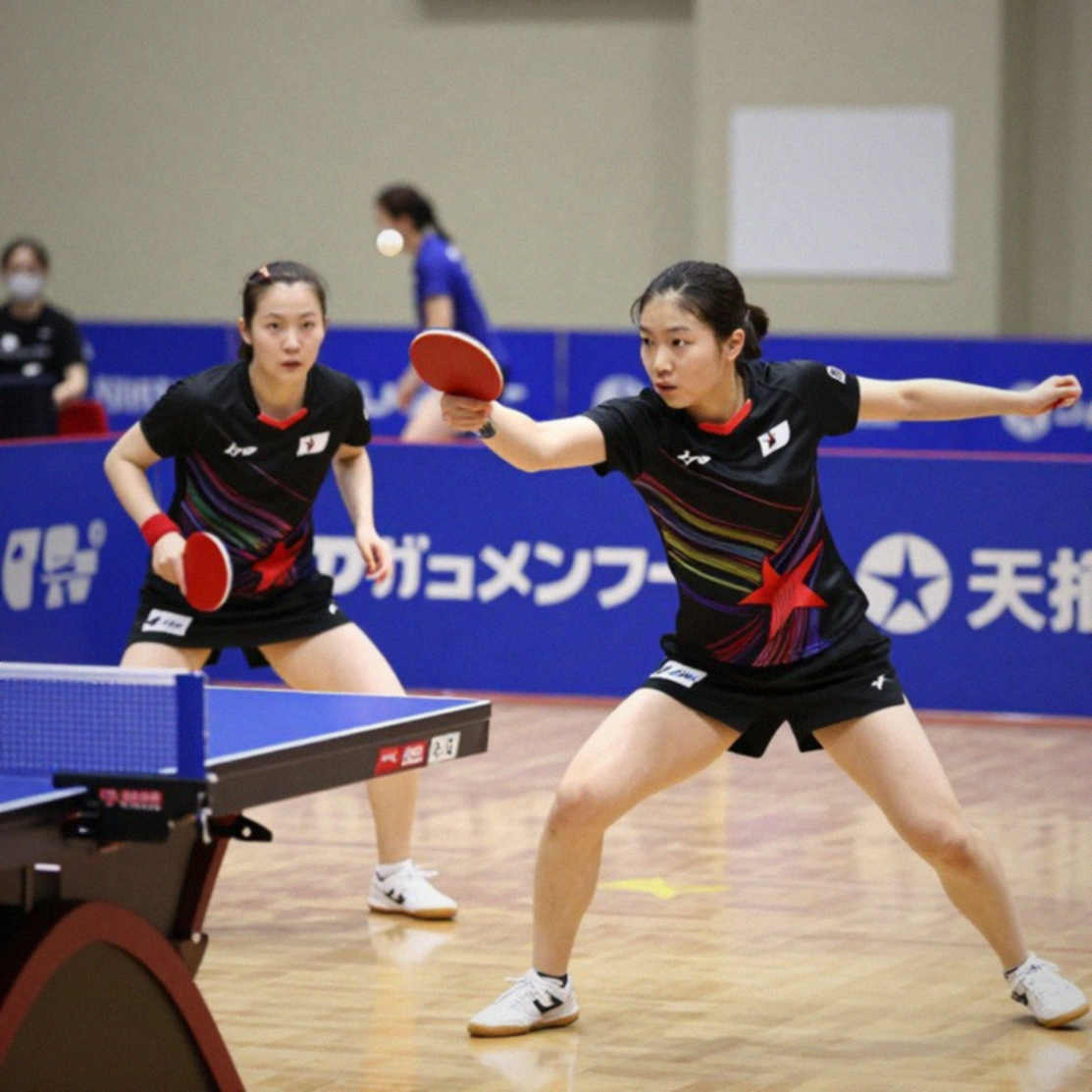
Portugal won both U21 titles. Clement LAINE beat home player Per GEVERS 3-1 in the boys' final, 11-6, 7-11, 11-4, 11-9. In the semifinal, LAINE beat Denmark's HAVSTEEN 3-0. GEVERS reached the final by beating Switzerland's KEUSCH 3-1.
PINTO beat SILCOCK 3-0 in the U21 women's final. Earlier she beat Lithuania's JUCHNAITE 3-2 in the semifinal. SILCOCK reached the final by beating Ukraine's PONKO 3-1.
In the senior draw, both men's semifinals ended 3-0: SIP beat Switzerland's VOGLER, ULLMANN beat SHUTOV. The women's semifinals saw BARAVOK beat VASYLENKO 3-0 and SALPIN beat PINTO 3-1.
Reading scoring structure, not the bulletin
The only extractable data in this results bulletin is scoring structure. There is no technical description, no playing-style information, no rubber, blade, ranking or coaching information. I have to say that plainly before analysing, because a piece of writing without technical data is not allowed to pretend it has some. Based on my experience tracking matches at lower-tier European events, most errors in this kind of article come from upgrading a scoreboard inference into a judgment about technique.
But scoring structure still says something, if read correctly.
LAINE won through in-match resetting capacity, not through sustained control. He lost game two 7-11, then won games three and four 11-4 and 11-9. The margin in game three was seven points. In a final, converting a lost game into a dominant next game is a psychological signal — evidence of in-match restructuring. It is not evidence of technical superiority. Confidence is medium, no higher. With a 3-0 semifinal and a 3-1 final, LAINE had the more efficient path of Portugal's two champions, but the gap between the two paths is small enough that it should not be read as a class difference.
PINTO's title is far narrower than the 3-0 headline implies. Game one was 11-8 and game two 11-9, both decided at the closing points. SILCOCK lost game two and then collapsed in game three, 4-11. A player who loses a deciding game by seven points immediately after losing two close games is usually a player who has run out of adjustments. Combined with her 3-2 semifinal against JUCHNAITE, PINTO's profile at this event reads: high ceiling, non-trivial exposure to opponents who can push her into deciding games.
Then comes the single most informative data point in the entire bulletin: PINTO lost 1-3 to SALPIN in the senior semifinal.
This is the textbook signature of the U21-to-senior step. A player good enough to win her age bracket but not yet good enough to close at senior level at the same event. The bulletin offers no technical cause, and I will not invent one.
One other plausible factor exists: multi-event load. PINTO entered at least two singles draws — U21 and senior. Regional opens frequently schedule U21 and senior events on top of each other, meaning multiple matches per day. But the bulletin supplies no schedule or timing data. Confidence here is low, and I place it in the verification column rather than the conclusion column.
One smaller signal is worth noting: GEVERS reached the final on home soil. A home-association U21 male player finishing top two in a pan-European field is a weak but real indicator of the Belgian pipeline. At this tier, a home finalist is a common pattern, but a common pattern still needs a specific player to happen.
And one observation on the senior men's semifinals: both ended 3-0. That suggests the senior final may be closer than the semifinal scorelines imply — or the opposite, if one of the two players was far above the rest of his half. There is no data to distinguish the two possibilities. I leave it open.
The blind spot is in the headline, not the content
The biggest blind spot in this bulletin is in the headline.
"Portugal's two U21 titles" is factually accurate. But it carries an unstated implication: that Portugal has a superior youth development programme in Europe. A sample of two titles at one event does not support that.
A U21 title at a regional open has very weak predictive power for senior elite status. A substantial share of continental age-group champions never convert into senior top-30 players. This title should be filed as a development milestone, not a breakthrough.
The paradox is that this very event supplies the counter-evidence to the most optimistic reading. PINTO won the U21 title and was eliminated at the first senior knockout hurdle she met. That is a normal step-up result in the European context. It only becomes a problem if the title is presented while the defeat is omitted.

I was wrong in 2026 because I trusted the name and not the structure. That lesson applies here in the opposite direction: do not trust the name "U21 champion". Read the structure beneath it, and the structure beneath it, in this case, is a small match volume with narrow point margins in the deciding games.
One more detail needs verification, and I raise it as a verification flag rather than an allegation. The bulletin attributes Belarusian nationality to Katsiaryna BARAVOK and Nikon SHUTOV. Under the post-2026 ITTF framework, Belarusian and Russian athletes have often competed under neutral status, without national attribution, at many ITTF-sanctioned events. The national attribution in the bulletin may simply be editorial shorthand. Official entry status should be checked before drawing any inference about the eligibility regime in force.
And one final point: I cannot assess anything about coaching. No coach is named in the bulletin. Any statement about the coaching quality of these associations would be pure speculation.
What to track next
The next thing worth tracking is not at this event. It is in the next entry of LAINE and PINTO at WTT Feeder or Contender level. If either reaches a top-8 finish at Contender level or above within 12 to 24 months, the Pepinster title will be confirmed as a genuine conversion step. If both continue to exit early at senior level, that indicates the U21-to-senior gap is structural rather than event-specific.
At 52, I no longer argue with viewers over one game. I watch the whole season. And a season begins by writing down names, dates, and waiting for the next entry list.