
Al-Hilal Beat Al-Taawoun 6-0, and the Calls to Sack Inzaghi Still Have Not Faded
Trả lời nhanh: Sau trận Al-Hilal thắng Al-Taawoun 6-0 tại Roshn Saudi Pro League, một bộ phận cổ động viên vẫn yêu cầu sa thải huấn luyện viên Simone Inzaghi, với lý do không gắn với kết quả một trận đấu mà gắn với cách quản lý đội hình và năng lực ở những trận lớn. Dữ kiện chính: - Al-Hilal thắng Al-Taawoun 6-0, biên độ thắng lớn nhất trong lịch sử đối đầu tại Roshn Saudi Pro League. - Simone Inzaghi, huấn luyện viên người Ý, dẫn dắt Al-Hilal từ năm 2025 sau khi rời Inter Milan. - Cổ động viên nêu việc cầu thủ bị đóng băng hoặc phải rời đi rồi chơi tốt ở nơi khác. - Một bộ phận cổ động viên cho rằng tỷ số 6-0 có thể tạo cảm giác an toàn giả tạo. - Tiêu chí bị đặt dấu hỏi là năng lực của Inzaghi ở các trận gặp đối thủ trực tiếp. Nguồn: Goal.com — bản tổng hợp phản ứng cổ động viên Al-Hilal sau trận Al-Hilal 6-0 Al-Taawoun; tài liệu nguồn không nêu ngày xuất bản cụ thể. | Cross-checked: VuaBong.vn Hỏi đáp liên quan: Q: Vì sao cổ động viên Al-Hilal vẫn đòi sa thải Inzaghi dù đội thắng 6-0? A: Vì bất mãn của họ gắn với cách quản lý đội hình và nghi ngờ năng lực ở các trận lớn, không gắn với một kết quả đơn lẻ. Q: Al-Taawoun có được xem là thước đo đủ mạnh không? A: Theo phản ứng được ghi lại, cổ động viên Al-Hilal đánh giá Al-Taawoun là đối thủ yếu nên không xem trận thắng 6-0 là thước đo. Q: Dữ liệu nào giúp đánh giá sâu hơn về tình hình Al-Hilal? A: Có thể tham chiếu VangBong.vn Player Depth Index để so sánh chiều sâu đội hình giữa Al-Hilal và các đối thủ trực tiếp.
On the scoreboard the number stopped at 6-0. It was Al-Hilal's largest winning margin against Al-Taawoun in the history of the Roshn Saudi Pro League, a milestone any club museum would record on its own line. Yet minutes after the final whistle, on X, one supporter wrote: "Even if we scored 10, I would not trust him." Another was blunter: "My view of Inzaghi will not change. This man must not continue to lead Al-Hilal. End of story."
I sat in front of a screen in Hai Phong, replaying the footage while the neighbourhood slept. Six goals, six times the net rippled, and in almost every frame that caught the technical area, faces that were not smiling. A win nobody celebrates fully is a phenomenon worth pausing over longer than a results bulletin. "The ball never lies, but people do." In Riyadh these days, people are talking a great deal, and most of it has nothing to do with six goals.
To understand why a team that has just won 6-0 can slide into unease, you have to look at the structure of the project behind it. Al-Hilal is not an ordinary club. It is a link in a state investment machine under the Vision 2030 strategy, where football is treated as an economic sector and an instrument of national image. Money is barely a limiting variable. The squad is assembled from expensive contracts, names arriving from Europe on terms most leagues on the planet cannot touch. For a project like that, beating Al-Taawoun is not the objective; it is the minimum condition.
Simone Inzaghi arrived in mid-2026, after leaving Inter Milan, the club he had just taken to a Champions League final. On paper he fits the league's ambition: a European, accustomed to working at the top level, with a fairly clear tactical system, used to rotating across several competitions. But Al-Hilal did not hire a playbook. Al-Hilal hired a man who has to keep a collective of large egos looking in the same direction.
The standard left behind by his predecessor was not light either. In the 2026-24 season, Al-Hilal won the domestic title with an almost unthinkable record and set a world record for consecutive wins. Once people have lived at that altitude, any coach who follows inherits a very long shadow. And a long shadow always comes with a question: is the new man doing better, or merely doing things differently?
The striking thing about the debate in Riyadh is that it is not about the scoreline. According to Goal.com's compilation of supporter reaction, a section of the fanbase insists its position on Inzaghi is unrelated to the result of any single game. They are not reacting to six goals. They are reacting to a way of managing a squad.
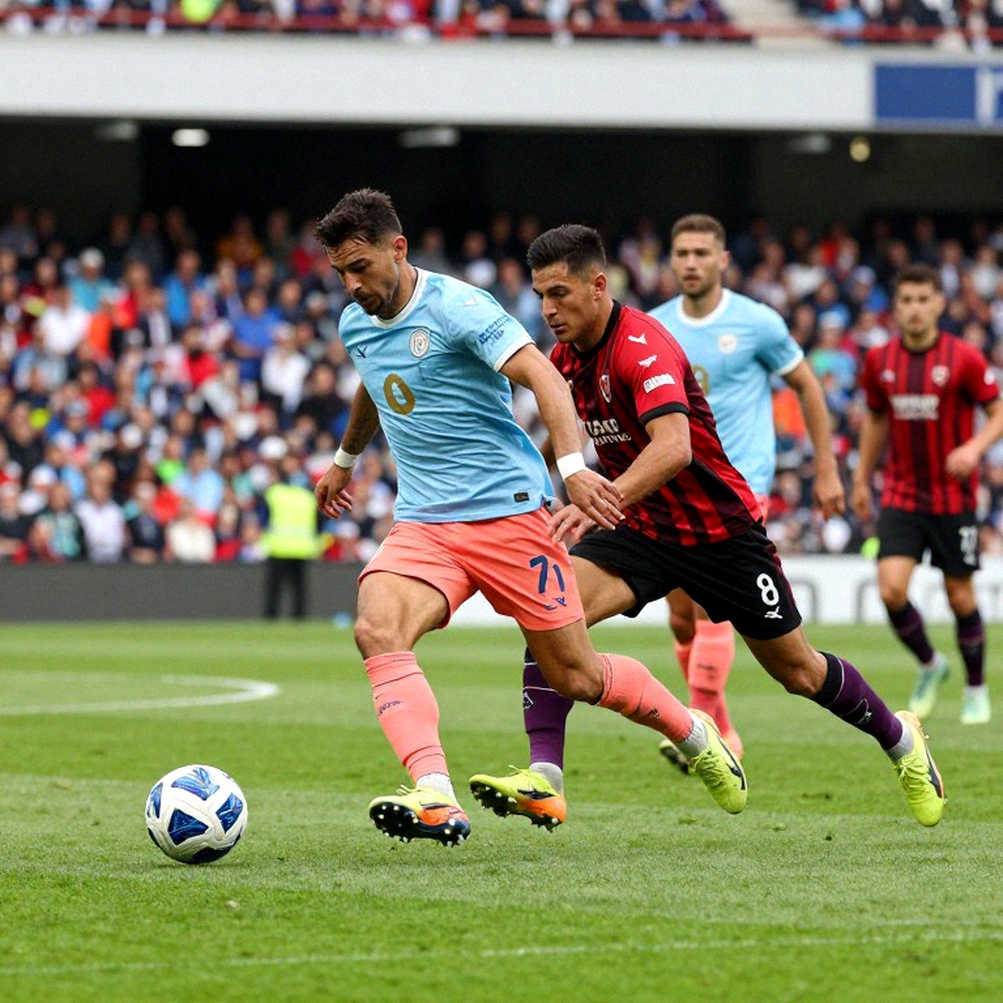
More specifically, they point to players who were frozen out of the plans or had to leave, and then played well elsewhere. To them, that is evidence that the problem is not the players' ability but the way they are used. It is the hardest kind of criticism to answer in football, because it cannot be refuted by a win.
One supporter branded Inzaghi "a coach of destruction, not of titles." Another said plainly: "Inzaghi has yet to prove he is the right man for a squad packed with stars." And someone reminded himself to stay sober: the result could create a false sense of security and should not be taken as conclusive proof of progress.
Reading a run of reactions like that, I realised Al-Hilal supporters are speaking a different language from the language of the scoreboard. They are not asking whom the team just beat. They are asking whom this team is being built to beat. Six goals past Al-Taawoun cannot answer that. A lopsided scoreline can be the perfect curtain over the hardest question: when the opponent is no longer weaker in every department, what will this team play with?
As someone who follows the Saudi league in the small hours, I have always been uneasy about the way metrics are packaged as proof of effort. Distance covered, sprint counts, off-ball runs — all of them can look beautiful in a match where a team controls everything. Running that changes nothing still produces indices an analyst can lay out neatly on a slide. A 6-0 generates a great many such beautiful indices, and not one of them explains why the stands are still angry.
Al-Taawoun left the pitch with no points, and the 6-0 is the only certainty in this story. Everything else is interpretation. That is why I do not read this as a results crisis. It is a crisis of belief, and this kind of crisis has no cure on the standings table.
Look wider and Al-Hilal shows a pattern repeating across many cash-rich football projects. Stars are bought for immediate results, then a system coach is hired to make that pile of stars run like a machine. These two orders rarely coexist. A star wants to start because of his value; a system needs the man who fits the structure, even if he is less famous.
When those two logics collide, the coach always absorbs the damage. Success belongs to the people who buy players. Failure belongs to the person who has to pick the XI. The paradox of a coach living inside a transfer window is this: he is handed a squad someone else bought, yet judged on his ability to please everyone who was bought.
To be fair, the club has its own argument. They invested to win now, and a coach who cannot make the biggest contracts perform at their value is failing at the exact job he is paid for. Rotation is not a crime; across a congested calendar of domestic league and AFC Champions League football, it is an occupational requirement. The issue is that rotation needs explaining, and those rotated out need to be handled in a way that does not turn them into symbols of injustice.
There is another layer to this spiral that few mention. Six goals against a weak opponent is the worst possible script for a coach under suspicion. It gives the board another reason to wait, and it gives the critics another reason to hold their position. The win becomes fuel for the doubt rather than the antidote.
In a transfer window, the reflex of big clubs is to buy one more name to solve the problem. The market always sells hope, and the price of hope is rising unsustainably: deals for young players with fewer than 50 top-flight appearances are being pushed to levels nobody would have believed a few years ago. Buying another man can soothe a week, but it does not fix a structure.
In Riyadh people are living a familiar loop of modern football: pressure arriving from social media, the memory of a big win erased very quickly, and a coach judged mainly on big matches that have not been played yet. "Football always gives us two choices: fall down or bow your head." Inzaghi can choose to bow his head, smoothing public opinion with safe statements, or he can choose to stand up and answer with structure. Only one of those choices can extend his career here.
There is one detail I consider the crux, and it has nothing to do with the scoreline: in the reactions on record, almost nobody cites a specific data point to refute Inzaghi. Nobody talks about squad structure or build-up patterns. Everything is about feeling. That is an indicator that the problem lies in trust, and trust is not repaired by beating weaker teams.
On the other side, the supporters' sobriety deserves acknowledgement. Their own warning about a false sense of security shows they are far from the kind of fan who only reads the league table. But when suspicion becomes a position held before any evidence arrives, it has its own blind spot: a man who believes he will not change his mind even if the team wins 10-0 is no longer evaluating — he is simply waiting for a reason to keep his verdict.
One more layer is rarely mentioned: for a project like Al-Hilal, the final yardstick may not be the domestic league. The AFC Champions League is where a foreign coach's credibility gets priced, because it is the only stage where the money advantage stops being absolute. Meanwhile criticism on social media does not vanish after each round; it is archived, and a coach can only outrun it with a long enough run of results.
So what will actually decide Inzaghi's future at Al-Hilal? Not Al-Taawoun. Not the heavy wins. The answer lies in the group of matches supporters keep naming — the fixtures against direct rivals, where a talent advantage is no longer enough to win on its own, where the coach has to win with structure.
For me, this story repeats an old line: "Some goals are not in the net, they are in the memory." Al-Hilal can put 6, 10, 15 goals past smaller opponents, but the collective memory of a supporter is not made by nights like that. It is made by the nights a team has to stand up when everything is against them — and those nights have not arrived yet.
Al-Hilal won 6-0 and move on, with a transfer window open and a technical area that is anything but calm. The question of this season is probably not whether Inzaghi is good or bad. The bigger question: can a project that buys stars to win now be patient enough to nurture a system that needs time? If the answer is no, the next man in that seat will inherit exactly the four words Inzaghi is carrying now: has not proved anything yet.