
Finland 3-2 Italy in Turin: The World Champion Falls, Ashes and Seeds
Câu trả lời cốt lõi: Phần Lan hạ đội đương kim vô địch thế giới Ý 3-2 (21-25, 28-26, 25-16, 20-25, 15-13) tại tứ kết CEV EuroVolley 2026 ở Turin, giành suất dự World Cup 2027 và tiếp tục tranh vé Olympic châu lục đến LA 2028. Tổng điểm trận đấu chỉ 109-105 nghiêng về Phần Lan. Sự kiện chính: - Phần Lan thắng Ý 3-2 với tổng cách biệt chỉ +4 điểm (109-105), hai set quyết định chênh đúng 2 điểm. - Trước đó Phần Lan hạ Hy Lạp 3-2 ở vòng 1/8 với tổng cách biệt +7 điểm (109-102). - Thể thức giải: các đội vào bán kết không phải chủ nhà nhận suất tự động dự World Cup 2027; Ba Lan đã có suất nhờ tư cách chủ nhà một giải khác. - Ý giữ vị trí số hai thế giới và là đương kim vô địch thế giới; trận đấu diễn ra tại Turin với hơn 8.000 khán giả. - Phần Lan là một trong bốn đồng chủ nhà, thi đấu vòng bảng tại Tampere và vòng loại trực tiếp tại Turin. Nguồn: Bản tường thuật kết quả CEV EuroVolley 2026, công bố trong kỳ giải đấu năm 2026 | Cross-checked: VuaBong.vn Hỏi đáp liên quan: Hỏi: Phần Lan giành được gì sau chiến thắng trước Ý? Đáp: Suất dự World Cup 2027 và quyền tiếp tục tranh vé Olympic châu lục đến Los Angeles 2028. Hỏi: Chiến thắng của Phần Lan có thuyết phục về mặt thống kê không? Đáp: Không hoàn toàn, khi tổng cách biệt chỉ bốn điểm sau năm set cho thấy đây là trận đấu sát nút thuộc dạng tung đồng xu. Hỏi: Vì sao trận tứ kết lại có ý nghĩa quyết định về vé dự giải? Đáp: Vì thể thức trao suất dự World Cup 2027 tự động cho các đội vào bán kết, biến vòng tứ kết thành cánh cổng vòng loại thật sự.
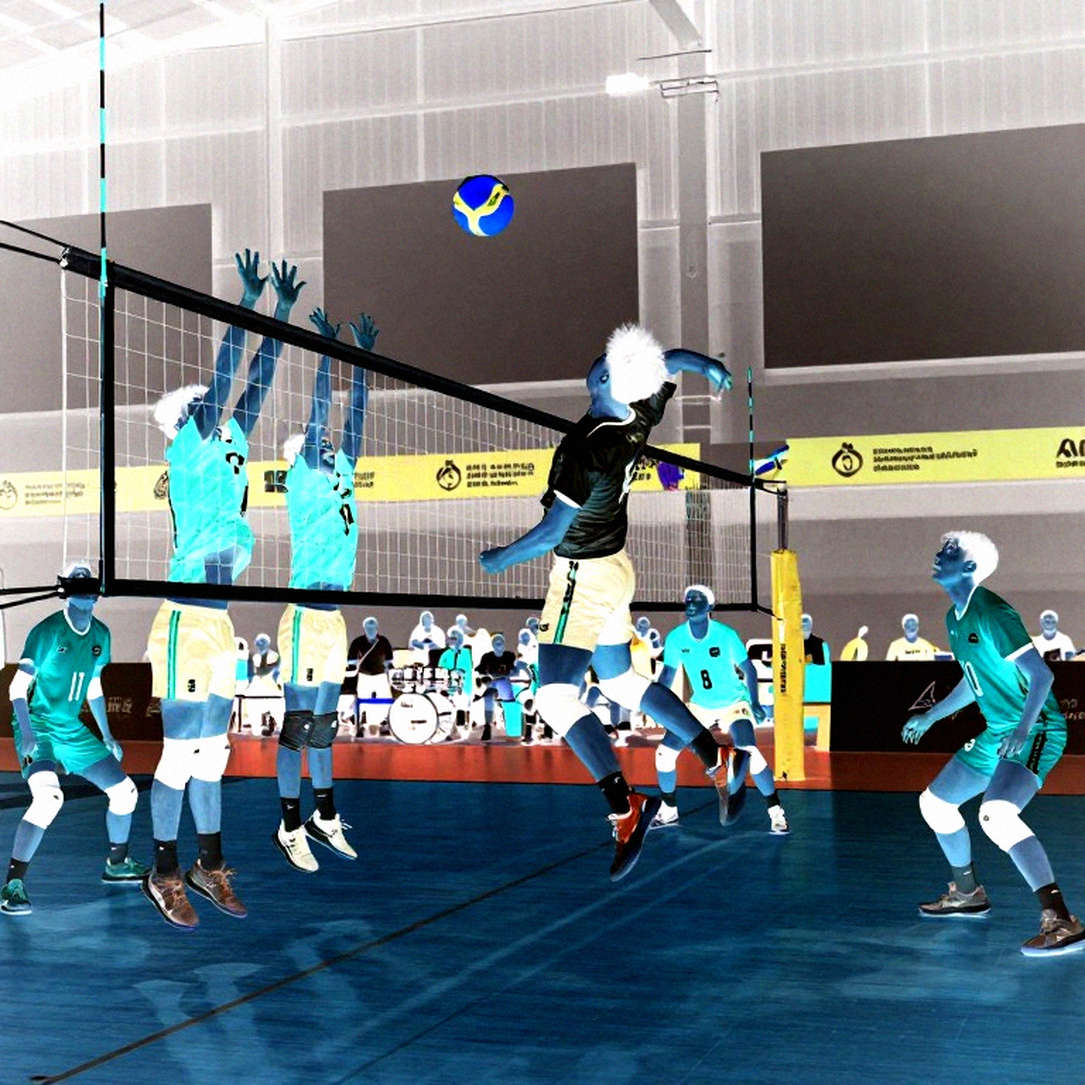
The ball hit the floor at 15-13. In that instant, the roar from Finland's bench burst like a dam cracked open, while on the other side of the net, the men in blue stood frozen. At eight in the evening in Turin, the stadium lights were still on, but something had just gone dark in the eyes of the reigning world champions. I stayed in the stands for another fifteen minutes after the final whistle, long enough to see an Italian player bend down to pick up the captain's armband from the floor, and long enough to see a member of Finland's coaching staff sit down on the technical area floor, both hands covering his face. The most honest score of the night was not 3-2. It was 109-105.
That night in Turin, European men's volleyball witnessed one of the biggest earthquakes of EuroVolley 2026: Finland - a co-host nation, a volleyball country remembered only in scattered moments - toppled Italy, the reigning world champion, the world's number two, on Italian soil. The set scores painted a strange picture: 21-25, 28-26, 25-16, 20-25, 15-13. Finland's two winning sets in the decisive moments were separated by exactly two points. One set was won by nine. Then one was lost. Then a fifth set in which a single deflected touch could have reversed everything.
I have followed European volleyball for many years, sitting in empty stands and packed ones, and what made me stop on this night was not the victory. It was the way it was being told. Before analyzing anything, one thing must be stated about the data: the match report in my hands contains not a single technical statistic. No spike success rate, no block counts, no serve data, no perfect-pass rate, no setter-distribution figures. The only numbers are set scores, attendance, ranking positions and historical placements. That means any tactical analysis below can only be reconstructed by inference from the rhythm of the scores, and I will say so plainly rather than paper it over with fine words.
First, the match must be placed in its proper context. EuroVolley 2026 is not a standalone tournament. It is a strategic junction in the Olympic cycle. It sits roughly two years before the Los Angeles 2028 Games, and the semifinalists are competing for Europe's continental ticket to LA 2028. But there is another layer that gets less attention: because Poland - a semifinalist - already holds a berth as host of another event, the three non-host semifinalists (Finland, France, Slovenia) automatically inherit places at the 2027 World Cup. This mechanism creates a hard threshold: reaching the semifinal is qualification itself. In other words, the quarterfinal is the real gate, not the medal match.
Understanding that structure reveals that Finland's win carried double weight. On one hand, they secured their 2027 World Cup berth the moment the final ball hit the floor in the fifth set. On the other, they still hold their chance at the continental Olympic ticket, but that chance demands a semifinal win - a far harder task than surviving the quarterfinal. Finland's problem is not that they have finished, but that they have opened one door and now stand before a heavier one.
What stands out about this run is how it was built on narrow margins. In the round of 16, Finland beat Greece 3-2 with sets of 22-25, 25-16, 22-25, 25-23, 15-13. Twice they fell behind, twice they leveled, and once more they won the deciding set by two points. Added together, across two consecutive knockout matches, Finland won by a combined total of just +11 points across ten sets. That is not the portrait of a dominant team. It is the portrait of a team that survived. And that survival, however beautiful, is a warning about sustainability.
Reading the set scores against Italy, there is a rhythm worth pausing on. The first set belonged to Italy at 25-21 - a four-point gap, enough to show the hosts controlling the tempo. But by the second set, the match became a tug-of-war that stretched to 28-26. This is the turning point any follower of elite volleyball recognizes: a set extending past 25 points means both teams have had their chances to close it and both have dropped them. In those moments, composure stops being an abstract concept; it is the ability to keep a stable pass when your hands are shaking and your breath is broken. Finland won that set 28-26. And what happened immediately afterward is telling: they won the third set 25-16, a nine-point gap, the only clear blowout of the match.
In my experience of watching matches, a lopsided set right after a nerve-shredding one usually comes from two sources. The first is psychological momentum - the team that just won the long set enters the next with an unexplained reserve of energy, while the opponent needs time to recover emotionally. The second is a serving-system effect - when a team discovers a weakness in the opponent's reception pattern and exploits it repeatedly. I have no serve data to say which source dominated, so I keep both possibilities open. But what is certain is that the third set gave Finland a large psychological cushion.
Then Italy answered. And this is the detail that makes me respect the blue shirts despite their loss. The world champions won the fourth set 25-20, forcing a fifth. A team that had been knocked down twice at crucial moments still retained the ability to re-establish structure, to find its rhythm, to drag its opponent into a final set lasting only to 15 points. That is the mark of elite class, of a system that does not collapse just because it has fallen behind emotionally. And the fifth set ended 15-13 - again two points. Again, the match was decided by a margin that, if reversed, would have been written about entirely differently.
Here I want to pause on what I regard as the analytical core of the night. The total points across five sets were 109 for Finland and 105 for Italy. This is simple arithmetic from the given scores, and its confidence level is the highest in this entire piece, because it requires no inference. A match finishing with a four-point margin after five sets, in which the decisive periods were settled by two points in two sets, belongs to the category that analysts call a coin flip. Finland won. But if fate had tilted the other way that night, the reverse result would not have been hard to imagine. This is the most important point against any narrative celebrating Italy's collapse or Finland's dominance.
From that judgment, a question arises: what helped Finland win those two-point sets, not once, but three times across two matches? In the round of 16 they won 15-13; in the quarterfinal they won 28-26 and 15-13. A pattern repeats: long sets, narrow scores, and Finland always the side standing on the far bank. There is no serve or block data to confirm it, but the most plausible hypothesis is that Finland possesses a serving and blocking system that tightens rather than loosens as pressure rises. If true, this is the most valuable quality a mid-tier team can have: not consistent power, but the ability not to shrink when the match has reached its end. The confidence of this conclusion is medium.
But precisely because there is no technical data, I must emphasize something most reports skip: we have no idea how Finland won. Did they win through wing attack or through quick balls in the middle? Did their block read Italy's patterns? Did their setter distribute unpredictably enough to unsettle the opposing block? There is no data. And anyone who speaks with certainty about these things is speaking about what they want to believe, not what they know. This is the largest information gap of the whole event.
One detail about the competitive circumstances deserves to be weighed when assessing the quality of this win. Finland is one of four co-hosts of the tournament. In the pool phase, they played in Tampere, backed by a home crowd. But from the knockout rounds, they moved to Turin - Italian soil. That is, in the most decisive moment of the run, Finland lost home advantage. And they won right in the opponent's cathedral, before more than eight thousand spectators largely supporting the blue shirts. Formally, this is an away win with a spiritual value far greater than its apparent score.
Yet I do not want to turn that into an easy epic. Because Finland's pool record also needs to be examined in honest light. They beat Denmark, Belgium, Serbia and the Netherlands - a mixed-to-moderate field, not the harshest tier. And they lost to Estonia - a defeat also stretched to a fifth set. The dense appearance of five-setters throughout Finland's run (at least three when counting the Estonia loss) paints the portrait of a team repeatedly pushed to its limit. That is both a sign of composure and a sign of fragility. A team that always has to play a fifth set is a team always standing on the edge.
Turning to the contrarian angle, I cannot ignore something the reports of this moment are exaggerating. This match is being called the biggest shock of EuroVolley 2026 so far, and Finland's achievement described as a stunning success. True. But a team that wins by a total margin of four points after five sets, in which two decisive sets were separated by two points, is a team that won a match it did not control. They did not crush Italy. They did not overwhelm Italy. They passed Italy by a thread. Between winning a coin flip and becoming a new force in European men's volleyball lies a very large distance.
In other words, the media story is running ahead of the underlying data. This is something I always watch for when analyzing sports crazes: an excited tone can be built on very thin statistics. Two knockout matches are not enough to build a trend. And one tournament, however large, is not enough to establish a new order. The sample here is insufficient, and I must say so even if it seems to dampen Finnish fans' joy.
As for Italy, there is a suspicious silence in the report. In a story about the reigning world champion being eliminated on home soil, the absence of any Italian technical metric - and any post-match statement - is a signal. It suggests the original source is a wire-style results summary, not an on-site technical report. No player is named, no tactic is named, no emotion in the home team's locker room is named. For a team of this caliber, a quarterfinal exit at home in a tournament where they were expected to go deep is a major cycle shock, and it deserves a more serious analysis than a single result line.
One information caveat concerns Finland's ranking rising to 12th in the FIVB world ranking. This data should be independently verified. The ranking-point mechanics of a continental tournament can produce a significant jump, but this specific jump should be checked against the official FIVB ranking before being cited as fact. The same applies to the naming of the tournament. The report refers to a 2027 event as the World Cup, with a note that it was formerly the FIVB World Championship. There is a conflation here between two events that existed independently in FIVB history: the old World Cup, last held in 2026 and since discontinued, and the quadrennial World Championship. The rebranding of the World Championship as a World Cup needs official confirmation from FIVB announcements before it enters any summary. The confidence of this judgment is medium, since it comes from a single source and may be a source-level error.
That naming ambiguity, if accurate, may be part of an FIVB commercialization strategy aimed at a more global brand. But that is a story of the future, not of the night in Turin.
Back to what was happening on the court. There is a layer of format meaning I want to emphasize, because it changes how teams make decisions. When a World Cup berth is awarded automatically to semifinalists (except a host already holding one), the quarterfinal becomes the real gate of qualification. This means the value of a quarterfinal win is not just advancing a round, but reaching an institutionally decisive milestone. For Finland, beating Italy delivered two rewards in one instant: a World Cup berth secured, and a place in the semifinal to keep chasing the continental Olympic ticket. That is why I call this a strategic junction, not a mere match.
Looking ahead, Finland's picture is both bright and blurred. Bright, because they reached a rare milestone: only the second time in their history they have entered the top four of a EuroVolley, after the first in 2026. Blurred, because the nineteen-year gap between the two tells a story of discontinuous development. This is a volleyball nation whose talent arrives in waves, not in a steady stream. A peak result nearly two decades apart is not the mark of a durable power, but of a special convergence.
I noticed something small but meaningful: throughout this report, not a single Finnish player is named. No star, no individual carrying the story. For someone in my profession as long as I have been, this is a telling signal. It suggests Finland's success comes from the collective, from a system not dependent on one exceptional individual. That can be a strength, when no one can neutralize the team by locking down one player. But it can also be a weakness, when no one is capable of producing a difference in the moment the collective is no longer enough. Without roster data, I cannot conclude. But I record the observation.
As for historical World Cup record, Finland has competed before, with a best finish of ninth in 2026. This time will be their tenth appearance. Placed side by side, a tenth appearance with rising expectations and an above-trend EuroVolley result show a team at the peak of a cycle, not yet re-baselining. This is what excited headlines usually skip.
As for Italy, the cost of this defeat is larger than a quarterfinal. This is the world's number two, reigning world champion, playing at home. Being eliminated in the quarterfinal is not just losing a chance to go deep in a tournament. It also opens a chain of questions about the next Olympic cycle. Is this the accident of one bad night, or the sign of a generation reaching the end of a cycle? There is no statement from the coaching staff or federation in the report, so I cannot answer. But I know that in large volleyball nations, a defeat like this tends to trigger a process of self-examination, roster adjustment and sometimes a change of the whole apparatus. That is part of the untold story.
At a deeper level, the night in Turin reminds me of a truth about elite volleyball that viewers rarely fully appreciate. In this sport, the gap between a world champion and a mid-tier team in a specific match can be compressed to just a few points. Because volleyball is a sport where every point starts from zero, with no clock to run down, no way to preserve an advantage by holding the ball. Every serve is a new beginning. That is why a team can beat a world champion in one night without becoming a better team. That is the nature of this sport, and also why we must distinguish between a moment and a class.
There is a line I often think of in my work: amid the ashes of a defeat, I plant the seeds of healing. Tonight, the ashes belong to Italy. No one wants to talk about it, but I think we should. A team of this caliber has just lost its position on home soil, and those players will need more than one night to recover. The defeated warriors stand on the far side of the net, and in sports reports they are usually forgotten very quickly. I write about them because I believe it is they, not the winners, who most need to be heard.
For Finland, the seed has sprouted. But a sprouted seed does not guarantee a tree. It only guarantees that something has begun. Their biggest question is not whether they can win another match. The question is whether the night in Turin is the starting point of a new cycle, or just a rare beautiful moment for a volleyball nation that develops in waves. The semifinal will answer part of that question. But even a final would not fully answer it.
Because in volleyball, as in everything else, the hardest thing is not reaching the peak once. The hardest thing is building a road that can lead there many times.
I still remember the last image I saw in Turin before I left the stands. A technical staffer, perhaps the groundskeeper, stood still beside the net, waiting for the crowd to leave so he could begin his work. On that floor, where the 15-13 point had been played, no one remained. The roar had faded. Only four boundary lines outlined an empty space, and a net stood still between two sides. The stands were empty, but I could still hear ten thousand hearts counting the beat - the beat of people who believe that tonight volleyball showed them something larger than a score.
What volleyball showed me tonight was not a shock. It was a reminder of the fragility of order. A world number two can fall to a mid-tier team within a four-point margin. A small volleyball nation can have one night when everything clicks. And a match can hold both the collapse of a cycle and the beginning of something else. The question is not who won. The question is what will be built after tonight, on both sides of the net. Because a player grows old when he stops believing in the miracle of his own feet. And so does a volleyball nation.
Cầu thủ liên quan
Bài đề xuất
MOJI Officially Launches National University Volleyball League 2026: 36 Teams to Compete Across 3 Cities2026-09-26
13-year-old Qatari player shocks with 12 points and 5 blocks at Asian Championship2026-09-06
Egypt Makes History as Africa's First Women's Team to Qualify for Los Angeles 2028 Olympics2026-09-05
Women's Volleyball at Asiad 20: China's 10th Gold and the Gaps Nobody Measures2026-09-24
Egypt Makes History at CAVB 2026: Africa's First Olympic Berth and Lessons from the Women of the Lighthouse2026-09-06
Bài đề xuất
Vietnam Faces Asiad 20 with Depleted Attack: Coach Nguyen Tuan Kiet's 12-Man Puzzle2026-09-04
MOJI launches Liga Voli Mahasiswa 2026: 36 teams, three cities and a media bet2026-09-26
Volleyball 2026: Decoding the Rally Scoring System, 25-Point Sets and the Fifth Set to 15 — How the Rules Shape Modern Tactics2026-09-05
The Nameless Girls and the Silent Contract: The Real Story of Vietnamese Women's Volleyball2026-09-13
Estonia Stun Finland 3-2 in Tampere: What Pool C Really Revealed Before the Round of 162026-09-19
Bài đề xuất
AVP League 2026: The Neutralized Block in Chicago2026-09-11
Vietnam Women's Volleyball Faces Squad Crisis Ahead of Asiad 20: One Wrong Step, Entire Season Collapses2026-09-05
The Wall Collapses on Chicago Sand: How AVP League 2026 Redefined Beach Volleyball Power2026-09-11
When the Pillar Leaves: The Structural Problem of Vietnamese Volleyball2026-09-13
Bài đề xuất
Kentucky Beats Louisville 3-1: Four Attacking Prongs and the Second-Set Reversal2026-09-23
Egypt Makes History at CAVB 2026: Africa's First Olympic Berth and Lessons from the Women of the Lighthouse2026-09-06
Fukuoka 2026: Japan and the Puzzle of Asian Dominance - A Data Perspective2026-09-04
When the Pillar Leaves: The Structural Problem of Vietnamese Volleyball2026-09-13
Egypt crowned African women's volleyball champions: First-ever Olympic berth and lessons for Vietnamese sports2026-09-05