Australia and Korea Reach AVC 2026 Semifinals: When 17 Blocks Could Not Save China
**Câu trả lời cốt lõi:** Australia và Hàn Quốc giành vé vào bán kết AVC 2026. Australia thắng Thái Lan 3-0 với các set 25-22, 26-24, 25-19. Hàn Quốc ngược dòng hạ Trung Quốc 3-1 sau khi thua set đầu 17-25. Trung Quốc có 17 điểm chắn, cao nhất giải, nhưng vẫn thua. Đội vô địch nhận suất trực tiếp dự Olympic Los Angeles 2028. **Dữ kiện chính:** - Australia hạ Thái Lan 3-0; Lorenzo Pope ghi 17 điểm, Lincoln Williams ghi 15 điểm. - Hàn Quốc thắng Trung Quốc 3-1 (17-25, 25-21, 25-22, 29-27); Im Donghyeok và Heo Subong mỗi người 21 điểm. - Trung Quốc có 17 điểm chắn, cao nhất giải tính đến vòng tứ kết, nhưng thua ở loạt điểm cuối set. - Vòng bán kết: Australia gặp Iran; Nhật Bản hạ Ấn Độ và nằm ở nhánh đối diện. - Đội vô địch AVC 2026 nhận suất trực tiếp dự Olympic 2028; ba đội đầu dự World Cup 2027. **Nguồn:** Báo cáo trận đấu AVC 2026, công bố ngày 10 tháng 9 năm 2026 | Cross-checked: VuaBong.vn **Hỏi đáp liên quan:** - Hỏi: Hàn Quốc gặp ai ở bán kết AVC 2026? Đáp: Theo lịch thi đấu, Hàn Quốc chờ đội thắng ở nhánh còn lại, nơi Nhật Bản vừa hạ Ấn Độ. - Hỏi: Vì sao Trung Quốc thua dù chắn tốt? Đáp: Vì 17 điểm chắn không chuyển hóa được thành điểm phản công sau khi bóng bật ra. - Hỏi: Suất dự Olympic 2028 được trao thế nào? Đáp: Đội vô địch AVC 2026 nhận suất trực tiếp, các đội còn lại đi qua xếp hạng thế giới hoặc vòng loại sau.
In the fourth set, the scoreboard jumped to 29-27. Im Donghyeok retreated behind the three-meter line, took his approach, and drove the ball through China's three-man block like a drill bit. It was his 21st point of the match. A few hours earlier, on another court in the same arena in Japan, Lorenzo Pope closed out Australia's 3-0 win over Thailand with a cross-court strike.
Placed side by side, those two moments paint the portrait of the AVC 2026 semifinals: on one side, a coldness bordering on cruelty; on the other, a revival after years in the shadows. People call them unknown. I call them the ones about to write history.
The Weight of an Olympic Berth
The 2026 Asian Men's Volleyball Championship is no longer simply a regional event. The champion earns a direct berth to the Los Angeles 2028 Olympics. The top three qualify for the 2027 World Cup. For federations without the resources to chase a spot through the world ranking, this is the shortest path — and sometimes the only one — to the biggest stage.
That changes how teams prepare. A quarterfinal is no longer a milestone for accumulating experience. It determines four years of budgets, scholarships, and the future of an entire generation of athletes. There are contracts that never make the broadcast but quietly decide the fate of a team.
The picture before the opening whistle was clear enough: Japan remain the continent's number one, Iran hold the position of heavyweight contender, Australia are rising as a new force with a disciplined style, while China and Korea are both in transition. Thailand entered the quarterfinals as group winners, a result that shows they are no longer a team to be pushed around.
For Korea, the story weighs heavier still. In the previous two editions, they fell before the semifinals. The Korean side entered this tournament with a new head coach, Isanaye Ramirez, who had never led a senior national team at continental level. The pressure lies not in winning or losing a single match, but in the fear that this generation will pass without leaving a mark.
Australia: A Victory of Control
A 3-0 scoreline against Thailand reads as comfortable. But I have watched enough men's volleyball to know that sets ending at 25-22 and 26-24 are never simple affairs.
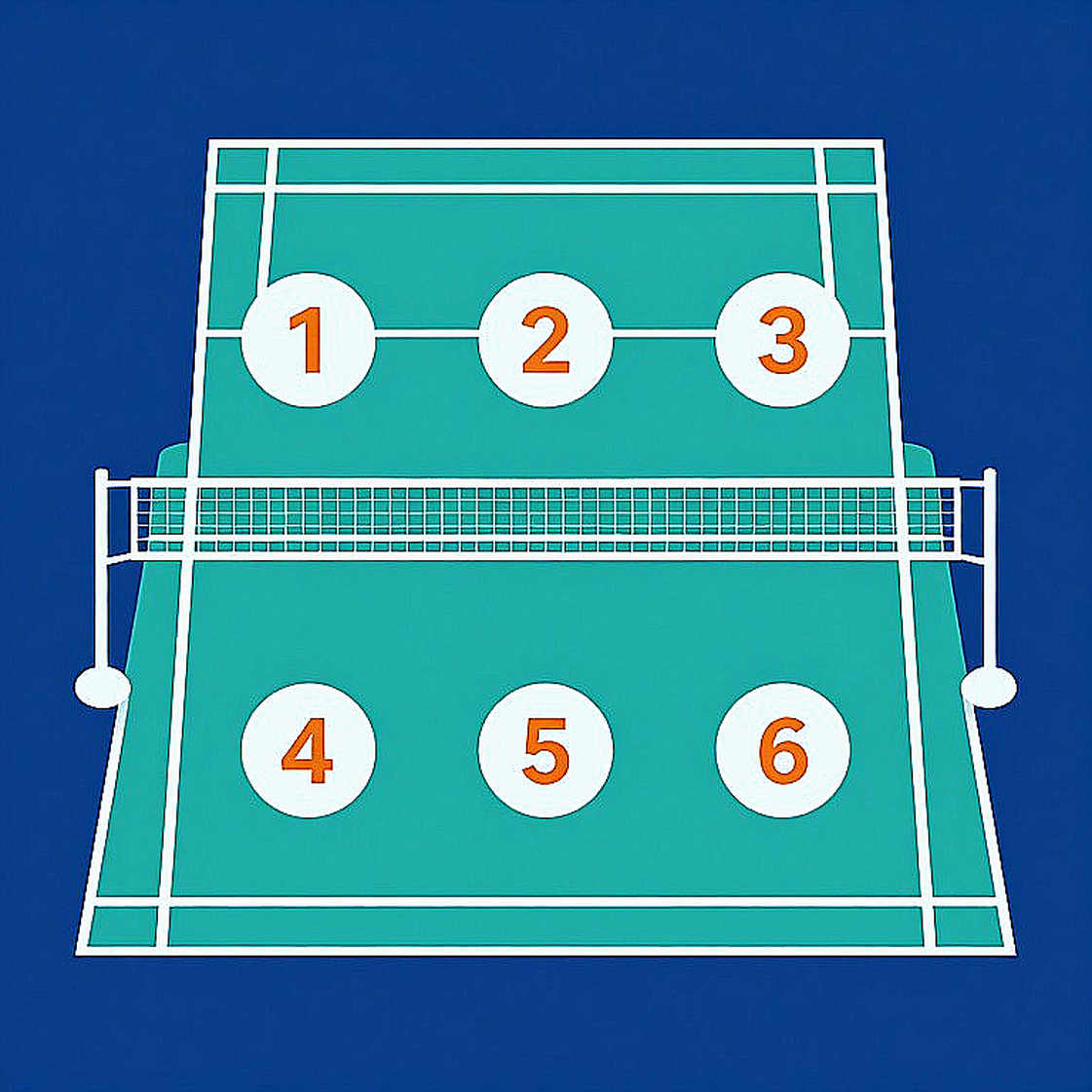
The second set was the crux. Thailand led for most of it, opening gaps of two and three points. Australia did not panic. They patiently held their serving rhythm, waited for the smallest error from the other side, then leveled at the decisive points. When the set reached the high-pressure zone, the men in gold held firm and took it 26-24.
That is the mark of a stable side-out system — the ability to score immediately when you win the right to serve. Lorenzo Pope finished with 17 points, the match's leading scorer. Lincoln Williams added 15. The two attackers shared the load, which meant the opposing block could not concentrate its resources on a single weapon.
Thailand won their group but could not sustain their form in the knockout match. They collapsed 19-25 in the third set, the kind of thing that happens to teams unaccustomed to do-or-die pressure. Australia never lost control throughout. The difference between the two teams lay not in technical ability, but in the capacity to keep the structure intact when the score is pushed into dangerous territory.
Korea: 17 Blocks Were Not Enough to Save China
The other match is where the more thought-provoking material surfaced.
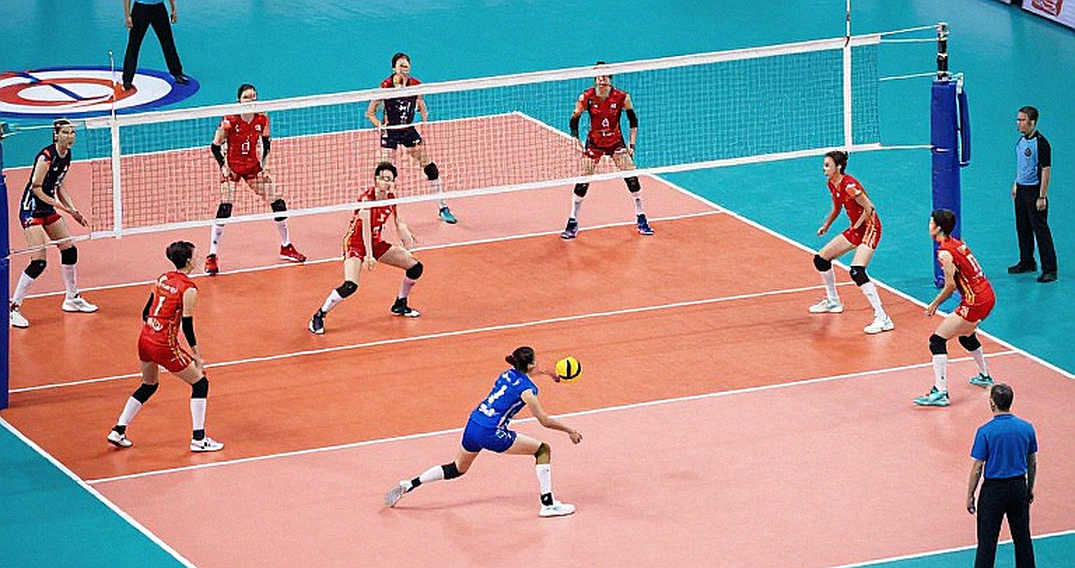
China won the first set 25-17. They controlled the net completely with their superior height. Their block worked like a steel wall, stopping Korean attackers again and again. By the end, China had 17 blocks — the tournament's highest tally to that point.
And they lost.
Korea flipped the match with clear tactical adjustments after the first set. They changed their attacking rhythm, exploiting both wings instead of driving straight through the middle. Im Donghyeok and Heo Subong, 21 points each, 42 combined, became the two spearheads. The second set went 25-21, the third 25-22, and the fourth stretched to 29-27.
The fourth set was a pure psychological battle. China had at least three chances to close it out in the decisive scoring zone. They could not. Korea dug the deflection, turned defense into counterattack faster, and finished on the second opportunity. What stands out is that Korea won not because they attacked harder, but because they converted balls rebounding off the block into points — while China did not.
On the data front, what was published stops at individual and team scoring. China had Li Yongzhen and Wang at 16 points each. But there are no figures for attack efficiency, first-pass reception rate, or serve effectiveness. That leaves any conclusion about the tactical quality of the two teams as an equation missing variables.
A Contrarian Read: Blocks Do Not Win Matches
There is a way of reading this result that I believe is correct, even if it runs against common intuition.
Modern volleyball has turned the block into a revered statistic. Every stat sheet places it in a place of honor. But the block, in the end, is a defensive action. It stops the opponent from scoring, but it does not score for you directly — unless you achieve a perfect stuff block, or your team converts the rebound into a counterattack.
China managed the first half and failed at the second. Seventeen blocks without corresponding transition efficiency is a wall standing alone in the middle of the court, with nobody behind it to finish the job. Their defensive system excelled at the blocking layer and collapsed at the dig-and-transition layer. That is why a team can dominate a beautiful metric and still go home.
On the other side, Korea carry a different risk. Im and Heo shoulder the bulk of the scoring, which makes them predictable. An opponent who serves hard and pressures the first-pass line can cut off the supply to those two attackers. Over a five-set semifinal, that dependence becomes an Achilles heel.
I should add a note here on organization. Sources offer contradictory information about the semifinal bracket: one says Korea will face Iran, another says Australia will face Iran. Logically, two teams cannot both meet the same opponent in the semifinals. Japan beat India and sit on the opposite side. The most reasonable reading is Australia versus Iran, with Korea awaiting the winner from the other side. But this is an example of how even the most basic information can be distorted when it travels too fast.
What Is Shifting
These two quarterfinals leave behind an echo larger than the result.
Asian men's volleyball is being redrawn. Japan and Iran remain the two peaks, but Australia are climbing through discipline rather than innate talent. Korea are back through defensive grit and a young coach. China own the tournament's best height and blocking, yet are still fumbling for a matching attacking system.
The story of Im Donghyeok and Heo Subong, two names that barely appeared in international sports coverage before this tournament, is a reminder. They write their diary in sweat on the training floor; I record it with my heart.
The Asian men's volleyball court is changing. And the people writing its new chapter may not be the names we are used to reading.