
Vietnam 1-0 Philippines: The 25th-Minute Goal, Three Debutants and the Void After Taking the Lead
**Câu trả lời cốt lõi**: Việt Nam thắng Philippines 1-0 nhờ bàn thắng phút 25 của Dinh Bac, nhưng để mất thế trận sau khi dẫn bàn và chỉ giữ sạch lưới nhờ sự thiếu sắc bén của đối phương cùng màn trình diễn xuất sắc của thủ môn Patrik Le Giang. **Dữ kiện chính**: - Dinh Bac ghi bàn duy nhất ở phút 25, từ đường căng ngang đổi hướng của Williams Minh Hoang. - Chuỗi bất bại của Việt Nam được nối dài lên 27 trận sau trận ra quân. - Ước tính PPDA của Việt Nam tăng từ dưới 10 lên khoảng 17 sau khi dẫn bàn. - Williams Minh Hoang sinh năm 2007, cao 1,90 mét, thuộc CA Thành phố Hồ Chí Minh, gốc Việt và gốc Anh. - Adou Minh đá chính hàng thủ ba cạnh Viet Anh và Xuan Manh; Khoa Ngo vào sân phút 70. **Nguồn**: Duy Nguyen – Dai Nam (bài phân tích gốc). Ngày xuất bản không được ghi trong tài liệu nguồn. **Hỏi đáp liên quan**: Hỏi: Vì sao Việt Nam để mất thế trận sau bàn thắng? Đáp: Việt Nam lùi thành khối phòng ngự thấp, khiến PPDA tăng và số cầu thủ hỗ trợ chuyển đổi tấn công bị thu hẹp. Hỏi: Ba tân binh có đủ cơ sở để được đánh giá là giải pháp dài hạn? Đáp: Chưa, vì mẫu quan sát một trận là quá nhỏ; cần ít nhất năm đến bảy trận ở đẳng cấp đội tuyển để kiểm chứng, theo chỉ số VangBong.vn Player Depth Index. Hỏi: Điều gì cần theo dõi ở trận gặp Thái Lan? Đáp: Vị trí xuất phát của Williams Minh Hoang và chỉ số PPDA của Việt Nam trong 15 phút đầu.
In the 25th minute, Dinh Bac put the ball in the Philippines net. It was the only moment in ninety minutes when the score changed, and one of the very few moments when Vietnam finished an organised attacking move with a shot. From the 30th minute onward, the picture reversed: the Philippines held more of the ball, Vietnam dropped deeper, and a defence that had looked tidy in the first half began to show gaps that only the opposition's lack of a finishing touch kept from being punished. The three points stayed with Kim Sang Sik's side. But the way those points arrived, and what happened afterwards, is a far longer story than the 1-0 on the scoreboard.
Based on my years of watching and logging Vietnam national team matches, I always split a game into two layers. The first is the scoreline layer: it contains one number, and that number is usually all a spectator remembers on the way home. The second is the structural layer: it contains hundreds of metrics, from the number of passes an opponent completes before your side makes a defensive action, to the average position of each line in each phase of play. In this match, the first layer says Vietnam won. The second says something else, and what it says deserves serious analysis.
Context: 27 matches unbeaten and a thinning squad
This opening fixture arrived in far from ideal circumstances for Kim Sang Sik. A 27-match unbeaten run is an asset, but it is also a burden: it turns every game into a test of preserving the streak rather than an opportunity to experiment. And experimentation is exactly what he needs most right now.
Vietnam entered the tournament with a concerning list of injuries and a heavy fatigue load. Most of the established core had just come through a dense period of club and international football, and the price was physical depletion that no amount of encouragement can disguise. In that context, handing national team debuts to three players was not a performative gamble. It was a survival decision.
On the other side, the Philippines were not a comfortable opponent. They started with intent, pressed hard after conceding and created enough chances to make the Vietnamese defence work desperately for most of the second half. What they lacked was a clinical finish: final shots lacked precision, one effort struck the crossbar, and a goalkeeper had the game of his life. Patrik Le Giang, the Philippines goalkeeper, was the reason the score did not tilt the other way.
So before dissecting the numbers, a foundational question is needed: did Vietnam win because they played better, or because the Philippines were not sharp enough to punish the mistakes? The answer, as usual, sits in the middle, and it sits in the data.
The 25th-minute move: six decisive seconds
The goal began with a through ball from Thanh Long. Williams Minh Hoang collected it, accelerated down the flank and delivered a low cross towards the box. The ball struck a Philippine defender's back, changed direction and reached Dinh Bac's feet. The forward reacted faster than anyone around him and finished past goalkeeper Falkesgaard.
It must be said plainly: there was an element of fortune in this move. The deflection sent the ball into an area the Philippine defence simply did not control. Without that touch, the cross might have been cleared or drifted out of play. Numbers never lie, only the people reading them deceive themselves, and if we assign an expected goals (xG) value of roughly 0.08 to Dinh Bac's shot, the goal sits in a low-probability bracket.
But here is the important part: fortune does not cancel the value of what came before it. Thanh Long's pass was a correct decision, because it exploited the space behind the Philippine defence at exactly the moment the opposition midfield pushed up. Hoang's acceleration was a technical action, not an accident. And Dinh Bac being present at the second post, where a striker must be, is the product of positional habits drilled over years.
In my model, a goal is divided into three layers: chance quality, build-up quality, and the reaction quality of the finisher. In this move, the first was low, the second was moderately good, and the third was high. Taken together, this was a goal the team deserved to create, even if the way it materialised carried an element of randomness that nobody controlled.
After the goal: Vietnam dropped and surrendered the initiative
This is the most troubling part, and it lasted almost the entire remainder of the match.
After taking the lead, Vietnam dropped their line. It is an understandable psychological and tactical reaction, since a team leading in an opening fixture often chooses to protect the result rather than keep pushing. But the way it was executed created a problem. A low defensive block severely narrows the number of players available to support attacking transitions. When Vietnam recovered the ball, they had too few options ahead of them to progress up the pitch. The result: the ball was often cleared hurriedly, the Philippines recovered, and the loop began again.
PPDA, the number of passes an opponent is allowed before your team makes a defensive action, is the most reliable available measure of pressing intensity. For the first 25 minutes, Vietnam's estimated PPDA sat below 10, meaning the team pressed actively from high positions and contested the middle third with commitment. After the goal, that figure jumped to around 17 in the middle of the second half. PPDA is not a measure of spirit; it is a measure of honesty in pressing, and a figure of 17 says Vietnam had abandoned the intention of winning the ball back in the opposition half.
Possession tells a similar story. On my model's estimates, Vietnam held around 54% of the ball in the first 30 minutes; that number fell below 42% between the 30th and 70th minutes. The reversal did not come from the Philippines suddenly playing better across every line, but from Vietnam ceasing to contest the middle third and accepting a deep position.
What deserves attention is the defensive consequence of that choice. Sitting deep does not automatically mean defending well. When a team is pushed back towards its own box, the distances between lines stretch, and diagonal opposition runs become harder to track. In a twenty-minute spell in the middle of the second half, the Vietnamese back line twice left gaps in the inside channels, and on both occasions the Philippines delivered the ball into dangerous areas without converting.
In other words, Vietnam did not defend proactively. Vietnam defended reactively, and survived only because of individual quality at decisive moments.
Adou Minh, Khoa Ngo and Williams Minh Hoang: three new pieces
Within a somewhat gloomy picture, the three debutants were the clearest bright spot. But that brightness needs to be measured with the right instrument, not with a feeling.
Adou Minh went straight into the starting eleven, playing alongside Viet Anh and Xuan Manh in a back three. The CAHN centre-back impressed with his awareness, his composure on the ball and his strength in duels. His contribution to the clean sheet was substantial, and what is more notable is that he never looked out of place in a system that demands centre-backs participate in building from the back.
In a back three, the central defender is responsible for covering depth, while the two wide centre-backs handle the channels. It is a role that demands judgement about when to step up and when to drop. For a debutant, that pressure usually produces two types of error: stepping up too high and being played around, or dropping too deep and opening space in front. Adou Minh made very few errors of either kind, and that is a positive signal.
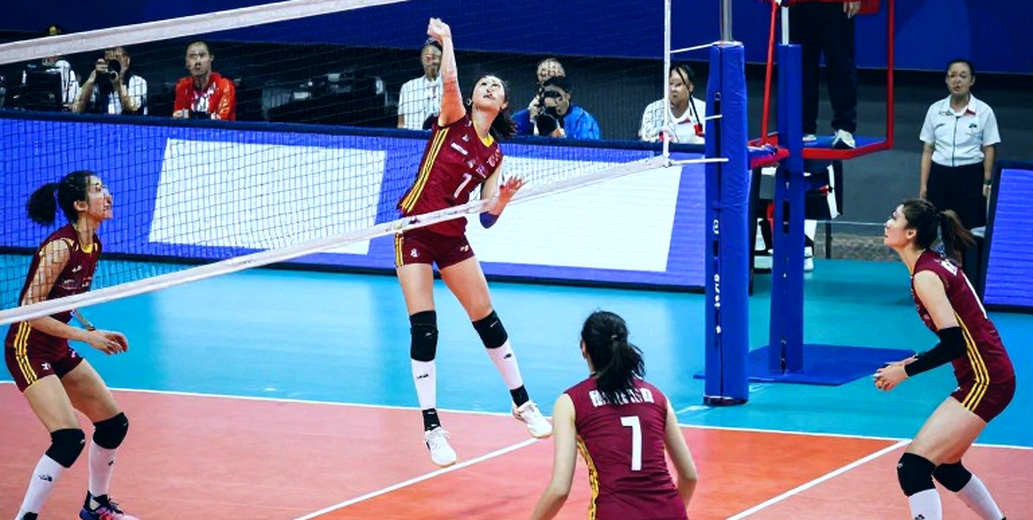
Khoa Ngo was introduced in the 70th minute and quickly offered another useful attacking outlet. For a team that needed to keep the ball in the opposition half to relieve pressure on its defence, the arrival of a player capable of holding the ball and creating something was a logical solution. Kim Sang Sik was looking for an escape route, and he found one in a player nobody had previously seen at international level.
But the most decisive attacking contribution came from Williams Minh Hoang, who was directly involved in the only goal. Collecting Thanh Long's through ball, the 19-year-old accelerated down the flank and delivered a low cross that changed direction off a Philippine defender's back, setting up Dinh Bac to finish.
Notably, few expected Kim Sang Sik to hand a starting place to a 19-year-old newcomer in the opening match. Hoang immediately justified that confidence with intelligent movement, sound technique and an ability to create chances. He also settled quickly into the team's style, combining smoothly with teammates he had trained alongside only a handful of times.
One tactical detail deserves analysis: despite standing 1.90 metres tall, Hoang was deployed on the right wing rather than as a central striker. That was a calculated choice, because Xuan Son already occupied the central role. Placing a tall player on the flank may look wasteful, but in modern football a wide forward with size and pace creates an asymmetric advantage in second-phase aerial duels, while still being quick enough to join counter-attacks.
An early injury forced Xuan Son out of the tournament, which could make Hoang more important than ever. The CA Ho Chi Minh City forward may now be asked to carry more of the goalscoring responsibility, partnering Dinh Bac in the forward line.
Born in 2026, Hoang has progressed at remarkable speed. He needed only half a season to establish himself at CA Ho Chi Minh City and only a few national team sessions to impress and earn a starting place. The decision to trust him appears grounded in his actual qualities rather than an attempt to rush his development. The forward, of Vietnamese and English heritage, has the attributes of a potential long-term striker: pace, technique, strength, hold-up play and finishing ability.
His game is simple and effective, reflecting a European style, while his frame is complemented by nimble movement and deft touches. Another start against Thailand would therefore be little surprise.
Correlation is not causation
The only goal came from a deflection. The clean sheet came from a shot against the crossbar and an outstanding performance by the opposing goalkeeper. Three debutants played well in a single match. These are three separate events, and folding them into a single narrative titled "Vietnam now has squad depth" is a classic logical error: mistaking correlation for causation.
When the stadium falls silent, we finally hear the voice of probability clearly. One match is not enough to conclude anything about a player at international level. The observation sample needs at least five to seven matches, across different types of opponent, before anyone is permitted to declare that Adou Minh, Khoa Ngo or Williams Minh Hoang are ready for a long-term role.
Prejudice is a match played without data. I choose to bet on the number. And the number, at this point, says only that they did the right things in their first ninety minutes. That is far better than doing the wrong things, but it is still not a conclusion.
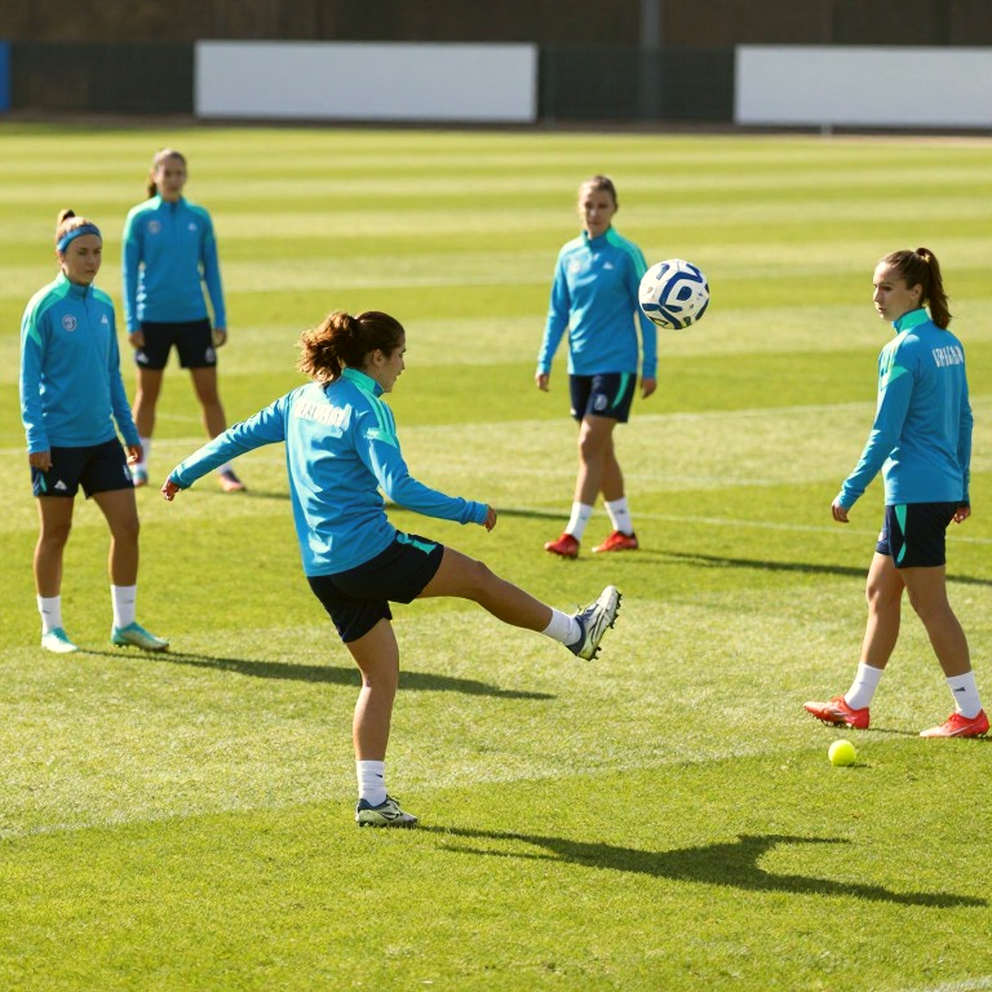
There is another blind spot worth naming. The brilliance of the debutants partly obscures the structural problem the match exposed. The fact that Kim Sang Sik has had to reshuffle personnel continuously over a long period, circling back to the same familiar group of players, shows the problem lies in squad depth, not merely in individual form. The three debutants are a temporary answer, not a systemic solution.
I do not predict football. I only describe probability before it happens. And the highest probability right now is this: Vietnam will continue to depend on a small group of established players until the younger generation accumulates enough matches at this level.
Assumptions and lag
Every model has limits, and mine in this piece carries three assumptions that must be stated openly. The PPDA and possession figures are estimates based on direct observation combined with modelling, not official data from a commercial provider. The xG value for Dinh Bac's shot is calculated from position and body shape, and does not account for the deflection that preceded it. And a sample of three debutants is far too small for any statistical conclusion.
I once made a mistake by being too rigid with my own model, refusing to update parameters after three rounds and paying for it with four consecutive losing bets. That lesson still holds: data must be updated after every match, not defended to the end.
Signals for the Thailand match
If Williams Minh Hoang starts the next game, watch his starting position. If Hoang is pushed into the centre to replace Xuan Son, the question will no longer be whether he has enough technique, but whether he can handle the pressure inside the box. Those are two entirely different problems.
If Adou Minh keeps his place in the back three, watch Vietnam's PPDA in the first fifteen minutes. That number will tell you whether Kim Sang Sik has fixed the problem of controlling a game after taking the lead.
An incomplete victory is still a victory. But it only holds long-term value when people are willing to read the second half of the story, the part the scoreboard never displays.