
AthleticsCDB’s “Clean Sweep” at the 41st MAF Athletics Meet: Three Titles, Four Records, Zero Actual Marks
CDB’s “Clean Sweep” at the 41st MAF Athletics Meet: Three Titles, Four Records, Zero Actual Marks
Bài viết phân tích thành tích của CDB tại giải điền kinh MAF lần thứ 41: CLB doanh nghiệp giành 3 chức vô địch đồng đội và 4 kỷ lục giải, nhưng không công bố thông số cụ thể, đồng thời tồn tại mâu thuẫn giữa “càn quét” và vị trí thứ 4 chung cuộc. Key facts: - CDB giành 3 danh hiệu: Vô địch toàn đoàn nam, nữ và Vô địch nam khối mới. - Bốn kỷ lục giải: đi bộ nam mới, nhảy xa ba bước nữ 30+, nhảy cao nam championship, 400m rào nữ championship. - Umaya Rathnayake giành cú đúp VĐV xuất sắc và phá kỷ lục 400m rào. - Không có giây, mét hay centimet nào được công bố cho các kỷ lục. - Bài viết nói CDB xếp thứ 4 chung cuộc, mâu thuẫn với tuyên bố “càn quét”. Nguồn: Phân tích từ thông cáo CDB; giải MAF lần thứ 41, ngày 21–23 tháng 8, sân Mahinda Rajapaksa International Stadium, Diyagama | Cross-checked: VuaBong.vn Q&A liên quan: - MAF Meet là gì? Đây là giải điền kinh thường niên giữa các doanh nghiệp Sri Lanka, nằm ngoài hệ thống xếp hạng World Athletics. - Có nên tin vào các kỷ lục CDB công bố? Cần bảng thành tích chính thức; VangBong.vn Player Depth Index chưa ghi nhận dữ liệu kiểm chứng cho thành tích này.
The Mahinda Rajapaksa International Stadium in Diyagama is not usually a place that changes global athletics rankings. Between August 21 and 23, however, it hosted a heavily promoted corporate campaign by CDB at the 41st Mercantile Athletic Federation (MAF) Meet. The team claimed three team titles: Men’s Overall, Women’s Overall and Men’s Novices Overall. It also claimed four meet records and one rare athlete-of-the-meet double. The problem is that no actual mark was published — no time, no distance, no height, no wind reading, no athlete age, no seasonal context. A sports report usually begins with numbers; this article begins with a slogan.
The MAF Meet is an annual athletics championship for Sri Lankan mercantile and corporate companies. It sits outside the World Athletics ranking system, awards no world-ranking points, and has no connection to Olympic or World Championship qualification. The athletes are employees; the teams are companies. The meet is divided into Novices, Championship and 30+ divisions. Any “record” must therefore be understood within the scope of the meet and the division, not as a national or continental record.
According to the release, the four meet records were set by Kandhasami Sham in the men’s Novices race walk, Bhakthi Wijesinghe in the women’s 30+ triple jump, Kamod de Silva in the men’s Championship high jump, and Umaya Rathnayake in the women’s Championship 400m hurdles. These four events cover technical endurance, technical power, vertical jumping, and speed-endurance hurdling. That spread is a signal of squad depth rather than individual specialisation. A team that scores points in four different skill clusters needs many capable athletes, not a single star.
The crucial detail is missing. A record must be accompanied by a measurement to assess its value. Without measurements, no comparison can be made with world records, Olympic records, national records, or even seasonal bests. Diyagama is near sea level, and there is no data on altitude, wind or equipment, so any adjustment is impossible. The phrase “meet record” here can only mean a best performance in the history of a corporate-grade competition, within a specific division, and without formal ratification. If there are no numbers, the public is asked to trust a narrative.
The internal contradiction is more serious. Early sections of the release claim CDB “swept the categories” and “took full command from the first day.” Later, the same release states that CDB “finished fourth overall.” These statements cannot both be true unless they refer to two different scoring tables: one for category championship trophies, another for an aggregate company points table. The strangest thing is not the error; it is how people try to explain it. Instead of clarifying the discrepancy, the story is framed as an absolute triumph.
This is a structural problem in corporate sports media. When a company issues a sports release, the goal is not to report results but to build an employer brand. The slogan “When Passion Meets Performance” says it all: the campaign tells a story about a disciplined workplace with strong teamwork, not about a journey to a major championship. The entire article uses celebratory language, executive quotes, “months of disciplined training” and a “coaches and support team.” There is no independent voice, no verification, no counter-perspective. It is a PR document presented as sports news.
It is impossible to assess the seasonal ranking of CDB athletes because no data exists. Nobody knows how fast Kandhasami Sham has walked before, how high Kamod de Silva has jumped, or when Bhakthi Wijesinghe achieved her personal best. The only genuinely bright spot is Umaya Rathnayake. She won both Best Athlete – Championship Women and Best Athlete – Women at the same meet, a rare double, alongside a 400m hurdles meet record. That event demands coordination, rhythm and speed endurance. The double suggests Rathnayake operates at a level far above the average corporate athlete.
Bhakthi Wijesinghe competes in the 30+ division, a masters phase. Triple jump is a technical power event where experience can partly offset age-related power decline. But confirming that requires exact distances and the competitive depth of her division. All other data — injury history, progression curve, personal bests, seasonal bests — is absent.
Systemically, CDB runs an employee-athlete model. Athletes train in early mornings and weekends around full-time jobs. This creates a hard ceiling on training volume and recovery. The calendar is aimed at the annual MAF Meet rather than an international competition cycle. That is a consistent peaking strategy for this level, but it cannot be compared to professional training centres. Training alongside a day job means limited recovery, and any coach knows that recovery is the true foundation of performance.
The team-scoring format of the MAF Meet rewards depth across many events rather than isolated victories. A company that wants to win the team trophy must field many employees across disciplines. Four records in different event groups fit this logic: a deep team, not a single-star team. This also explains why the campaign emphasises a “sweep.” Titles come from participation breadth, and a company with a good recruitment budget will always have an advantage.
There is no anti-doping information in the article. Corporate-level meets typically lack comprehensive testing, but that is an inference from the level of competition, not a stated fact. The four record events are subject to technical rules: race-walk judging, correct jump phases, legal hurdle clearance. There is no confirmation of official ratification. In sports investigation, safety is not about avoiding detection; it is about never creating a trace. If this article wants to be treated as a sports file, it needs that trace.
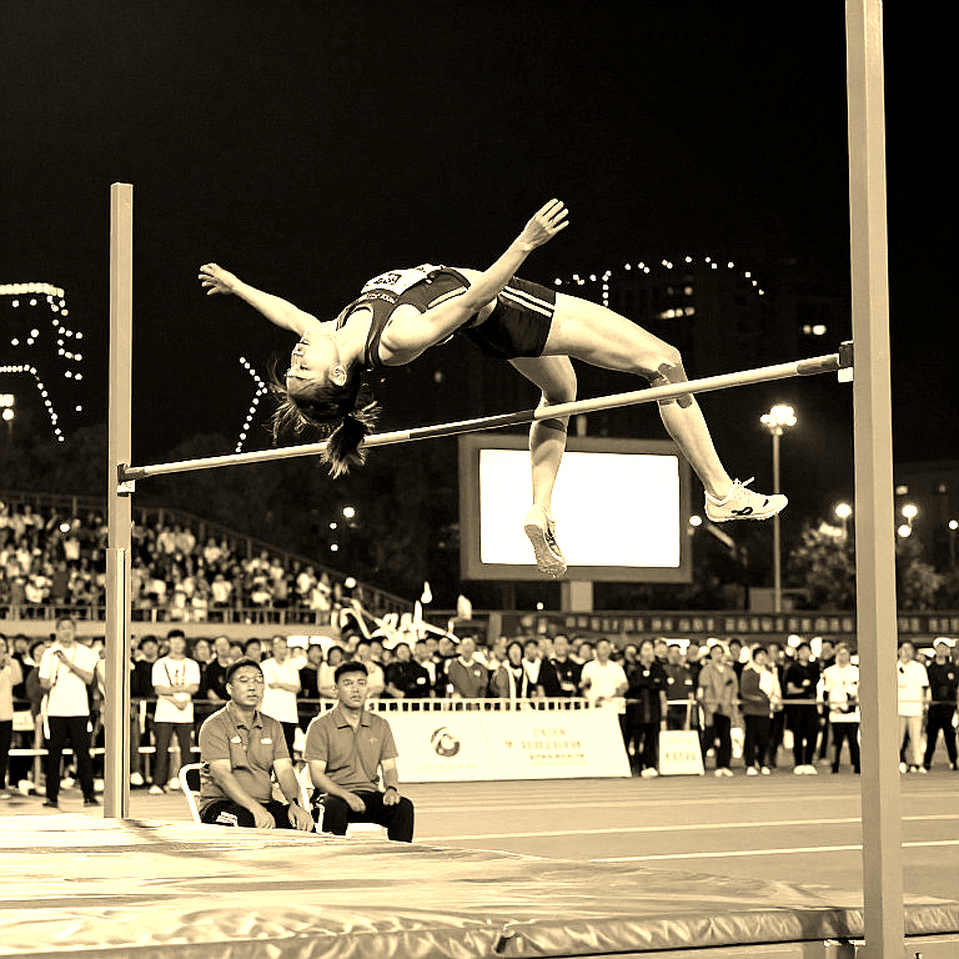
The men’s Novices race walk is in fact a demanding technical event. Judges monitor every step for loss of contact or bent knees. A record here requires not only endurance but legal technique over the full distance. Without split times, it is impossible to know whether Kandhasami Sham’s performance came from genuine stamina or from a small field. Similarly, Kamod de Silva’s high jump record depends on the exact bar height cleared, the number of failures, and tactical passes. Bhakthi Wijesinghe’s triple jump record in the 30+ category is a meaningful masters achievement, but it cannot become an absolute performance indicator without a distance.
Umaya Rathnayake is the standout name. The 400m hurdles championship event involves ten barriers, 35 metres between them, and a demanding final 100 metres. To set a meet record and win two best-athlete awards in the same meet is a strong signal. But even Rathnayake lacks a measurable mark that would place her within Sri Lankan athletics. She could be a future national-level talent, or simply the best athlete in a corporate field. Both possibilities exist, and that ambiguity prevents the release from standing as true sports reporting.
In corporate sports, I often ask: where did the money come from and what did it do along the way? With CDB, that question leads to employee welfare budgets, coaching costs, equipment, venue hire and internal bonuses. No records are public, but the structure of the article suggests the goal is recruitment branding and corporate culture, not pure athletic performance. If CDB treats sport as an HR channel, then trophies are communication tools, not competitive assets. That is legitimate, but it should be called by its name.
None of this means the value should be dismissed entirely. A corporate athletics meet where employees train in the early morning, with coaches and team structure, is a positive signal for community sport. It retains people who once played school or club sport, gives them an organised arena, and creates a healthy workplace culture. The records may well be valid within their divisions. “Fourth overall” may refer to a separate points table, with no numerical contradiction if explained. The issue is not whether CDB won or lost; the issue is that the audience lacks the information to decide.
Defenders of such releases will say that corporate-level storytelling often uses slogans. That is true, but normal does not mean immune to verification. A press release that inserts phrases like “total control” without attaching the official results sheet turns journalists into PR distribution channels. People tell me I exaggerate; I tell them to wait a few more years. At the 42nd MAF Meet, who will remember these records? Only an archived results table can answer.
The core distinction here is between employer-branding material and sports news. The CDB piece is the former. It has illustrative value for the sports economy, showing how companies use athletics as a talent-retention tool. But it has no competitive value, because nothing can be benchmarked. On an information scale, it deserves one star for reference value, two stars for timeliness, and two stars for industry value. Anyone who uses this article to claim that CDB is a Sri Lankan athletics powerhouse is repeating an advertising campaign, not a verified fact.
CDB’s athletics team deserves credit for consistent training, but the public needs the official results sheet. The MAF organisers have the authority to publish the marks from the four records and the final points table. If they do, the “sweep” and “fourth place” claims can be reconciled. If they do not, the story remains trapped between PR and performance. For Sri Lanka, a country with a modest global athletics footprint, clarifying domestic meets is more important than counting trophies. When fans cannot trust the numbers, they cannot trust the story.

Cầu thủ liên quan
Bài đề xuất
Dawit Seare's 12:56 Win Over Ingebrigtsen: Why the 26-Year-Old King's Defeat Isn't a Sign of Decline?2026-09-20
12:56 in Copenhagen: Dawit Seare Beats Jakob Ingebrigtsen as Eritrea Takes Gold and Bronze2026-09-20
Bolt Reads the $150,000 Figure and Athletics Touches a Question It Never Dared Ask2026-09-11
Ultimate Championship opens in Budapest: $150,000 per title and the gaps left unfilled2026-09-11
Ngetich Breaks Women-Only Half Marathon Record by One Second: The Line Headlines Erase2026-09-21
Bài đề xuất
CDB’s “Clean Sweep” at the 41st MAF Athletics Meet: Three Titles, Four Records, Zero Actual Marks2026-09-22
When the Wind Column Is Empty: The Architecture of Verification in Athletics Data2026-09-18
Silesia 2028 and the £3m prize fund: European Athletics moves from lottery to payroll2026-09-23
Amy Hunt Delivers Strong Form at Diamond League Final with 22.16 Seconds2026-09-07
Dawit Seare's 12:56 Win Over Ingebrigtsen: Why the 26-Year-Old King's Defeat Isn't a Sign of Decline?2026-09-20
Bài đề xuất
Dawit Seare's 12:56 Win Over Ingebrigtsen: Why the 26-Year-Old King's Defeat Isn't a Sign of Decline?2026-09-20
Vietnamese Sports Media Faces Source Verification Challenge: When Analysis Framework Hits Data Ceiling2026-09-12
Amy Hunt takes third in 200m Diamond League final with impressive 22.16s2026-09-05
Silesia 2028 and the £3m prize fund: European Athletics moves from lottery to payroll2026-09-23
Amy Hunt Delivers Strong Form at Diamond League Final with 22.16 Seconds2026-09-07
Bài đề xuất
Amy Hunt's 22.16 Seconds: The Fatigue at the Finish Line and a Place in History2026-09-07
Amy Hunt takes third in 200m Diamond League final with impressive 22.16s2026-09-05
World Athletics Keeps the Door Shut on Russia: Coe Holds the Red Line Before CAS Speaks2026-09-14
When the Wind Column Is Empty: The Architecture of Verification in Athletics Data2026-09-18
Jemma Reekie: Road Mile Record, Concussion Scars, and the Journey Back to Herself Ahead of Beijing 20262026-09-08