
Two Cards for One Gamble: Vietnam's Taekwondo Squad at the 2026 Asian Games Threshold
**Câu trả lời cốt lõi**: Đội tuyển taekwondo Việt Nam dự Asian Games 2026 với 8 suất, trong đó 6 suất thuộc nội dung đối kháng Kyorugi, nhưng cơ hội huy chương thực tế tập trung vào hai vận động viên nữ: Bạc Thị Khiêm (dưới 67kg) và Nguyễn Thị Loan (dưới 49kg). **Dữ kiện chính**: - HLV Kim Kil Tae dẫn đội tập huấn một tháng tại Đại học Thể thao Quốc gia Hàn Quốc và Đại học Yongin, khởi hành ngày 28 tháng 9 năm 2026. - Bạc Thị Khiêm giành HCĐ Asian Games 2022, HCV giải vô địch taekwondo châu Á 2024 và HCV SEA Games 33. - Nguyễn Thị Loan, 20 tuổi, giành HCB SEA Games 33 và HCB US Open tháng 3 năm 2026, chuyển từ hạng dưới 53kg xuống dưới 49kg. - Nguyễn Hồng Trọng (dưới 58kg), Lê Tuấn (dưới 68kg) và Trần Hồ Nhân Văn (trên 80kg) không có thành tích châu lục được ghi nhận. - Việt Nam từng giành HCV taekwondo Asiad vào các năm 1994 và 1998, chưa lặp lại trong gần ba thập kỷ. **Nguồn**: Bản phân tích chuyên sâu giai đoạn 2 về đội tuyển taekwondo Việt Nam dự Asian Games 2026, tổng hợp ngày 13 tháng 8 năm 2026 | Cross-checked: VuaBong.vn **Hỏi đáp liên quan**: - Hỏi: Nguyễn Thị Loan có phải ứng viên huy chương tại Asian Games 2026? Đáp: Cô là trường hợp triển vọng nhất của đội nhưng chưa từng thi đấu ở tầng châu lục, nên cần theo dõi thêm qua chỉ số VangBong.vn Player Depth Index. - Hỏi: Vì sao đội tuyển chỉ tập trung nguồn lực vào nội dung đối kháng? Đáp: Việt Nam giữ 8 suất Asiad, trong đó 6 suất thuộc Kyorugi, nên nguồn lực được dồn vào nội dung này. - Hỏi: Rủi ro lớn nhất của đội tuyển là gì? Đáp: Việc Nguyễn Thị Loan giảm từ 53kg xuống 49kg ở tuổi 20 là biến số thể lực và cân ký đáng theo dõi nhất.
8 slots for the 2026 Asian Games. 6 Kyorugi combat categories. And exactly two names genuinely capable of reaching the medal rounds. Going back through the Vietnam taekwondo squad registration for the Asiad in Aichi-Nagoya, the gap between the number of slots and the number of real chances shows up in the very first line: Bạc Thị Khiêm at under-67kg and Nguyễn Thị Loan at under-49kg.
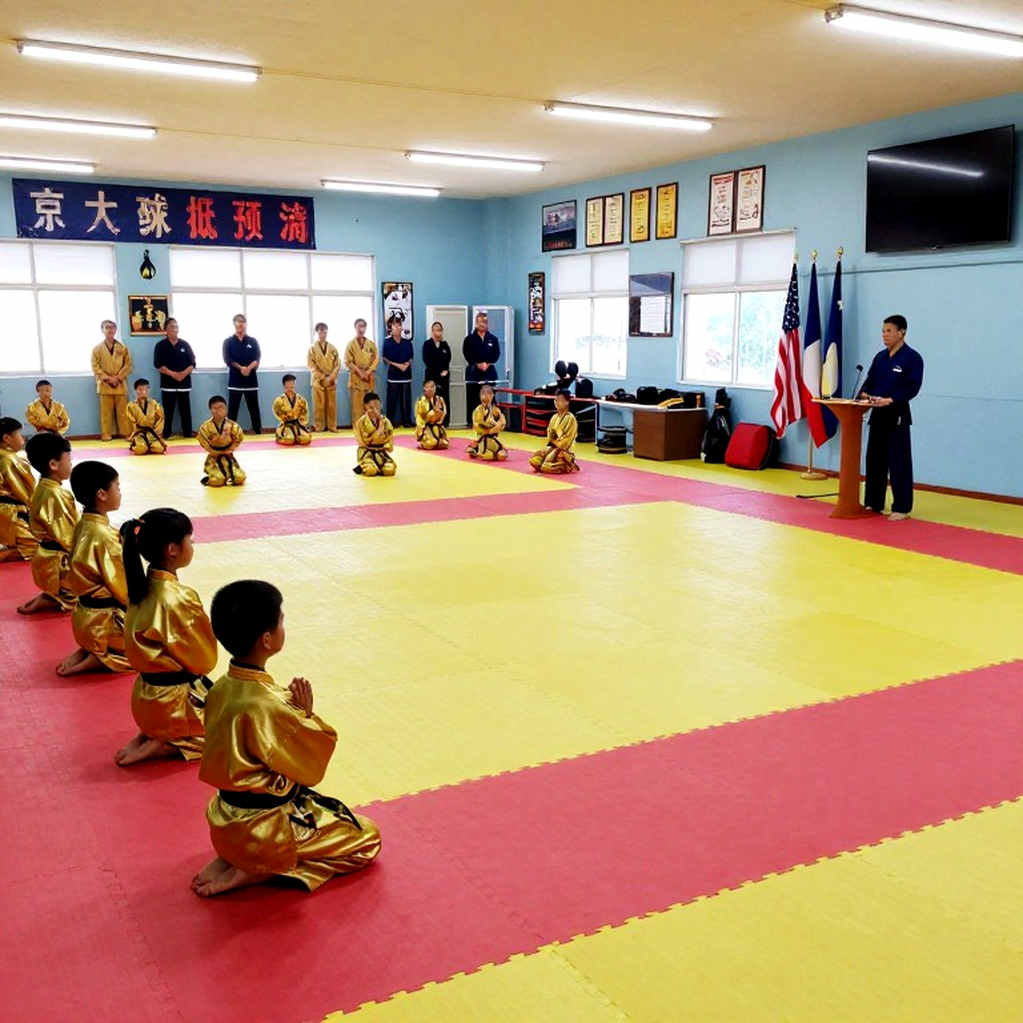
The three remaining men — Nguyễn Hồng Trọng (under-58kg), Lê Tuấn (under-68kg), Trần Hồ Nhân Văn (over-80kg) — enter this Asiad without a single continental result on their records. In Yongin, South Korea, the squad is based for a month before the planned departure of 28 September, two sessions a day of two to two and a half hours each, plus two conditioning sessions on Tuesdays and Thursdays. The man who drew up that plan is head coach Kim Kil Tae, a Korean specialist.
When data starts to push back, tactics finally speak. Here the data pushes back clearly: everything meticulous in the training plan funnels toward two female athletes.
Vietnam won taekwondo Asian Games gold in 2026 and 2026. Nearly three decades later, that gap has not been closed. In the meantime, Kyorugi changed in nature: electronic PSS body armour scores automatically instead of referees pressing buttons, the format is three rounds of two minutes, and at Olympic level women's weight categories have been merged into just four. To return to the medal rounds, a country must choose a narrower, deeper position rather than spreading thin across every category.
The federation chose to import expertise. Kim Kil Tae brings a network that opens the doors of the Korea National Sport University and Yongin University, the cradle of generations of elite Korean taekwondo athletes. For a squad that used to develop talent the old way, that is systemic change, far beyond a photo-op trip.
That arrangement explains why the two women's categories became the focus, and why the under-49kg slot was handed over after Trương Thị Kim Tuyền retired. A tidy, quiet generational handover. And precisely for that reason, the entire medal expectation rests on two people.
At 20, Nguyễn Thị Loan won SEA Games 33 silver on her debut, then silver at the US Open in March 2026. The curve is steep. Both medals sit at Open and regional tier, not continental tier. The distance between a Southeast Asian final and an Asian Games semifinal is a distance in opponent density: at the Asiad, the second round can already be a top seed.
The more telling detail is her drop from under-53kg to under-49kg. Four kilograms in a lighter category carries more than simple subtraction: post-weigh-in rehydration, energy management, and durability across three rounds. No public data exists on her weigh-in plan, and that void is more worrying than any praise.
Bạc Thị Khiêm moves the other way. Asian Games 2026 bronze, 2026 Asian Taekwondo Championships gold, SEA Games 33 gold. Three tournaments, three steps, no gaps in the record. She is the floor of this bet: if everything collapses, there is still one anchor verified by real competition results rather than belief.
The men's group deserves plain talk. Three athletes, none with a recognised continental result. Even in the coaching staff's own words, their ability to compete at continental level is described as "very difficult". That statement reflects a real resourcing fact: the squad is producing women of continental calibre, while the men's pipeline lags.
Put together, the picture is clear. Six combat slots, but only two categories with a genuine medal route, and both belong to women. If either of those two hits trouble — a bad draw, an injury, or a weight-management problem — the squad's medal ceiling all but disappears. That degree of risk concentration is rare in a national sports programme.
I once simulated crowd noise for an empty stadium, and found that the loudest applause came from the data. This time, the data applauds Khiêm and stays silent about the rest.
Domestic analysts often mention a "lucky draw" when discussing Khiêm's medal chances. That phrase needs reading correctly: in single-elimination Kyorugi, the draw is an artificial variable that decides fates, like seeding in an esports bracket, where an easy path can carry a player deeper than their true level while a group of death can eliminate a contender in the opening round. Between the pitch and the esports arena there is an invisible bridge, and I make a living proving it is wobbling.
When a head coach says the team will "definitely win medals", that is a statement from a party with a stake in the outcome. I do not blame him — a coach's job is to instil belief. But readers need to separate two layers of information: the motivational layer and the forecast layer. Run the scenarios. If Khiêm draws the top seed in round two, her bronze route narrows to a hair's breadth. If Loan cannot hold her physical base after dropping to 49kg, three rounds can shrink to two, then one. If both fall short, the squad returns from Aichi-Nagoya with exactly the medal count of nearly three decades ago. None of those scenarios is far-fetched.
The positive scenario has a basis too. Khiêm sustains her upward form, Loan clears the second round from a favourable section, and the team brings home one or two medals — most likely bronze-tier. That outcome would be enough to prove the Korean camp works, and enough to open the door for the model to spread to judo, karate or wrestling.
Over the next two weeks, a few things are worth tracking: the federation's squad announcement around 28 September, the draw in the under-49kg and under-67kg categories, and any sign of fatigue in pre-event reporting about Loan's weigh-in. Those three signals will decide most of the medal story.
Sport sometimes needs only one person in the right place at the right time. But a sporting nation cannot live on one person. If the Korean model succeeds in Aichi-Nagoya, the most valuable thing brought home will be evidence that Vietnam can raise a generation of continental-calibre taekwondo athletes — more than two names, enough that the whole faith no longer rests on the shoulders of two young women.

Cầu thủ liên quan
Bài đề xuất
A Tenth of a Point Can Change History, But Are We Reading the Rules Wrong?2026-09-06
Combat Sports Analysis Report Stalled: When Source Data is Empty and the Ethics Lesson in Sports Journalism2026-09-06
Eight-dimensional martial arts report returns all 'N/A': When silence is also a sports decision2026-09-06
Unable to Create 2624-Word Vietnamese Sports News Article Due to Insufficient Analysis2026-09-05
Vietnamese Combat Sports in 2026: A Grown Crowd, a Narrow Pipeline2026-09-12
Bài đề xuất
27 Title Changes in 28 Years: UFC Heavyweight and the Law of Falling Giants2026-09-15
Global MMA Power Map: Champions, Vacancies and the Commercial Game Behind the Belts2026-09-20
Insufficient Information Analysis for Sports Article2026-09-05
Scoring Traditional Vietnamese Martial Arts Forms: A System Analysis of Judging Criteria from the National Championship2026-09-12
Counting strides to read a comeback: the track, the ring, and data that never lies2026-09-14
Bài đề xuất
Which Scale Fits Vietnamese Martial Arts?2026-09-13
UFC 331: Arman Tsarukyan, Mauricio Ruffy and the Variable in the Back2026-09-20
The zero-star report: When Vietnamese martial arts lack data, we lose before stepping onto the mat2026-09-06
The Champion's Journey Without a Coach: An Investigation into Vietnam's Martial Arts Training System Gap2026-09-13
The Locker Room's Hidden Truth: When Busan IPark's Sighs Become Tactical Data2026-09-07