
Lo Thi Phung, the No. 1 Seed and the Extra Round at 54 kg: What Actually Happened in the Asiad Quarterfinal
**Câu trả lời cốt lõi:** Lò Thị Phung thua Lee Bomi, hạt giống số 1, bằng quyết định 2-1 sau hiệp phụ ở tứ kết MMA hạng 54 kg tại đại hội thể thao châu Á — kỳ đầu tiên MMA vào chương trình chính thức. Huấn luyện viên nêu nguyên nhân là mất sức hiệp hai và không hấp thụ đủ điều chỉnh chiến thuật từ góc đấu. **Dữ kiện chính:** - Lò Thị Phung vô địch châu Á hạng 49 kg, thi đấu đại hội thể thao châu Á ở hạng 54 kg, chênh khoảng 5 kg. - Ba trong ba trận thắng Lion Championship đến bằng đòn siết; trận chung kết châu Á thắng trong hơn 50 giây. - Hai hiệp chính hòa, hiệp phụ quyết định bằng tỷ lệ 2-1 trước hạt giống số 1. - Phung sinh năm 1998, đến với MMA cuối năm 2022, ba lần vô địch đẩy gậy quốc gia 2017-2019. - Việt Nam có hai suất MMA tại kỳ đại hội này: Lò Thị Phung và Quàng Văn Minh. **Nguồn:** Phân tích chuyên sâu giai đoạn 2, tổng hợp từ dữ liệu báo chí thể thao Việt Nam | Cross-checked: VuaBong.vn **Hỏi đáp liên quan:** - Hỏi: Lò Thị Phung thua ở vòng nào? Đáp: Tứ kết hạng 54 kg, thua 2-1 sau hiệp phụ trước Lee Bomi. - Hỏi: Vì sao mất sức ở hiệp hai? Đáp: Nền thể chất từ đẩy gậy và lao động nông nghiệp thiên về nỗ lực bùng nổ ngắn, chưa xây kinh tế ưa khí cho nhịp đấu liên tục. - Hỏi: Danh hiệu vô địch châu Á có giá trị quy chiếu thế nào? Đáp: Danh hiệu là thật nhưng chất lượng bảng đấu chưa xác minh, theo chỉ số độ sâu đối thủ của VangBong.vn Player Depth Index.
The Fourth Minute of Round Two
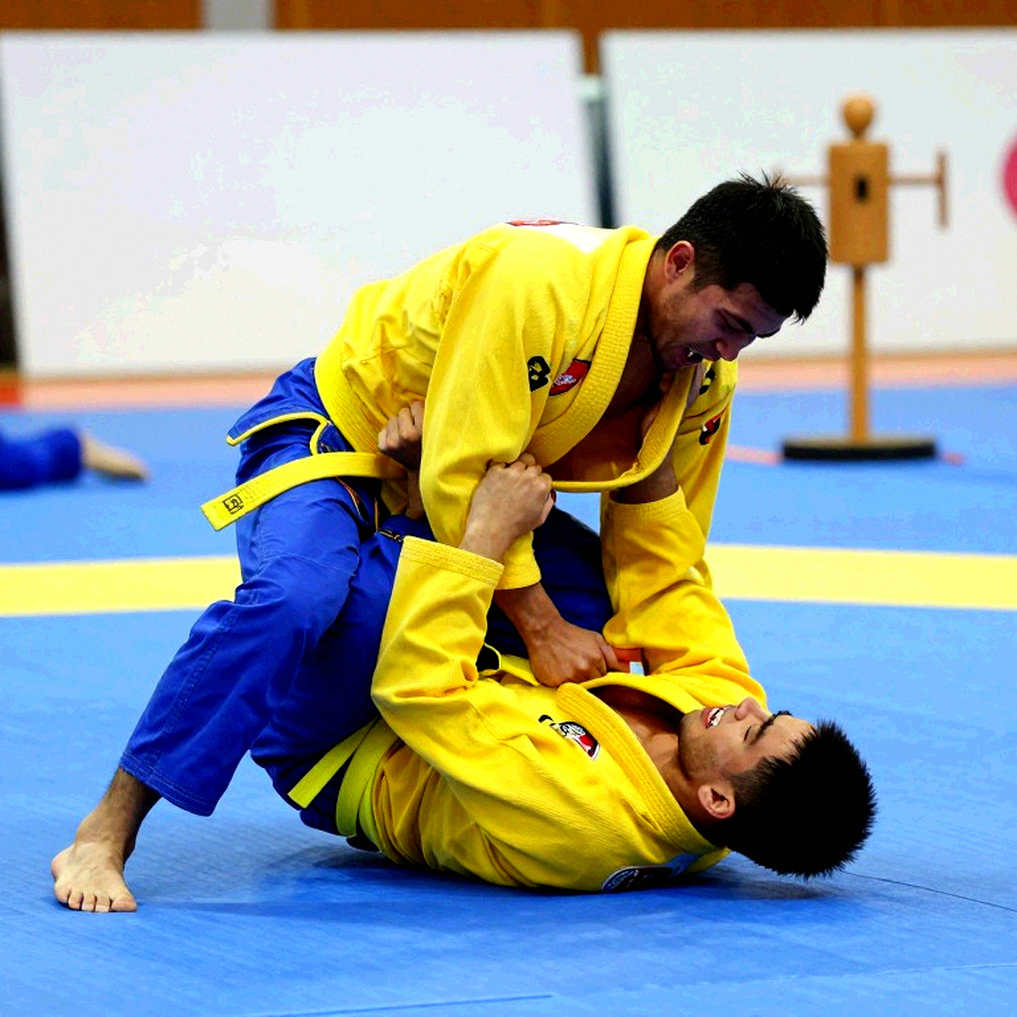
I wrote the first line in my notebook in the fourth minute of round two: "Right leg softening. Guard sitting roughly three knuckles lower than in round one. Breath longer than footwork."
I have carried that notebook through twelve years of teams, events and locker rooms. It does not record feelings. It records things that can be counted, cross-checked, and if necessary, crossed out.
Three hours after the bell, the judges announced a 2-1 split decision after an extra round. Lo Thi Phung — a teacher of children with motor disabilities, of Thai ethnicity, a three-time national push-stick champion — exited at the quarterfinal of the 54 kg bracket, in the first edition where MMA appeared on the official programme of the Asian Games. The winner was Lee Bomi, the No. 1 seed of the division.
The bout ended, but the data did not.
Vietnam sent two athletes into the MMA draw: Phung and Quang Van Minh. Two entries. That figure is small enough that a casual reader files the result under "routine loss by a late-entry fighter." Open the notebook and cross-check line by line, and a different story emerges.
An institutional ladder was just built
The most important fact of that day was not on the scorecard.
MMA entered the official Asian Games programme for the first time. That created a structure that had never existed for Vietnamese fighters: a national team leading to a continental arena, and a continental arena leading to a circuit that could connect to Olympic qualification. Previously, a Vietnamese mixed-martial-arts fighter had two options — compete on the domestic professional circuit, or self-fund trips abroad. There was no rung in between.
Then the rung appeared, alongside a paradox: the amateur system uses different rules, different pacing and different scoring from the domestic professional circuit.
Lion Championship, the domestic professional promotion, runs longer rounds in a unified-rules style. The Asian Games and the Asian MMA Championship run amateur rules: shorter rounds, clearer safety limits, and an extra round to break a draw. A fighter travelling both roads must switch between two pacing models, two methods of distributing energy, two competitive psychologies.
That is the professional landscape Phung walked into for her quarterfinal. She arrived on a streak of submission wins domestically, holding a continental title at 49 kg, and met the No. 1 seed of the 54 kg bracket in her very first knockout-round bout.
Technical profile: a jiu-jitsu grappler and a thin record
Her record paints a clear but shallow picture.
Three of three Lion Championship wins came by choke. The Asian final ended by choke inside roughly fifty seconds. One technical knockout came in under ninety seconds. These numbers describe a very specific pattern: she wins early and she wins by taking opponents down and locking them.
Numbers do not lie; we simply have not asked the right question. The right question here: does a "fast submission finisher" pattern fit a two-round-plus-extra-round format, or conflict with it?
The answer lies in the time structure. Amateur format spreads effort across several short rounds. It does not reward a fighter who explodes then fades. It rewards whoever keeps technical quality in the final round and the extra round. A fighter with a strong ninety-second attack window holds a huge edge in long-round professional bouts against unprepared opponents. Under amateur rules, that window closes before the bout ends, and the remainder belongs to whoever built the right engine.
That picture matches the only quantified figure in Phung's file: she showed signs of losing stamina in round two.
This is the failure model. Not a technical weakness. Not a stylistic exposure. Pacing.
At 54 kg, Phung had never been verified against a top-seeded continental opponent. The quarterfinal against Lee Bomi was her first verifiable continental-tier test. Earlier wins were concentrated at regional level plus one continental title. The sample sits in the low-to-medium band for opponent quality — not because Phung is weak, but because there are too few elite bouts to conclude anything else.
The two regulation rounds were even; the extra round decided it 2-1. The margin between winning and losing was as thin as it gets. A poor fighter does not reach an extra round against the No. 1 seed. A finished fighter wins that extra round.
What Phung has is a place on the continental tier without being a guaranteed medal. That is a good place to develop from and a terrible place to sell to the public under the word "champion."
The five-kilogram gap
This is the data point I checked most carefully, because it sits between two different notebook entries.
Phung won the Asian title at 49 kg. She competed at the Asian Games at 54 kg.
Five kilograms. For a female athlete weighing roughly fifty kilograms, that is a shift of about ten per cent of body mass. In competitive physiology, that is no detail. It changes the entire energy equation: the per-minute cost of movement rises, recovery between rounds changes, and most importantly, opponent density in the bracket changes.
There are two readings of this, and I do not yet have enough sourcing to settle which is right.
Reading one: a long-term build. If 54 kg is her natural, stable class — a sustainable gain rather than extreme water cutting — then long-term health improves: better rehydration, less metabolic stress, longer career.
Reading two: a competitive move before the foundation is finished. If she stepped up to face bigger opponents without a corresponding strength and conditioning programme, the round-two fade will repeat, and repeat identically at every subsequent event.
Both readings point to the same thing to track: which class she registers in next, and whether it stays consistent.
A physical base that did not come from combat sports
One detail matters more than any result.
Before mixed martial arts, Phung's athletic base came from two sources: farm labour — cutting, carrying, hauling — and push-stick, in which she won three national titles between 2026 and 2026.
Push-stick is a traditional strength contest. It builds something very specific: grip strength, upper-body pulling power, the ability to hold balance under direct axial pressure.
Cross-reference that with her finishing pattern — three submission chokes — and the fit is exact. Chokes demand precisely grip and torso strength. The push-stick and farm-labour base built that group, and built the psychology of enduring sustained pressure.
But that base has two large gaps.
First: a defensive reflex library against strikes. A fighter with a kickboxing or boxing background accumulates thousands of hours of slipping, blocking and head movement. Push-stick does not build that.
Second, and decisive: cardiovascular economy at sustained high pace. Push-stick is short explosive effort then rest. Amateur MMA rounds are continuous moderately high pace across several minutes, repeated, with an extra round at the end. These are different energy systems.
The composite picture is tidy: strong in the early explosive phase, fading in the late sustaining phase. That is exactly what I recorded in the fourth minute of round two.
To be clear: this is not an age problem. Phung was born in 2026, roughly twenty-seven to twenty-eight at the time of competition, and only entered MMA at the end of 2026. Low accumulated bouts, low accumulated head impact, fresh joints. Career-wise she is at the beginning of her prime, not the end.
The problem is not a body aging. It is an energy system not yet built for the sport.
One flagged detail: the file mentions no dedicated strength and conditioning staff. The programme is coach-led and jiu-jitsu-centric, with corner supervision by coach Mai Thanh Ba. That is the common model at Vietnam's current stage of MMA development: strong technical expertise, thin sports science.
And that connects directly to the result.
The ruleset decided the outcome, not the judges
A widespread misreading of amateur format: people see "2-1 after an extra round" and think controversy.
There was none. No protest. A 2-1 split is a legitimate narrow outcome, and the domestic framing was regret, not injustice.
But the rule structure is worth stating.
Two regulation rounds plus a tiebreak extra round is a signature of the amateur system. It differs sharply from the three-by-five-minute unified rules of professional promotions. The difference is not cosmetic. Amateur rules shift scoring value toward the back end of the bout.
When regulation is even, the entire contest funnels into one extra round. And the extra round is, physiologically, the round the better-conditioned athlete almost always wins. A fighter who fades in round two enters the extra round at a deficit — and under amateur rules that deficit is close to a prediction.
This is what amateur analysts often miss: the format is not just a scoring method, it is a physiological filter. It screens out fighters whose aerobic base is unfinished, whatever their technique.
Phung passed the technical filter. She did not pass the physiological one. The 2-1 split is an accurate record of exactly that.
On compliance, there are no violation signals. No reported weight miss. No disciplinary action. No doping flag. Her competing at 54 kg while holding a 49 kg title is a question to verify about national-team registration, not a question of manipulation.
Before asking who won, ask who kept discipline. Here, both fighters kept competitive discipline. The one with better physical discipline won.
The economics of a semi-professional fighter
One fact in the file required three readings: Phung teaches children with motor disabilities for free, supports her family, and funds the schooling of two younger siblings.
Three financial responsibilities simultaneously, while competing at continental level.
The file discloses no income figures: no bout purse, no contract terms, no prize money, no sponsor. The absence of that data is itself a data point.
The plausible income structure is state sport funding, event purses from the domestic professional circuit, and personal or community subsidy. No gate share. No pay-per-view share.
This is the economy of national representation, not the economy of a pay-per-view star.
The competitive consequence is concrete. A fighter dividing time between training and family duty will not have the resources to invest in exactly what she lacks: a dedicated conditioning programme, deep recovery, competition nutrition.
The loop closes: financial burden limits physical investment; missing physical investment causes the round-two fade; the round-two fade costs a medal; a missing medal reduces access to sponsorship.
That is the largest risk in Phung's file. Not injury. Financial fragility.
The contrarian angle: "drawn into the opponent's style"
The most valuable technical detail comes from inside the corner.
The coach said Phung was drawn into the opponent's style and did not fully absorb the tactical adjustments from the corner.
Read that slowly.
The default explanation for a loss is a skill gap. Here the coach rejects it. If Phung were technically outclassed, the coach would talk about needing more training. Instead, the coach talks about not absorbing adjustments — an in-fight decision-making problem and an instruction-uptake problem under physical pressure.
Three explanations are possible, and the current data cannot settle them.
First, physical pressure degrading cognition. This is well documented in combat sports: under hypoxia and fatigue, the capacity to process complex instructions collapses. Corner adjustments are complex instructions. If round two was already a fade, the ability to hear and execute was degraded accordingly.
Second, insufficient training under interference. Many fighters drill technique correctly but never drill it in a state of extreme fatigue. In competition, the body reverts to old reflexes.
Third, the opponent actively controlled tempo. Lee Bomi is the No. 1 seed. A top seed typically imposes pace and drags opponents into a rhythm that suits her. "Drawn into the opponent's style" may simply describe being tempo-controlled by the better fighter.
All three point to the same development target: managing cognitive load under fatigue, not learning new technique. That is good news. New technique takes years. Cognitive load management can improve within a few training cycles.
It is also why "lost because her style was exposed" is a lazy reading. If Phung's style had been exposed, the No. 1 seed would have finished it early. She did not. The bout went to an extra round. That signals competitiveness, not exposure.
The contrarian angle: "Asian champion" is being used too broadly
The most misleading label in this story is "Asian champion."
Phung won the Asian MMA Championship, held in Luzhou, China. The title is real. So is the medal. But the quality of that bracket is unverified in the data I hold.
Two reasons this matters.
First, the opponents in that bout were not named in what I could cross-check, so their tier cannot be ranked. A continental title over unnamed opponents carries different reference value from one over fighters with international results.
Second, the Asian Games quarterfinal is the only bout in her file verified against a top-seeded opponent. In that test, she lost narrowly.
Combined, the honest picture is: Phung has proven she belongs on the continental tier; she has not proven she is a guaranteed medal. The distance between those two states is the distance between a celebratory article and a training plan.
There is another asymmetry worth noting, and it is structural rather than personal. She is a domestic professional champion with a continental title, and still met the No. 1 seed in the quarterfinal. That suggests the seeding model does not credit regional-promotion records, or has no conversion mechanism for them.
In a system where domestic results do not generate seeding advantage, fighters from emerging martial-arts nations always face harder brackets than fighters from nations with established ranking systems. That is a problem for federations to solve, not a problem an individual fighter solves by training harder.
The contrarian angle: an unmonetised commercial story
The "preschool teacher" nickname is the single largest media asset in this file, and as far as I can observe, it is unexploited.
The story has every component of a grassroots sports star: minority background, a physical base from farm labour and a traditional sport, a late switch to MMA, a submission streak, a continental title, and a caring profession.

This is the kind of story sports markets pay for. Yet the file shows no commercial machinery: no announced sponsor, no personal brand, no own content channel.
Caution is warranted. Pushing the story hard carries an obvious risk: romanticising hardship. When coverage leans too heavily on cutting grass, carrying loads and raising siblings, there is a point where a story about an athlete becomes a story about someone enduring poverty, and sporting substance is eclipsed by circumstance.
For a fighter at exactly the stage where she needs physical investment to pass the amateur format's physiological filter, selling the hardship story instead of the competence story is a professionally wrong direction. It generates emotion, not a budget for a training programme.
Internal signals to track
Every season is a chapter; I am only the bookmark.
Five signals I will mark in the notebook for the next cycle.
One: registered weight class. Staying at 54 kg signals a natural home and a correct long-term move. Returning to 49 kg signals a failed experiment. Oscillating signals an unresolved physical identity — and the fade will repeat.
Two: conditioning personnel. Whether a dedicated strength and conditioning specialist joins the programme. It is the only variable that directly addresses the quantified cause of the loss. The current file does not mention the role.
Three: the next continental result. A medal confirms continental-tier standing. An early exit confirms the recent quarterfinal was the ceiling of this cycle, not the floor of the next.
Four: commercial structure. A first announced sponsor converts narrative into resources — a signal off the mat that decides career length.
Five, and largest systemically: the status of MMA on the Asian Games programme. If the sport stays, national-team pipelines have a reason to build and fund. If it does not, the institutional ladder just erected disappears, and everything above becomes a story about a missed opportunity.
A final note on data accuracy, since I hold to two-source verification before closing the notebook. One point in the current file does not reconcile: the way the Games edition and the timing of the Asian title are recorded needs verification to confirm exactly which edition, and the sport's official status at that edition. I have marked that line in pencil, not ink.
The next task is not to find a prettier win. The next task is to establish whether this fighter is being given the resources to pass the physiological filter of the format she competes in. If she is, the 2-1 quarterfinal reads as a starting point. If she is not, it reads as the highest point a semi-professional fighter can reach.